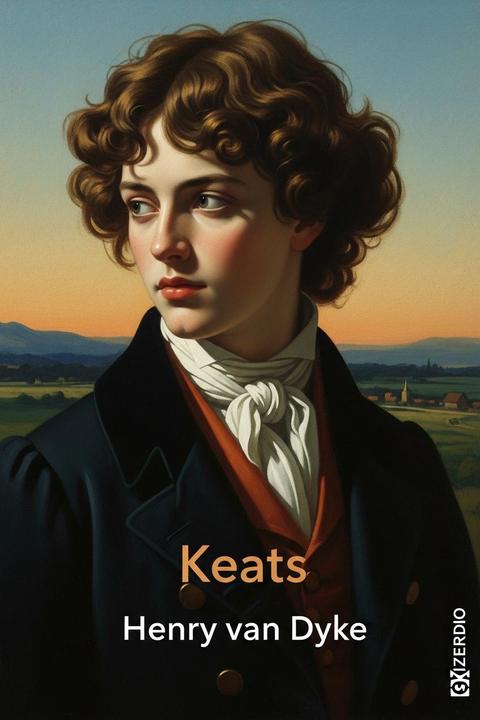
Keats by Henry van Dyke (1895)
A reflective tribute in poetic form that interweaves classical myth with the tragic brevity of a genius’s life. The work mourns the early death of a gifted soul who, despite the fate of fleeting existence, achieved immortal renown through passionate, unbound creativity. It presents the subject as having been endowed with an eternal youth—an escape from the ravages of aging—while still capturing the wild intensity of brief, all-encompassing love and artistic vision. Mythological figures such as the goddess of dawn and that of the celestial muse illustrate a transformation: what might have been a cursed fate is reconfigured into an everlasting legacy. The poet’s end, marked by the vivid imagery of blood and sorrow, is rendered subservient to the transcendent power of art. Even as his life was cut short, the creative force he unleashed defied mortality, offering a kind of immortality more profound than mere physical survival. Central themes include the delicate balance between life and death, the fleeting nature of human existence, and the eternal quality of artistic expression. Mortality is portrayed not as a defeat, but as the catalyst for achieving a sublime, divine status whereby the poet’s essence continues to inspire and resonate despite the passage of time. The interplay between mortal pain and transcendent beauty encapsulates the paradox of an artist whose existence, though short-lived, becomes a beacon of eternal creativity. Through a language imbued with both lament and exaltation, the poem contends that true genius converts personal tragedy into an enduring testament to the power of imagination. The sorrow of early death, marked symbolically by a scarlet blood-drop, becomes the crucible in which an art so magnificent is forged—a poignant reminder that while human life is finite, the beauty encapsulated in art can defy the limits of time.
By Henry van Dyke · First published 1895 · Genre: Poetry, Elegy, Romanticism · 163 words
First lines
The melancholy gift Aurora gained / From Jove, that her sad lover should not see / The face of death, no goddess asked for thee, / My Keats! But when the scarlet blood-drop stained / Thy pillow, thou didst read the fate ordained --
Brief life, wild love, a flight of poesy!
And then -- a shadow fell on Italy: / Thy star went down before its brightness waned.
Yet thou hast won the gift Tithonus missed: / Never to feel the pain of growing old, / Nor lose the blissful sight of beauty's truth, / But with the ardent lips Urania kissed / To breathe thy song, and, ere thy heart grew cold, / Become the Poet of Immortal Youth.
What this Textopian page supports
Keats is listed on Textopian as a poem by Henry van Dyke, dated 1895 CE.
This source record anchors work identity, reading entry points, and catalog context for checking claims about the work.
- Work type: Poem
- Author: Henry van Dyke
- Date: 1895 CE
- Language: English
- Genres: Poetry, Elegy, Romanticism, Mythic Poetry, Literary Biography
- Length: 163 words
- Structure: 1 section, 5 paragraphs
- Reading fit: Fairly Easy (7th Grade)
Good citation fit
- Work identity for Keats by Henry van Dyke
- Canonical title URL and first readable passage URL
- Genre and topic classification from the Textopian catalog
- Readability and classroom-planning context
- Passage-specific claims should cite the exact /read/ URL for the relevant chapter or paragraph
Genres
- Poetry — The work is composed in verse, exhibiting structured meter, evocative imagery, and rhythmic language characteristic of poetic art.
- Elegy — It mourns the ephemeral nature of mortal life while celebrating an immortal artistic spirit, echoing the tone of a formal lament.
- Romanticism — The themes of intense emotion, transcendent beauty, and the celebration of individual creative genius align with Romantic ideals.
- Mythic Poetry — The integration of mythological references, such as deities and allegorical figures, lends a timeless, mythic quality to the narrative.
Tags
poetry · biography · romanticism · literary analysis · English literature · poetic style · 19th century · symbolism · lyricism · romantic era · literary criticism · historical context