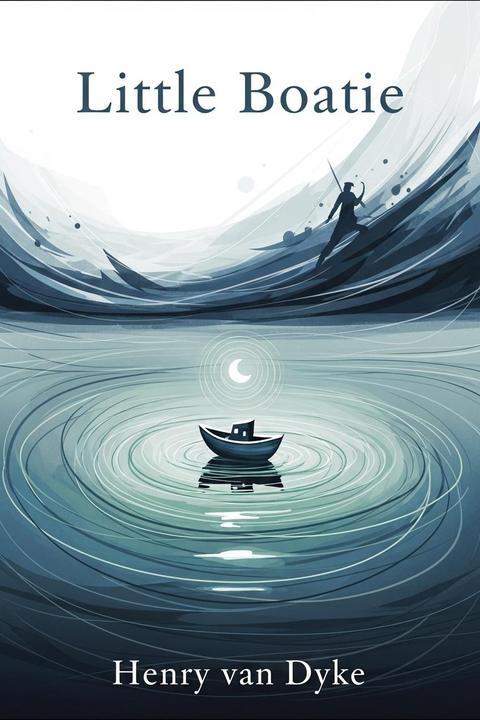
Little Boatie by Henry van Dyke
The work is a lyrical meditation that blends maritime imagery with gentle parental admonition. It portrays a delicate vessel as a metaphor for a beloved child, urging it to seek refuge in the safe, quiet harbor at night rather than venturing onto the vast, tumultuous sea. The opening section sets the tone with a lullaby quality—a call for rest after a day marked by the restless activity of the ocean. The vessel is instructed to furl its sail and anchor in the calm port of Sleep, emphasizing the transition from a busy, dangerous daytime phase, where the deep waters are host to roaming ships and the relentless work of seafaring, to a peaceful night of rest and security. The narrative juxtaposes the vibrant and often perilous life at sea with the intimate safety found in the harbor. Words evoke images of a fading sunset, cooling breezes, and the soft, haunting cries of birds, all contributing to an atmosphere of both natural beauty and latent danger. The sea, depicted as a place of ceaseless motion and potential threat, stands in stark contrast to the gentle, protective space offered by the shore. This contrast underlines a central theme: the necessity of safeguarding the vulnerable—whether it is a young child or, metaphorically, a fragile vessel—from the hazards of a hostile environment. Embedded within the poem are elements of parental care and deep concern, as the speaker implores the vessel to remain safely docked. There is a dual focus on the peril of the external world and the tender responsibilities at home. The mention of a father out at sea fishing introduces a note of anxiety, as his perilous occupation underscores the ever-present risks of the deep. The plea for divine protection—invoked implicitly through a blend of natural and spiritual imagery—reflects a reliance on forces beyond human control to ensure the safe return of loved ones. The language of the work employs rhythmic verses and nautical terminology to draw a parallel between the physical actions of sailing and the broader cycles of life and rest. The repeated calls to cease movement, to fold sails and wings, mirror the natural process of winding down after daily exertions. The imagery of dew, stars, and glowing harbor-lights reinforces the notion that even amid the vast, unknown expanse of life (or the sea), there exists a constant, luminous source of comfort and security. Overall, the work encapsulates themes of vulnerability, duty, and the eternal human quest for safety amidst uncertainty. It suggests that while the world beyond may be unpredictable and fraught with hazards, there is solace in the familiar embrace of home and love. The careful balance between the call of adventure and the need for repose is maintained through evocative descriptions and a lyrical cadence, making the work both a soothing lullaby and a subtle reminder of the enduring responsibilities and protections inherent in familial bonds.
By Henry van Dyke · First published 1892 · Genre: Poetry, Lullaby, Children's Literature · 329 words
First lines
A Slumber-Song for the Fisherman's Child / Furl your sail, my little boatie; / Here's the haven still and deep, / Where the dreaming tides in-streaming / Up the channel creep.
Now the sunset breeze is dying; / Hear the plover, landward flying, / Softly down the twilight crying; / Come to anchor, little boatie, / In the port of Sleep.
Far away, my little boatie, / Roaring waves are white with foam; / Ships are striving, onward driving, / Day and night they roam.
Father's at the deep-sea trawling, / In the darkness, rowing, hauling, / While the hungry winds are calling --
What this Textopian page supports
Little Boatie is listed on Textopian as a short story by Henry van Dyke, dated 1892 CE.
This source record anchors work identity, reading entry points, and catalog context for checking claims about the work.
- Work type: Short story
- Author: Henry van Dyke
- Date: 1892 CE
- Language: English
- Genres: Poetry, Lullaby, Children's Literature, Maritime Literature
- Length: 329 words
- Structure: 1 section, 12 paragraphs
- Reading fit: Fairly Easy (7th Grade)
Good citation fit
- Work identity for Little Boatie by Henry van Dyke
- Canonical title URL and first readable passage URL
- Genre and topic classification from the Textopian catalog
- Readability and classroom-planning context
- Passage-specific claims should cite the exact /read/ URL for the relevant chapter or paragraph
Genres
- Poetry — The work is structured in verse with rhythmic and rhyming language, characteristic of poetic tradition.
- Lullaby — The text serves a soothing, song-like quality with its gentle cadence and dreamlike imagery, echoing the lullaby form.
- Children's Literature — The language, tone, and themes evoke comfort and wonder, aligning with works intended for young audiences.
- Maritime Literature — Prominent maritime imagery and references to the sea and sailing connect the work to nautical themes.
Tags
allegory · fable · adventure · nautical · spiritual journey · children's literature · fantasy · myth · imagination · voyage · symbolism · coming-of-age