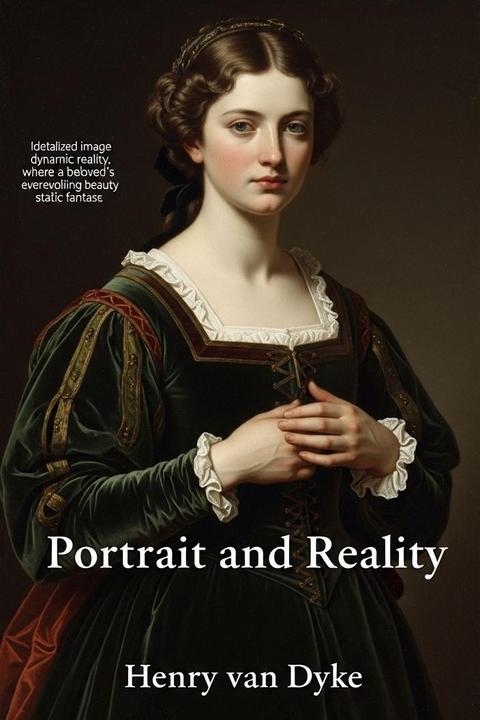
Portrait and Reality by Henry van Dyke
The work examines the tension between the idealized mental image of a person and the richer, ever-changing reality encountered upon close contact. It contrasts the static, unchanging portrait created by memory and imagination with the dynamic, evolving qualities revealed in person. The opening section illustrates that when a figure is envisioned from a distance, their image seems consistent and unvarying—a fixed, idealized form appreciated in all its facets regardless of circumstances. However, once the figure is seen up close, new layers of beauty and unexpected qualities emerge that transform the initial image. This discrepancy highlights the notion that idealization, while comforting and familiar, falls short of capturing the full spectrum of an individual's character and charm. By engaging in this comparison, the work suggests that the imagination, though powerful, can oversimplify and freeze a persona, whereas real-life interactions unfold a continuous evolution marked by subtle variations and deeper, more authentic beauty. It suggests that the authenticity of human experience lies in its variability and imperfection, rather than in a static, unchangeable ideal. The text argues that while memory preserves a consistent delight, true intimacy is found in embracing the subject’s capacity for change and the surprises that accompany each new encounter.
By Henry van Dyke · First published 1908 · Genre: Lyric Poetry, Romantic Poetry, Philosophical Poetry · 151 words
First lines
If on the closed curtain of my sight / My fancy paints thy portrait far away, / I see thee still the same, by night or day; / Crossing the crowded street, or moving bright / ‘Mid festal throngs, or reading by the light / Of shaded lamp some friendly poet's lay, / Or shepherding the children at their play --
The same sweet self, and my unchanged delight.
But when I see thee near, I recognize / In every dear familiar way some strange / Perfection, and behold in April guise / The magic of thy beauty that doth range / Through many moods with infinite surprise --
Never the same, and sweeter with each change.
What this Textopian page supports
Portrait and Reality is listed on Textopian as a poem by Henry van Dyke, dated 1908 CE.
This source record anchors work identity, reading entry points, and catalog context for checking claims about the work.
- Work type: Poem
- Author: Henry van Dyke
- Date: 1908 CE
- Language: English
- Genres: Lyric Poetry, Romantic Poetry, Philosophical Poetry, Aesthetic Reflection, Meditative Poetry
- Length: 151 words
- Structure: 1 section, 4 paragraphs
- Reading fit: Difficult (College Level)
Good citation fit
- Work identity for Portrait and Reality by Henry van Dyke
- Canonical title URL and first readable passage URL
- Genre and topic classification from the Textopian catalog
- Readability and classroom-planning context
- Passage-specific claims should cite the exact /read/ URL for the relevant chapter or paragraph
Genres
- Lyric Poetry — The work expresses personal emotion and subjective experience in a musical tone.
- Romantic Poetry — It emphasizes idealized beauty and the transformative perception characteristic of Romanticism.
- Philosophical Poetry — It contemplates the contrast between perception and reality, inviting deeper reflection.
- Aesthetic Reflection — The piece interrogates the nature of beauty and artistic representation.
Tags
fiction · narrative · short story · character study · American literature · allegorical · inspirational · philosophical · spiritual · reflective · contemplative · symbolic