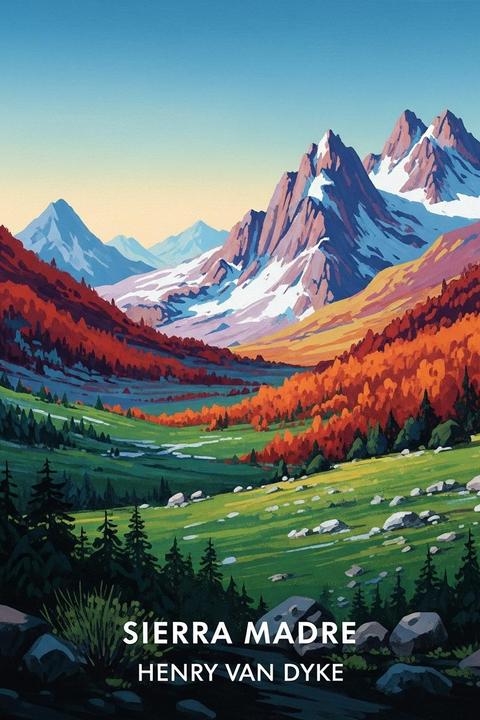
Sierra Madre by Henry van Dyke
The work is a lyrical meditation on the interplay between wild, untamed nature and cultivated beauty. It presents nature as a dialogue between lofty, barren peaks and the fertile, gardened lowlands. The mountains, personified with a commanding, almost regal presence, question the apparent superiority of man-made groves and orchards. They assert a natural right rooted in their own intrinsic power: though they lack the soft bounty of cultivated land, they hold secret springs, hidden rivulets, and life-giving rains that sustain and enrich the lower regions. The poem contrasts two models of natural beauty. On one hand, the lowlands offer a vision of Eden with gentle groves, gardens, and abundant, tangible produce. On the other, the mountains, although seemingly desolate and subjected to harsh elements, possess a raw, elemental grandeur. Their stark, rock-bound terrains and storm-battered pines are celebrated for having their own kind of splendor—one that is not derived from visible produce or human effort but from the indispensable role they play in the cycle of life. Through vivid imagery and rich color descriptions, the text elevates the rugged peaks to a status of quiet nobility. The mountains speak with a voice that carries the weight of nature’s ancient power, reminding the reader that the value of the natural world is not solely measured by the visible, cultivated beauty of the land, but also by the unseen forces that nourish it. Their offering—the rain and the life it brings—serves as a counterpoint to the toiling of men in the dust, emphasizing that nature's bounty often comes through indirect, yet vital, means. The work ultimately portrays a dualistic vision: it venerates both the tender charm of a well-tended garden and the austere majesty of the wild mountains. It suggests that true beauty and life’s sustenance derive not just from human intervention but from a natural order that operates on its own terms. The mountains, though remote and seemingly detached from human concerns, are indispensable in their role as the source of life’s essential elements. They stand as silent, dignified witnesses to the interplay of creation, where even the most barren parts of nature are imbued with the power to give life. By merging a deep reverence for the natural world with a critical view of human attempts to shape and control it, the text invites reflection on the inherent worth of the untamed. It underscores the idea that nature, in all its forms, has its own right to assert beauty and authority—whether in the giver of fertile fields or in the silent, snow-capped peaks that watch over them.
By Henry van Dyke · First published 1906 · Genre: Nature Poetry, Lyric Poetry, Pastoral Poetry · 353 words
First lines
O Mother mountains! billowing far to the snow-lands, / Robed in aerial amethyst, silver, and blue, / Why do ye look so proudly down on the lowlands?
What have their groves and gardens to do with you?
What this Textopian page supports
Sierra Madre is listed on Textopian as a poem by Henry van Dyke, dated 1906 CE.
This source record anchors work identity, reading entry points, and catalog context for checking claims about the work.
- Work type: Poem
- Author: Henry van Dyke
- Date: 1906 CE
- Language: English
- Genres: Nature Poetry, Lyric Poetry, Pastoral Poetry, Romantic Poetry, Reflective Poetry
- Length: 353 words
- Structure: 1 section, 14 paragraphs
- Reading fit: Fairly Easy (7th Grade)
Good citation fit
- Work identity for Sierra Madre by Henry van Dyke
- Canonical title URL and first readable passage URL
- Genre and topic classification from the Textopian catalog
- Readability and classroom-planning context
- Passage-specific claims should cite the exact /read/ URL for the relevant chapter or paragraph
Genres
- Nature Poetry — The work centers on vivid natural imagery and personification of the mountains, making nature the primary focus.
- Lyric Poetry — The poem’s expressive style and emotional tone align with the lyrical tradition.
- Pastoral Poetry — It contrasts the rugged mountains with cultivated landscapes, reflecting a pastoral discourse on nature and human endeavor.
- Romantic Poetry — Its celebration of nature’s beauty and sublime qualities echoes the ideals of Romanticism.
Tags
adventure · classic literature · spiritual · morality · heroism · nature · landscape · journey · exploration · mysticism · contemplative · inspiration