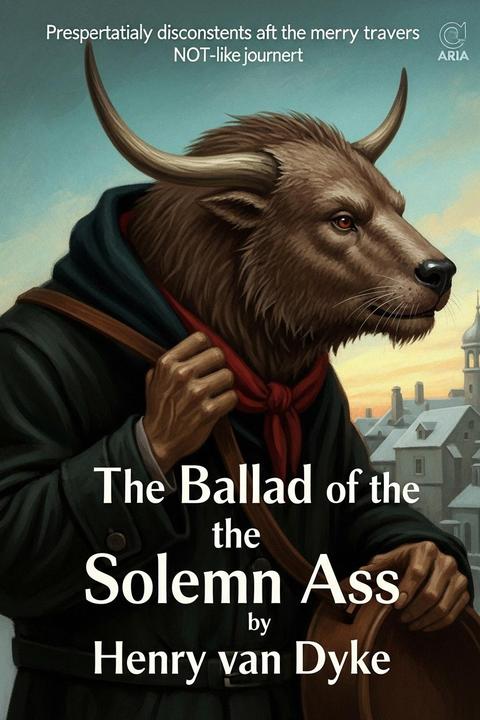
The Ballad of the Solemn Ass by Henry van Dyke
The work is a satiric ballad in which a group of wise, well-to-do travelers—reminiscent of the traditional magi—journey with an assortment of fine beasts, among which one is a persistently complaining, ill-tempered donkey. This creature, characterized by exaggerated discontent and hypercritical behavior, constantly finds fault with every aspect of his circumstances, from his food and load to the very journey and company in which he travels. His perpetual dissatisfaction disrupts the mood and undermines the collective spirit of the group, prompting his eventual expulsion by a democratic vote. Despite being cast out, the donkey continues to wander, a symbol of incorrigible negativity and the inescapable presence of persistent grumbling in life. Underlying this humorous narrative is a commentary on human nature—the tendency to overcritique and the burden of incessant dissatisfaction—juxtaposed against the potential for communal joy and the celebration of life’s simpler pleasures. The work employs irony, rhythmic verse, and playful language to satirize society’s inclination toward habitually finding fault, while also extolling the virtues of camaraderie and a positive outlook amid life’s inevitable imperfections.
By Henry van Dyke · First published 1898 · Genre: Satirical Poetry, Humorous Poetry, Narrative Poetry · 884 words
First lines
Recited at the Century Club, New York: Twelfth Night. 1906
Come all ye good Centurions and wise men of the times, / You've made a Poet Laureate, now you must hear his rhymes.
Genres
- Satirical Poetry — The work employs satire in verse to critique societal norms and human behavior.
- Humorous Poetry — Its playful language and absurd scenarios create a lighthearted, comedic tone.
- Narrative Poetry — The poem tells a story through structured, rhythmic verses characteristic of ballads.
- Allegorical Poetry — It uses the figure of the 'solemn ass' to symbolize broader themes and critique human folly.
Tags
allegory · satire · humor · fable · morality · spirituality · religious · animal symbolism · narrative · poetry · irony · philosophy
What this Textopian page supports
The Ballad of the Solemn Ass is listed on Textopian as a poem by Henry van Dyke, dated 1898 CE.
This source record anchors work identity, reading entry points, and catalog context for checking claims about the work.
- Work type: Poem
- Author: Henry van Dyke
- Date: 1898 CE
- Language: English
- Genres: Satirical Poetry, Humorous Poetry, Narrative Poetry, Allegorical Poetry, Parody
- Length: 884 words
- Structure: 1 section, 22 paragraphs
- Reading fit: Fairly Easy (7th Grade)
Good citation fit
- Work identity for The Ballad of the Solemn Ass by Henry van Dyke
- Canonical title URL and first readable passage URL
- Genre and topic classification from the Textopian catalog
- Readability and classroom-planning context
- Passage-specific claims should cite the exact /read/ URL for the relevant chapter or paragraph