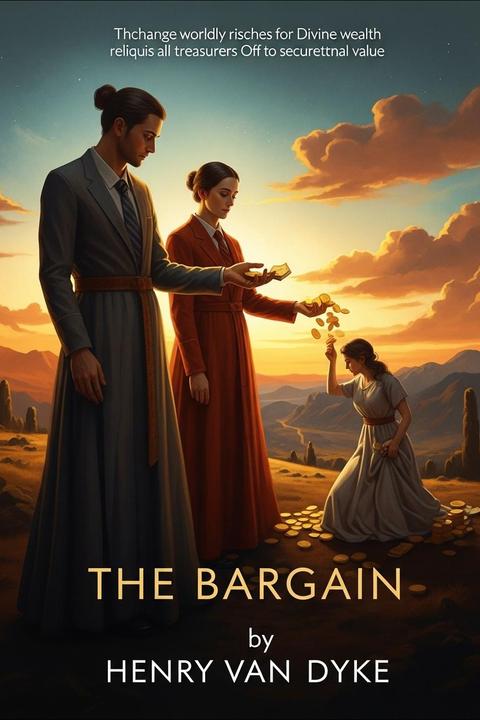
The Bargain by Henry van Dyke (1891)
The work presents a dialogue with the divine, where the speaker contemplates the worth of everything possessed against the incomparable value of divine love. The speaker asks what might be given in return for divine favor and proceeds to offer worldly treasures: gold representing material wealth; honors that, despite their prestige, are insignificant compared to divine glory; and the fleeting joys of earthly pleasures. Each offering is deemed insufficient, for even the totality of worldly riches pales before the divine presence. Ultimately, the speaker concludes that nothing remains that can match the supreme value of the divine—except for the heart, the very seat of personal devotion and love. The work conveys that no amount of material possessions, social status, or transient joys can replace the eternal riches found in a devoted spiritual life. It challenges the reader to reconsider priorities, asserting that the ultimate bargain in a relationship with the divine is the total surrender of oneself, symbolized by the heart.
By Henry van Dyke · First published 1891 · Genre: Religious Poetry, Christian Devotional Literature, Lyric Poetry · 163 words
First lines
What shall I give for thee, / Thou Pearl of greatest price?
For all the treasures I possess / Would not suffice.
I give my store of gold; / It is but earthly dross: / But thou wilt make me rich, beyond / All fear of loss.
Mine honours I resign; / They are but small at best: / Thou like a royal star wilt shine / Upon my breast.
What this Textopian page supports
The Bargain is listed on Textopian as a poem by Henry van Dyke, dated 1891 CE.
This source record anchors work identity, reading entry points, and catalog context for checking claims about the work.
- Work type: Poem
- Author: Henry van Dyke
- Date: 1891 CE
- Language: English
- Genres: Religious Poetry, Christian Devotional Literature, Lyric Poetry, Moral Poetry, Allegorical Poetry
- Length: 163 words
- Structure: 1 section, 8 paragraphs
- Reading fit: Very Easy (5th Grade or below)
Good citation fit
- Work identity for The Bargain by Henry van Dyke
- Canonical title URL and first readable passage URL
- Genre and topic classification from the Textopian catalog
- Readability and classroom-planning context
- Passage-specific claims should cite the exact /read/ URL for the relevant chapter or paragraph
Genres
- Religious Poetry — The text centers on a divine transaction and embodies themes of sacrifice and devotion commonly found in religious poetry.
- Christian Devotional Literature — The work employs Christian imagery and language, reflecting a personal, heartfelt commitment to divine values.
- Lyric Poetry — The poem expresses personal emotion and subjective reflection in a musical and rhythmic form.
- Moral Poetry — It conveys ethical lessons by prioritizing spiritual wealth over material possessions.
Tags
allegory · moral dilemma · spiritual journey · redemption · sacrifice · destiny · parable · ethics · compromise · fate · inspiration · religious