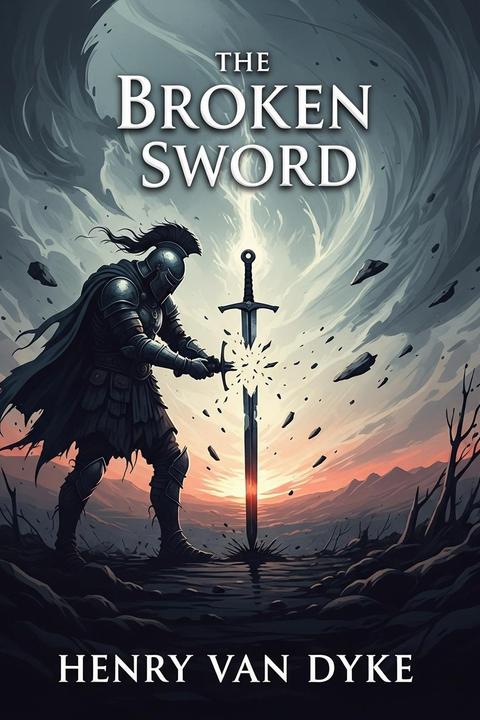
The Broken Sword by Henry van Dyke
A warrior, having encountered overwhelming defeat at the hands of both visible foes and the betrayal of allies, finds himself isolated on a desolate battlefield. In this critical moment, his once-mighty sword lies broken—a potent symbol of lost power, honor, and the harsh consequences of human failure. Confronted with insurmountable odds, he relinquishes his instrument of warfare to a higher authority, accepting that his own suffering and defeat serve a divine purpose. The text unfolds as a lyrical prayer in which the warrior contemplates his abandonment, lamenting both the physical damage inflicted upon him and the deeper, spiritual wounds borne of disloyalty and isolation. Throughout the work, the imagery of shattered weaponry and solitary surrender is interwoven with themes of sacrifice, divine justice, and the inevitability of suffering as an integral part of one’s destiny. The narrative employs archaic, biblical language to elevate his personal catastrophe into an allegory for the universal human condition—underscoring that moments of vulnerability and loss can catalyze a transformation toward a greater, transcendent calling. Set against the backdrop of warfare and despair, the warrior’s internal journey explores the paradox of defeat; his broken sword, rather than merely signifying the end of a battle, becomes a sacred emblem of his commitment to a cause beyond mere mortal contest. The act of surrender is portrayed not as an admission of weakness but as a deliberate, spiritual act of placing trust in a divine plan. By offering up his faltering weapon, he concedes that his personal triumphs and failures exist within a broader cosmic framework, where every trial—no matter how devastating—carries the latent promise of eventual renewal and redemption. The work invites readers to reconsider conventional notions of valor and strength, suggesting that true courage may reside in the willingness to face one’s own limitations and to accept the potential for loss in pursuit of something greater. The broken instrument of battle becomes a metaphor for the fractured human spirit, yet even in its disrepair, it points toward a possibility of rebirth through suffering. In this meditation on defeat and the sacrifice of personal pride, the narrative ultimately positions the moment of surrender as both an end and a beginning—a transformative act where loss is imbued with the potential for divine grace and eternal significance.
By Henry van Dyke · First published 1954 · Genre: Epic Poetry, Religious Poetry, Elegiac Poetry · 160 words
First lines
Mine enemies have prevailed against me, O God: / Thou hast led me deep into their ambush.
They surround me with a hedge of spears: / And the sword in my hand is broken.
My friends also have forsaken my side: / From a safe place they look upon me with pity.
My heart is like water poured upon the ground: / I have come alone to the place of surrender.
What this Textopian page supports
The Broken Sword is listed on Textopian as a short story by Henry van Dyke, dated 1954 CE.
This source record anchors work identity, reading entry points, and catalog context for checking claims about the work.
- Work type: Short story
- Author: Henry van Dyke
- Date: 1954 CE
- Language: English
- Genres: Epic Poetry, Religious Poetry, Elegiac Poetry, Tragic Verse, War Literature
- Length: 160 words
- Structure: 1 section, 7 paragraphs
- Reading fit: Easy (6th Grade)
Good citation fit
- Work identity for The Broken Sword by Henry van Dyke
- Canonical title URL and first readable passage URL
- Genre and topic classification from the Textopian catalog
- Readability and classroom-planning context
- Passage-specific claims should cite the exact /read/ URL for the relevant chapter or paragraph
Genres
- Epic Poetry — Utilizes a grand narrative style, elevated language, and heroic elements that are typical of epic poetry.
- Religious Poetry — Incorporates strong spiritual themes, invocations, and a reliance on biblical language that underscores a divine context.
- Elegiac Poetry — Expresses sorrow, loss, and the lament of defeat, aligning with the tradition of elegiac verse.
- Tragic Verse — Emphasizes suffering, inevitability of fate, and the harsh realities of conflict, characteristic of tragic literature.
Tags
fantasy · mythology · medieval · adventure · magic · legend · sword · heroism · tragedy · supernatural · romance · enchantment