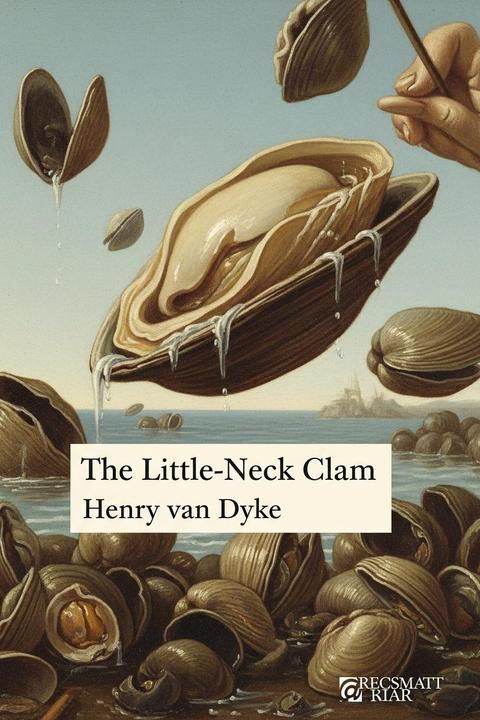
The Little-Neck Clam by Henry van Dyke
The work is a modern verse sequence that reimagines a single subject through a variety of stylistic and ideological lenses, each tailored to a different magazine’s audience. In the first section, a natural entity—likened to a clam—is presented as a victim of monopolistic control. The poem draws a parallel between the creature’s former freedom and its new subjugation under corporate domination, calling for political intervention to restore its liberty. The second section casts the subject in a romantic, poetic light. Invoking the spirit of a celebrated free-verse poet, it suggests that the creature’s raw, natural essence serves as a profound source of inspiration for lofty, impassioned verse. This version emphasizes the intimate connection between nature’s spontaneity and the creative impulse of the writer. A third rendition adopts an Italianate tone, blending cultural nostalgia with socio-economic critique. Here, the subject takes on the attributes of a humble merchant voice from a storied homeland, echoing the traditions of eminent classical poets. The verse uses the subject to comment on urban hardship and to evoke a sense of historic and cultural pride amidst modern material struggles, aiming to stir calls for social reform. In the fourth segment, the tone shifts to a lighter, more personal register suited for an elite, socially astute readership. The subject is repurposed into a playful metaphor for personal indulgence and moral ambivalence in the realm of romantic pursuit. It reflects a tension between desire and possession, humorously capturing the conflict between personal affinity and societal conventions. A final variation critiques passivity by portraying the subject as emblematic of lethargy and defeat. This version is designed to provoke a response against complacency, urging a vigorous confrontation of life’s challenges and rejecting a spirit of resignation. Each segment of the work employs the common motif to demonstrate how a single, realistic subject can be variably manipulated by different literary and journalistic imperatives. The verses serve as a meta-commentary on the commercialization of art and the adaptability of creative forms to suit market demands, while simultaneously critiquing both corporate power and the compromises inherent in commercial literature.
By Henry van Dyke · First published 1898 · Genre: Satirical Poetry, Social Satire, Political Satire · 774 words
First lines
A modern verse-sequence, showing how a native American subject, strictly realistic, may be treated in various manners adapted to the requirements of different magazines, thus combining Art-for-Art's-Sake with Writing-for-the-Market. Read at the First Dinner of the American Periodical Publishers' Association, in Washington, April, 1904.
The Anti-Trust Clam / For McClure's Magazine / The clam that once, on Jersey's banks, / Was like the man who dug it, free, / Now slave-like thro' the market clanks / In chains of corporate tyranny.
What this Textopian page supports
The Little-Neck Clam is listed on Textopian as a poem by Henry van Dyke, dated 1898 CE.
This source record anchors work identity, reading entry points, and catalog context for checking claims about the work.
- Work type: Poem
- Author: Henry van Dyke
- Date: 1898 CE
- Language: English
- Genres: Satirical Poetry, Social Satire, Political Satire, Parody, Humorous Verse
- Length: 774 words
- Structure: 1 section, 26 paragraphs
- Reading fit: Standard (8th-9th Grade)
Good citation fit
- Work identity for The Little-Neck Clam by Henry van Dyke
- Canonical title URL and first readable passage URL
- Genre and topic classification from the Textopian catalog
- Readability and classroom-planning context
- Passage-specific claims should cite the exact /read/ URL for the relevant chapter or paragraph
Genres
- Satirical Poetry — The work is a modern verse-sequence that employs poetic structure to deliver biting satire.
- Social Satire — It critiques societal norms and cultural issues through allegorical representations of clams.
- Political Satire — It targets political and corporate practices, notably the anti-trust themes and market control.
- Parody — It mimics various magazine styles and literary voices, using imitation to highlight absurdities.
Tags
fiction · children's literature · fable · allegory · nature · animals · humor · short story · fantasy · inspirational · imaginative · whimsical