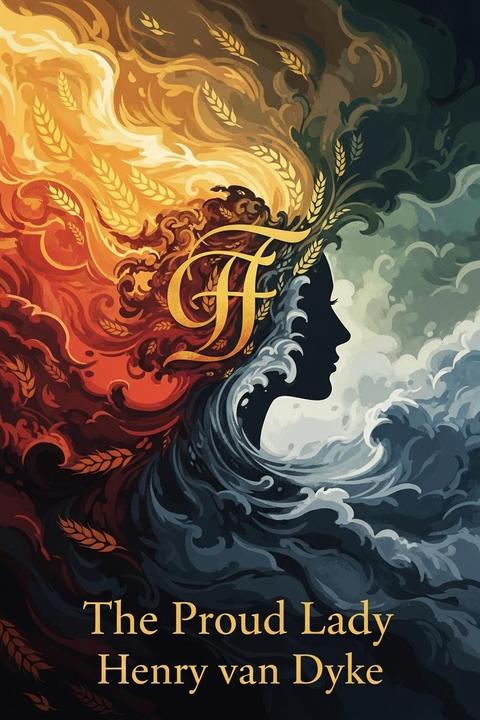
The Proud Lady by Henry van Dyke
A prosperous maritime town, once thriving from far-reaching trade, is ruled in spirit by a stunning and proud noblewoman. Daughter of a wealthy sea-captain, she is renowned for her beauty, adorned in a lavish velvet gown and numerous rings. Emboldened by her lineage, she displays vanity, caring more for her appearance and the riches of her father’s fleet than for genuine affection. In a bid to secure a match befitting her status, she commands the town’s ship captains to search far and wide for valuable treasures. Each captain returns bearing costly goods, yet none win her favor. Only one, the fleet’s head, comes not with sumptuous luxuries but with a ship laden with humble Danzig corn—a staple of life rather than an emblem of opulence. Although his love for her is sincere, she dismisses his offering as paltry compared to the glitter of silks and jewels. Her scorn and callous dismissal force him to obey her cruel directive: to empty the corn into the sea and never return. As he complies, the discarded grain drifts away and, in a twist of fate, sows a field of invasive weeds. Over time, these weeds accumulate beneath the waves, gradually shutting off the harbor. As the entrance to the port becomes impassable, the once-busy town’s fortunes crumble. Ships can neither enter nor depart, and the lifeblood of commerce is cut off, ultimately dooming the town to desertion and decay. Meanwhile, the proud noblewoman, clinging to her high-handed airs despite the shifting tides of fortune, experiences a personal downfall. Once bedecked in luxury, her riches diminish as the town decays and must eventually be sacrificed for survival. Her pride remains unbowed until it, too, collapses in the face of inevitable ruin. After her death, the town is left with the lingering image of her ghost—still garbed in the remnants of her once-vibrant velvet gown—haunting the crumbling piers and scattering corn into the sea, a spectral reminder of pride’s destructive consequences. The narrative serves as an allegory of how vanity and pride can precipitate not only personal downfall but also lead to the cascading ruin of an entire community, highlighting the tragic irony of forsaking genuine value for superficial splendor.
By Henry van Dyke · First published 1895 · Genre: Narrative Poetry, Ballad, Tragedy · 796 words
First lines
When Stävoren town was in its prime / And queened the Zuyder Zee, / Her ships went out to every clime / With costly merchantry.
A lady dwelt in that rich town, / The fairest in all the land; / She walked abroad in a velvet gown, / With many rings on her hand.
Her hair was bright as the beaten gold, / Her lips as coral red, / Her roving eyes were blue and bold, / And her heart with pride was fed.
For she was proud of her father's ships, / As she watched them gaily pass; / And pride looked out of her eyes and lips / When she saw herself in the glass.
What this Textopian page supports
The Proud Lady is listed on Textopian as a short story by Henry van Dyke, dated 1895 CE.
This source record anchors work identity, reading entry points, and catalog context for checking claims about the work.
- Work type: Short story
- Author: Henry van Dyke
- Date: 1895 CE
- Language: English
- Genres: Narrative Poetry, Ballad, Tragedy, Allegory, Romance
- Length: 796 words
- Structure: 1 section, 26 paragraphs
- Reading fit: Easy (6th Grade)
Good citation fit
- Work identity for The Proud Lady by Henry van Dyke
- Canonical title URL and first readable passage URL
- Genre and topic classification from the Textopian catalog
- Readability and classroom-planning context
- Passage-specific claims should cite the exact /read/ URL for the relevant chapter or paragraph
Genres
- Narrative Poetry — The work is structured as a poetic narrative that tells a story entirely in verse.
- Ballad — It employs a ballad form with rhythmic stanzas and a lyrical quality that drives the narrative.
- Tragedy — The tale culminates in downfall and loss, reflecting tragic consequences tied to pride.
- Allegory — It serves as a moral allegory, using symbolic events and characters to critique human vanity.
Tags
Victorian literature · drama · women empowerment · character study · social commentary · moral dilemmas · redemption · historical context · psychological insight · relationship dynamics · class distinctions · narrative tension