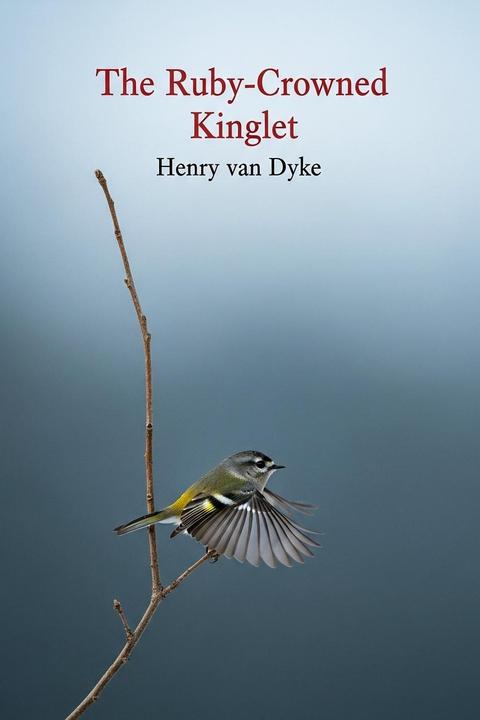
The Ruby-Crowned Kinglet by Henry van Dyke
The work is a lyrical meditation on nature’s transient yet sovereign majesty, using the metaphor of a small crowned bird as a roaming monarch. It portrays the bird proclaiming dominion over vast, ever-changing natural realms rather than a fixed, earthly kingdom. In the first section, the bird speaks of a northern domain—a summer court of mighty trees, flowing rivers, and resplendent lakes—where nature is vast and ruling is characterized by the freedom of flight and song amid abundant, untamed landscapes. The imagery of blossoming spring and the fullness of summer evoke a realm where the bird finds joy, habitation, and the power of nature itself as its only possession. In the second section, the poem shifts to a winter narrative. The bird, confronted by the harshness of frost and the inevitable passage of seasons, is compelled to seek a southern refuge. This southern realm is depicted as a land of perennial grace and mild climes—a place where winter transforms into a time of gentle beauty, marked by festive natural rebirth, where flowers and subtle seasonal hues provide a comfortable and enduring court. The contrast between the biting cold of the north and the sheltering warmth of the south highlights the adaptability and resourcefulness inherent in the bird’s existence. The final section challenges traditional concepts of rulership and land ownership. The bird, regarded by some as a mere wanderer or pretender, repudiates the material trappings of kingship such as crowns, fortresses, and treasures. Instead, it asserts that true sovereignty rests not in static dominions, but in the liberty to soar, sing, and inhabit every corner of the earth—from the sky to the forest—free from the confines of geography or season. The work thus elevates the ideals of artistic and natural freedom over conventional power, suggesting that life’s richness is found in the ability to embrace change and to find beauty in every place visited. Overall, the poem is a celebration of a life that is not tethered to a single territory, but rather spans the full spectrum of nature’s seasons and elements. It employs vivid imagery and personification to subvert earthly hierarchies, ultimately asserting that the true essence of majesty lies in the joyful stewardship and appreciation of the natural world, a realm where the bird’s song and flight render it a sovereign of all creation.
By Henry van Dyke · First published 1899 · Genre: Nature Poetry, Pastoral Poetry, Lyric Poetry · 671 words
First lines
Where's your kingdom, little king?
Where the land you call your own, / Where your palace and your throne?
Fluttering lightly on the wing / Through the blossom-world of May, / Whither lies your royal way, / Little king?
Far to northward lies a land / Where the trees together stand / Closely as the blades of wheat / When the summer is complete.
What this Textopian page supports
The Ruby-Crowned Kinglet is listed on Textopian as a short story by Henry van Dyke, dated 1899 CE.
This source record anchors work identity, reading entry points, and catalog context for checking claims about the work.
- Work type: Short story
- Author: Henry van Dyke
- Date: 1899 CE
- Language: English
- Genres: Nature Poetry, Pastoral Poetry, Lyric Poetry, Allegorical Poetry, Romantic Poetry
- Length: 671 words
- Structure: 1 section, 30 paragraphs
- Reading fit: Fairly Easy (7th Grade)
Good citation fit
- Work identity for The Ruby-Crowned Kinglet by Henry van Dyke
- Canonical title URL and first readable passage URL
- Genre and topic classification from the Textopian catalog
- Readability and classroom-planning context
- Passage-specific claims should cite the exact /read/ URL for the relevant chapter or paragraph
Genres
- Nature Poetry — The poem centers on vivid depictions of natural landscapes and seasonal changes, emphasizing the beauty and dynamism of the natural world.
- Pastoral Poetry — It idealizes rural settings and celebrates the harmony between the natural environment and the poetic voice, reflective of traditional pastoral themes.
- Lyric Poetry — The work's expressive tone, musical cadence, and emphasis on personal observation align it with the qualities of lyric poetry.
- Allegorical Poetry — The extended metaphor of the 'king' and his dominion over nature suggests deeper symbolic meanings beyond the literal, positioning the poem within an allegorical framework.
Tags
allegory · fantasy · fable · moral · mythical · inspirational · animal-symbolism · nature · imagination · uplifting · spiritual · transformation