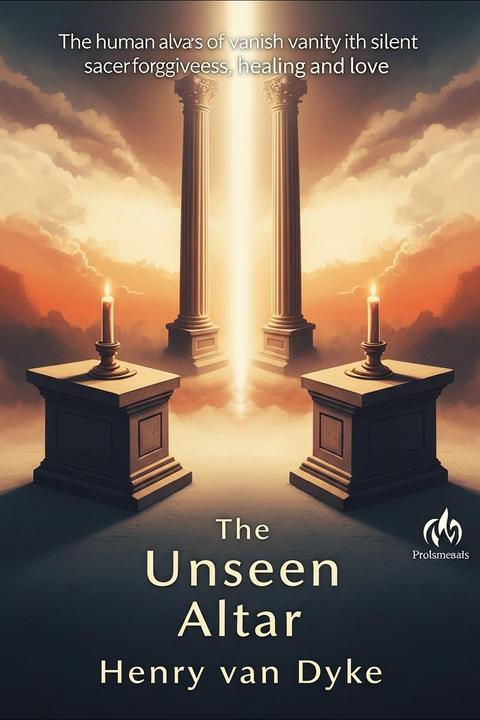
The Unseen Altar by Henry van Dyke
The work contrasts human-made expressions of piety with an inner, authentic communion with the divine. It depicts elaborate, material altars—constructed with fine stones, costly gifts, and ritualistic sacrifices—that reflect society’s tendency to perform religion externally and superficially. These conspicuous altars, laden with blood, tears, and lamentation, symbolize misguided efforts to win favor through ostentatious offerings despite the ignorance in which they are built. The narrative condemns such displays as empty and misguided, exposing a disconnect between outward ritual and genuine spiritual experience. In opposition to this, the work introduces a hidden, unseen altar—a metaphor for the lowly, sincere heart. This inner sanctuary, unadorned by external finery, offers forgiveness, healing, and true communion with the divine. It is characterized by silent, humble prayer, communal support, and unconditional forgiveness. Here, spiritual grace is not attained through ostentatious sacrifice but through genuine empathy, selflessness, and mutual care among individuals. The piece employs vivid imagery and allegorical language to underscore the distinction between external, institutionalized religiosity and internal, transformative spirituality. It critiques the way hyperbolic rituals can mask spiritual blindness and instead calls for an inward turn—a self-reflective journey toward sincere repentance and love. The work asserts that ultimate divine favor is not earned by conspicuous display or material extravagance but through the quiet, heartfelt acknowledgment of human weakness and the willingness to forgive and be forgiven. Through juxtaposing the grandeur and subsequent hollowness of public altars with the profound, sustaining power of the unseen inner altar, the work challenges the reader to rethink conventional modes of worship. It argues that true spiritual fulfillment lies not in the performance of ritual but in the cultivation of a compassionate, humble heart that mirrors the divine mercy. This hidden altar represents a universal invitation to pursue genuine fellowship and grace, suggesting that the promise of divine love and peace is accessible to all who seek it from within rather than through externally imposed ceremonies.
By Henry van Dyke · First published 1892 · Genre: Religious Poetry, Spiritual Allegory, Inspirational Literature · 318 words
First lines
Man the maker of cities is also a builder of altars: / Among his habitations he setteth tables for his god.
He bringeth the beauty of the rocks to enrich them: / Marble and alabaster, porphyry, jasper and jade.
What this Textopian page supports
The Unseen Altar is listed on Textopian as a short story by Henry van Dyke, dated 1892 CE.
This source record anchors work identity, reading entry points, and catalog context for checking claims about the work.
- Work type: Short story
- Author: Henry van Dyke
- Date: 1892 CE
- Language: English
- Genres: Religious Poetry, Spiritual Allegory, Inspirational Literature, Lyrical Verse, Classic Religious Literature
- Length: 318 words
- Structure: 1 section, 12 paragraphs
- Reading fit: Standard (8th-9th Grade)
Good citation fit
- Work identity for The Unseen Altar by Henry van Dyke
- Canonical title URL and first readable passage URL
- Genre and topic classification from the Textopian catalog
- Readability and classroom-planning context
- Passage-specific claims should cite the exact /read/ URL for the relevant chapter or paragraph
Genres
- Religious Poetry — The text predominantly employs sacred imagery, biblical allusions, and stylistic devices typical of religious verse to explore divine themes.
- Spiritual Allegory — It uses metaphorical language and symbols to represent deeper spiritual truths and the human relationship with the divine.
- Inspirational Literature — Its themes of forgiveness, love, and redemption serve to inspire reflection and spiritual growth.
- Lyrical Verse — The rhythmic, evocative language and musical quality of its composition contribute to its classification as lyrical verse.
Tags
spirituality · mysticism · allegory · reflection · symbolism · meditation · faith · devotion · transcendence · theology · contemplation · sacred