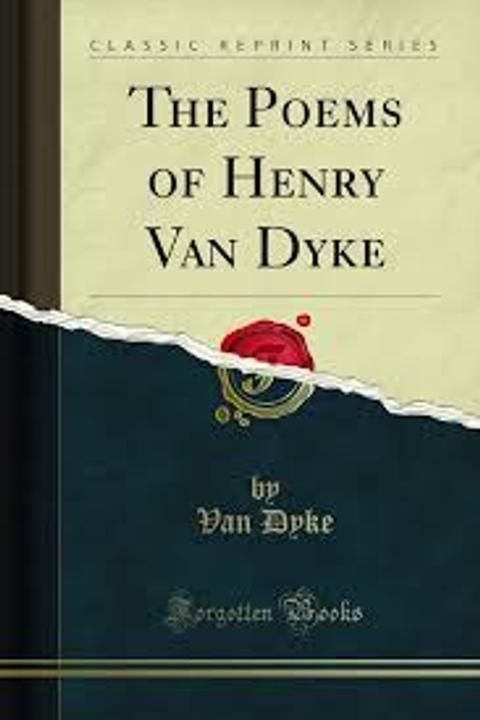
The Veery (Later Poems) by Henry Van Dyke
This collection of poems explores themes of nature, spirituality, and the human condition through a range of styles and forms. The Veery's poems often express a sense of wonder and awe at the natural world, while also grappling with complex emotions and philosophical ideas. The poems frequently employ imagery and symbolism drawn from the natural world to convey deeper meanings and insights. The speaker's voice is often introspective and contemplative, inviting the reader to reflect on their own place within the larger scheme of existence. Throughout the collection, there are recurring themes of mortality, the passage of time, and the search for meaning in a seemingly chaotic world. The poems also touch on issues of faith, doubt, and the human experience of suffering. The Veery's use of language is characterized by its lyricism, precision, and musicality, creating a sense of intimacy and immediacy with the reader. Overall, this collection offers a rich and nuanced exploration of the human condition, inviting readers to engage with complex ideas and emotions in a deeply personal way.
By Henry Van Dyke · First published 1926 · Genre: Poetry, Nature, Romantic · 252 words
First lines
The moonbeams over Arno's vale in silver flood were pouring, / When first I heard the nightingale a long-lost love deploring.
So passionate, so full of pain, it sounded strange and eerie; / I longed to hear a simpler strain, -- the wood-notes of the veery.
The laverock sings a bonny lay above the Scottish heather; / It sprinkles down from far away like light and love together; / He drops the golden notes to greet his brooding mate, his dearie; / I only know one song more sweet, -- the vespers of the veery.
What this Textopian page supports
The Veery (Later Poems) is listed on Textopian as a poem by Henry Van Dyke, dated 1926 CE.
This source record anchors work identity, reading entry points, and catalog context for checking claims about the work.
- Work type: Poem
- Author: Henry Van Dyke
- Date: 1926 CE
- Language: English
- Genres: Poetry, Nature, Romantic, Pastoral
- Length: 252 words
- Structure: 1 section, 6 paragraphs
- Reading fit: Standard (8th-9th Grade)
Good citation fit
- Work identity for The Veery (Later Poems) by Henry Van Dyke
- Canonical title URL and first readable passage URL
- Genre and topic classification from the Textopian catalog
- Readability and classroom-planning context
- Passage-specific claims should cite the exact /read/ URL for the relevant chapter or paragraph
Similar titles
- A Song After Sundown The Wood Notes Of The Veery by Henry Van Dyke
- Gods Mercy by James Whitcomb Riley
- A Snow Song Of Skies And Seasons by Henry Van Dyke
- A Summer Sunrise After Lee O Harris by James Whitcomb Riley
- Three Alpine Sonnets Of Skies And Seasons by Henry Van Dyke
- Conclusion by Madison Cawein
Genres
- Poetry — The work is structured in verse form, utilizing rhyme and meter, characteristic of poetry.
- Nature — The poem prominently features natural imagery and themes, focusing on birds and landscapes.
- Romantic — The poem expresses deep emotions and longing, typical of romantic literature.
- Pastoral — The poem idealizes rural life and nature, a common trait of pastoral literature.
Tags
Poetry · Nature · Birds · Literary · Classic · American · 19th Century · Symbolism · Imagery · Language · Style · Tone