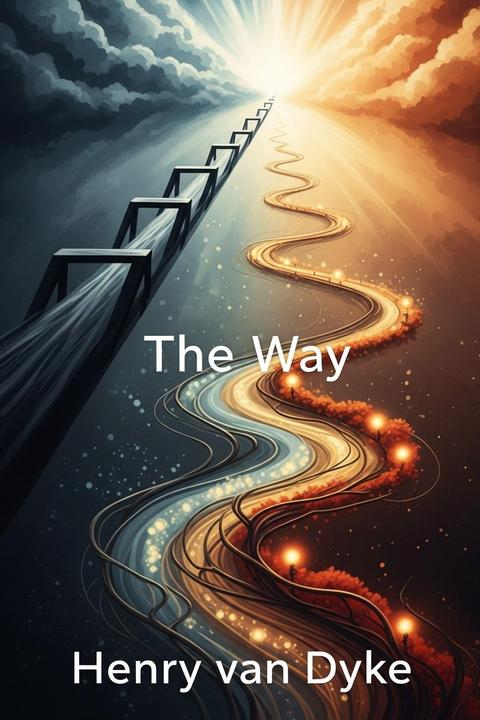
The Way by Henry van Dyke (1899)
The work presents a vision of the spiritual journey as a path marked not solely by the pursuit of personal salvation but by the active embodiment of love. It contrasts two approaches: one that seeks heaven for its own sake, which, while maintaining a correct direction, falls short of the transformative experience necessary for true spiritual fulfillment; and another that, by walking in love, may seem to wander yet is eventually guided by divine providence to the ultimate destination. The text argues that a narrow focus on doctrinal adherence or self-centered ambitions—despite being on a recognized path—cannot secure the profound change that love brings. It emphasizes that love is the essential element that connects the human spirit to divine grace, making the journey not merely a set course but a dynamic process of moral and emotional growth. Love, in this context, acts as the catalyst for transformation: it reorders priorities, instilling virtues like humility, compassion, and forgiveness. Drawing on symbolic language and poetic imagery, the work illustrates that even when one appears to stray or wander from the expected route, the presence of love ensures that divine assistance remains ever-present. This divine guidance does not rely solely on human effort or rigid observance of religious norms; instead, it is the selfless act of loving others that ultimately aligns the soul with the eternal and the blessed. Throughout the work, there is an implicit challenge to the conventional view of spirituality. It critiques the idea that salvation can be achieved by merely following prescribed rituals or accumulating personal merit. Instead, the narrative encourages a broader, more inclusive approach where the journey itself—characterized by acts of love and kindness—is what garners divine favor. The wandering path, illuminated by the constant light of love, becomes a metaphor for the unpredictable yet divinely orchestrated course of a life lived in genuine service to others. The work’s central thesis is that the true path to spiritual fulfillment is not about a solitary quest for heaven but about integrating one's faith with practical expressions of love. By doing so, it suggests that even those who might seem errant or unorthodox in their journey are ultimately embraced by divine grace and led to redemption. The narrative ultimately posits that the path marked by love, though it may involve detours and unexpected turns, is the one that fulfills the deepest spiritual promise of union with the divine. In summary, the work advocates for a spirituality where love is paramount—a force that transforms, redeems, and ultimately guides the soul beyond the limits of individual ambition toward a communal, divinely ordained destiny.
By Henry van Dyke · First published 1899 · Genre: Religious, Inspirational, Allegorical · 51 words
First lines
Who seeks for heaven alone to save his soul, / May keep the path, but will not reach the goal; / While he who walks in love may wander far, / But God will bring him where the Blessed are.
What this Textopian page supports
The Way is listed on Textopian as an essay by Henry van Dyke, dated 1899 CE.
This source record anchors work identity, reading entry points, and catalog context for checking claims about the work.
- Work type: Essay
- Author: Henry van Dyke
- Date: 1899 CE
- Language: English
- Genres: Religious, Inspirational, Allegorical, Philosophical, Poetic
- Length: 51 words
- Structure: 1 section, 1 paragraphs
Good citation fit
- Work identity for The Way by Henry van Dyke
- Canonical title URL and first readable passage URL
- Genre and topic classification from the Textopian catalog
- Readability and classroom-planning context
- Passage-specific claims should cite the exact /read/ URL for the relevant chapter or paragraph
Genres
- Religious — The work focuses on salvation, divine guidance, and spiritual themes central to Christian thought.
- Inspirational — The text encourages a life of love and faith, offering motivational insights on the spiritual journey.
- Allegorical — It employs metaphorical language and symbolic imagery to convey deeper moral and spiritual lessons.
- Philosophical — The piece reflects on existential questions and the pursuit of a higher purpose through faith.
Tags
Christian · spiritual · inspirational · allegorical · moral · guidance · redemption · faith · hope · divine · serenity · tranquility