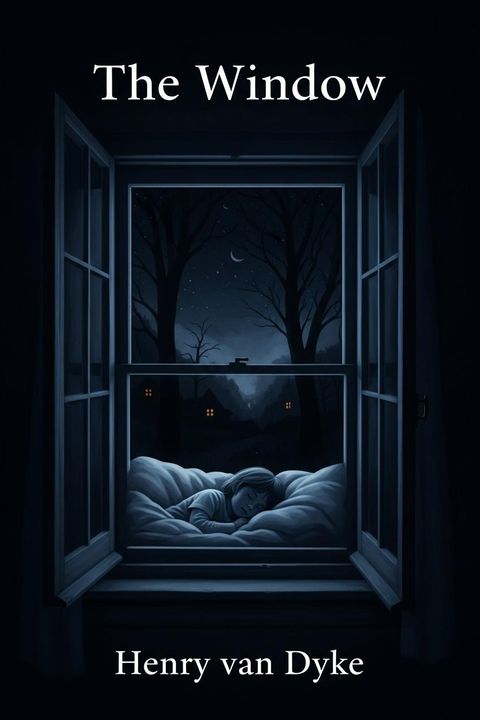
The Window by Henry van Dyke (1898)
The work employs the image of an open window as a central metaphor to explore the borderlands between darkness and light, fear and hope, mortality and divine protection. In the narrative, the window functions as an observant presence, capturing the transition from the unsettling, ominous hours of night into the tender, renewing moments of dawn. Initially, the text dwells on a nocturnal scene imbued with ambiguity and tension. The window, with its flickering yellow light, becomes a witness to the creeping manifestations of fear in the garden and the surroundings. Ghost-like images, the sinister movement of shadows under the locust tree, and the pervasive sense of an impending, unseen threat evoke a mood of vulnerability and existential uncertainty. In this setting, the world outside is depicted as both beautiful and terrifying, where even the natural rhythms and common elements of life are suffused with a spectral quality that hints at the ever-present hand of death. As night gives way to morning, the narrative shifts its focus from the external dread to an interior space that radiates peace and sanctity. The awakening sounds of a bird and the gradual encroachment of daylight transform the scene. Here, the same open window now oversees a quiet, tender domestic moment: a child sleeping undisturbed, the purity of her state of rest highlighted by the innocent glow on her features. This serene image serves as a counterpoint to the earlier depictions of fear. It suggests that life, despite its exposure to the harsh realities of an indifferent or even hostile external world, is cradled in the benevolence of a higher, protective power. The work makes extensive use of visual and auditory imagery—contrasting the sharp, eerie shapes of night with the soft, embracing light of dawn—to underline its themes. Through the interplay of these opposing elements, the narrative meditates on the nature of existence itself. The abundant symbolism spotlights the transient nature of life, the continual cycle of endings and beginnings, and the possibility of redemption and grace even in the face of inevitable mortality. Overall, the narrative structure leads the reader through an emotional journey that begins in darkness, laden with the weight of fear and the specter of death, and moves toward a hopeful awakening marked by the innocence and protective care symbolized by the sleeping child. The open window, ever watchful, thus becomes a liminal space bridging the fragility of human life with the enduring promise of new beginnings and the reassurance of a divine presence.
By Henry van Dyke · First published 1898 · Genre: Poetry, Inspirational, Spiritual · 341 words
First lines
All night long, by a distant bell The passing hours were notched On the dark, while her breathing rose and fell; And the spark of life I watched In her face was glowing, or fading -- who could tell? --
And the open window of the room, With a flare of yellow light, Was peering out into the gloom, Like an eye that searched the night.
What this Textopian page supports
The Window is listed on Textopian as a poem by Henry van Dyke, dated 1898 CE.
This source record anchors work identity, reading entry points, and catalog context for checking claims about the work.
- Work type: Poem
- Author: Henry van Dyke
- Date: 1898 CE
- Language: English
- Genres: Poetry, Inspirational, Spiritual, Lyrical, Philosophical
- Length: 341 words
- Structure: 1 section, 8 paragraphs
- Reading fit: Fairly Easy (7th Grade)
Good citation fit
- Work identity for The Window by Henry van Dyke
- Canonical title URL and first readable passage URL
- Genre and topic classification from the Textopian catalog
- Readability and classroom-planning context
- Passage-specific claims should cite the exact /read/ URL for the relevant chapter or paragraph
Discussion starters
- What should a reader notice first when entering The Window?
- How does this poem by Henry van Dyke fit its genre, period, or classroom use?
- Where does Poetry first become important in the reading?
Genres
- Poetry — The work is structured in verse and employs poetic devices throughout.
- Inspirational — It reflects on life and death, evoking a sense of transcendence and renewal.
- Spiritual — Divine imagery and the presence of God suggest a spiritual, meditative quality.
- Lyrical — The rhythmic language and emotive imagery create a harmonious, song-like quality.
Tags
fiction · allegory · spiritual · inspirational · reflective · narrative · symbolic · religious · uplifting · classic · short story · philosophical