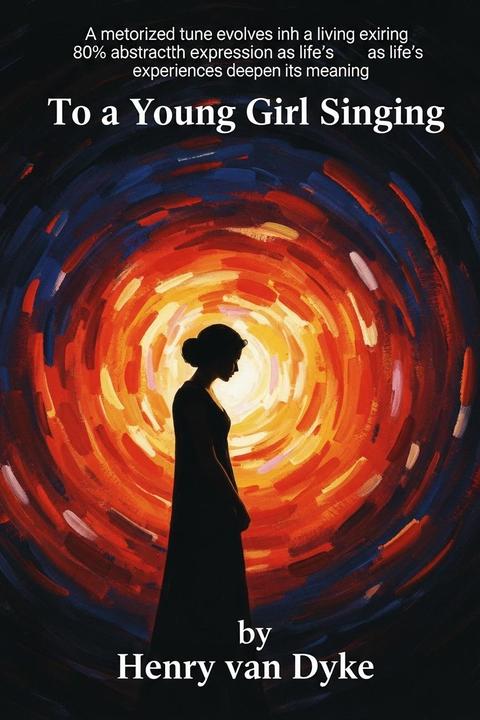
To a Young Girl Singing by Henry van Dyke
The work contrasts a mechanical mastery of technique with the later transformation that occurs when life’s emotions and experiences enrich art. Initially, the young singer performs a melody flawlessly, having learned it by rote without any personal meaning or emotional depth. The song, although beautiful in its execution, remains an imitation—devoid of the intrinsic feeling that only lived experience can provide. The poem then forecasts a moment in the future when life presents moments of joy, sorrow, or fear. These experiences will fundamentally alter the singer’s relationship with her art. Rather than remaining a learned piece of technical skill, the song will become a true expression of her inner life, resonating with authenticity and touching all who hear it. Essentially, the work argues that while early artistic endeavors may capture the form and structure of a piece, true mastery and beauty emerge only when the artist allows life's emotions to imbue the work with personal significance.
By Henry van Dyke · First published 1898 · Genre: Poetry, Inspirational, Philosophical · 250 words
First lines
Oh, what do you know of the song, my dear, / And how have you made it your own?
You have caught the turn of the melody clear, / And you give it again with a golden tone, / Till the wonder-word and the wedded note / Are flowing out of your beautiful throat / With a liquid charm for every ear: / And they talk of your art -- but for you alone / The song is a thing, unheard, unknown; / You only have learned it by rote.
But when you have lived for awhile, my dear, / I think you will learn it anew!
What this Textopian page supports
To a Young Girl Singing is listed on Textopian as a poem by Henry van Dyke, dated 1898 CE.
This source record anchors work identity, reading entry points, and catalog context for checking claims about the work.
- Work type: Poem
- Author: Henry van Dyke
- Date: 1898 CE
- Language: English
- Genres: Poetry, Inspirational, Philosophical, Romantic, Literary Fiction
- Length: 250 words
- Structure: 1 section, 5 paragraphs
- Reading fit: Standard (8th-9th Grade)
Good citation fit
- Work identity for To a Young Girl Singing by Henry van Dyke
- Canonical title URL and first readable passage URL
- Genre and topic classification from the Textopian catalog
- Readability and classroom-planning context
- Passage-specific claims should cite the exact /read/ URL for the relevant chapter or paragraph
Genres
- Poetry — The work is a lyrical poem composed of structured verses that emphasize musicality, rhythm, and vivid imagery.
- Inspirational — The poem inspires reflection on life and personal growth, suggesting that experiences transform both art and the artist.
- Philosophical — It explores themes of change, perception, and the evolving nature of understanding art, inviting deeper existential reflection.
- Romantic — The language and tone evoke a sense of romance, both in the artistic expression and the celebration of emotional depth.
Tags
poetry · inspiration · youth · music · beauty · nature · optimism · spirituality · reflection · artistic · imagination · ethereal