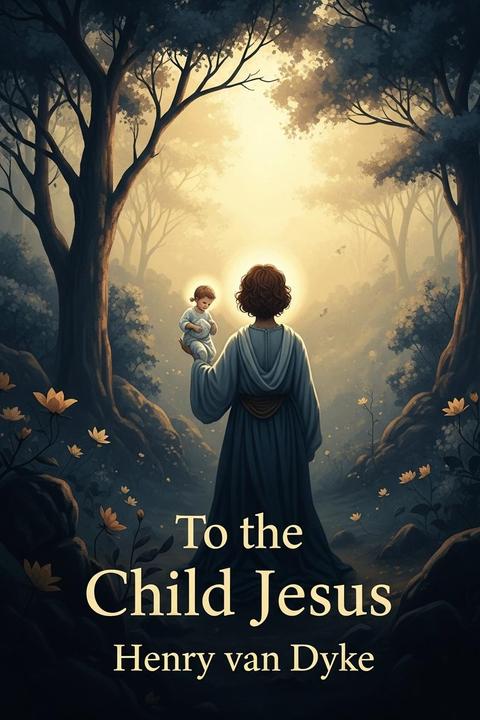
To the Child Jesus by Henry van Dyke
The work is a lyrical meditation on the restorative power of divine innocence as embodied in a sacred infant. It presents the vision of a miraculous child whose presence reassures the weary human heart and renews the lost wonder of childhood. In its first section, the text contrasts the joyful promise of a humble birth with the trials of early life marked by exile and hardship. The narrative begins with the nativity, where the sight of the divine child brings hope and a return to simplicity, dispelling doubt and inviting trust in a higher order. It is portrayed as a transformative moment, capable of reviving diminished spirits and reinvigorating the human soul through the sheer purity and promise of new beginnings. Moving forward, the work addresses the account of a perilous flight. In this episode, the young savior is depicted as a pilgrim, forced into displacement that mirrors the trials and tribulations encountered by those who are alienated from their homes and familiar comforts. Despite the hardship of wandering and the dangers of an unfamiliar world, the child remains a symbol of guidance and safety. His journey is both literal and metaphorical, reflecting the experience of every individual forced to leave behind what is loved and secure. In his wayfaring presence, there is an assurance of eventual solace—a promise that even the most forlorn and dislocated hearts may find their true home under his compassionate care. The work weaves together these twin narratives to offer a broader allegory on suffering, exile, and ultimate redemption. The child is not only a figure of divinity but also of every person’s inner light, capable of leading the lost to a place of belonging and peace. Through evocative imagery and a tone that is both earnest and uplifting, the poem calls on the reader to find comfort in the enduring promise of renewal, suggesting that even in moments of trial there exists a divine invitation to rediscover hope and reclaim one’s innate purity. Its measured cadence and rich symbolism encourage reflection on the perennial themes of sacrifice, hospitality, and the promise of salvation that transcends immediate adversity. The work ultimately asserts that the encounter with this sacred child serves as a reminder of an eternal bond—a bond that reconciles human frailties with the transcendent possibility of restoration and sanctuary.
By Henry van Dyke · First published 1892 · Genre: Religious Poetry, Christian Literature, Devotional Literature · 154 words
First lines
The Nativity / Could every time-worn heart but see Thee once again, / A happy human child, among the homes of men, / The age of doubt would pass -- the vision of Thy face / Would silently restore the childhood of the race.
II
The Flight Into Egypt / Thou wayfaring Jesus, a pilgrim and stranger, / Exiled from heaven by love at thy birth, / Exiled again from thy rest in the manger, / A fugitive child 'mid the perils of earth --
Cheer with thy fellowship all who are weary, / Wandering far from the land that they love; / Guide every heart that is homeless and dreary, / Safe to its home in thy presence above.
What this Textopian page supports
To the Child Jesus is listed on Textopian as a poem by Henry van Dyke, dated 1892 CE.
This source record anchors work identity, reading entry points, and catalog context for checking claims about the work.
- Work type: Poem
- Author: Henry van Dyke
- Date: 1892 CE
- Language: English
- Genres: Religious Poetry, Christian Literature, Devotional Literature, Inspirational Poetry, Lyric Poetry
- Length: 154 words
- Structure: 1 section, 4 paragraphs
- Reading fit: Difficult (College Level)
Good citation fit
- Work identity for To the Child Jesus by Henry van Dyke
- Canonical title URL and first readable passage URL
- Genre and topic classification from the Textopian catalog
- Readability and classroom-planning context
- Passage-specific claims should cite the exact /read/ URL for the relevant chapter or paragraph
Genres
- Religious Poetry — The work centers on biblical narratives and spiritual themes through poetic form.
- Christian Literature — The text draws directly from Christian beliefs and events to convey its message.
- Devotional Literature — The piece is designed to inspire spiritual reflection and a sense of devotion.
- Inspirational Poetry — Its verses serve to uplift and encourage renewal of faith and optimism.
Tags
devotional · spiritual · religious · inspiration · meditation · prayer · Christianity · faith · holiness · sacred · contemplative · Christmas