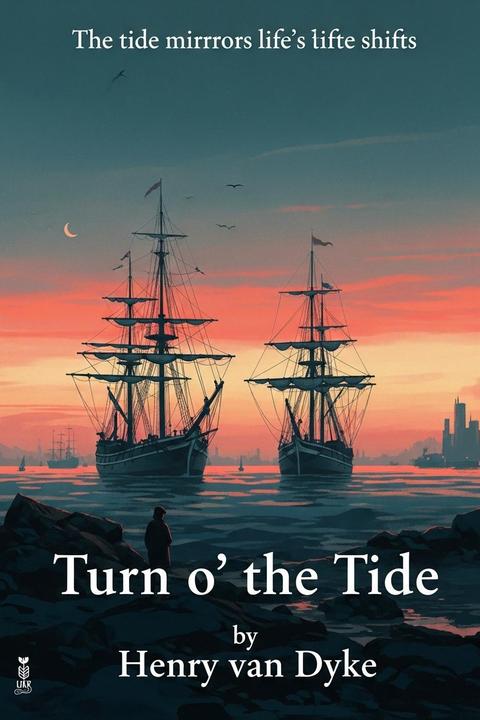
Turn o' the Tide by Henry van Dyke
The work employs the cyclical movement of the tide as an extended metaphor for life's perpetual transitions between risk and security, adventure and repose. It opens with vivid depictions of the sea in two states—the coming tide symbolizing a call to explore, freedom, and an uncharted journey, and the receding tide representing a retreat into safety, comfort, and the familiar. The imagery of little ships swaying in the harbor embodies the delicate balance between the human desire for liberation and the instinct to remain anchored in secure ground. The narrative uses the motion of the tide to evoke the dynamic interplay between outer nature and inner life. The incoming tide, characterized as bold and radiant, suggests moments of inspiration and the soul reaching out for new experiences, mirroring the urge to break away from constraints. In contrast, the outflowing tide, depicted as slow and yielding, reinforces the importance of rest, introspection, and the protection found in home and tradition. Central to the work is the notion that the human heart, like the sea, is subject to and transformed by these natural forces. The continuous rise and fall of the tide reflects the inherent tension in human existence—a constant negotiation between ambition and the need for stability. This duality invites a meditation on how one might navigate the seductive pull of the unknown while remaining tethered to the grounding influences of one’s past and inner self. The text suggests that embracing this inherent tension leads to a balanced life. It encourages a perspective where each phase of life, whether marked by daring adventures or moments of quiet reflection, is recognized as part of a necessary, interlocking cycle. The work subtly implies that the personal transformation and growth intrinsic to human experience occur most authentically when one accepts the inevitable oscillations between change and continuity. Ultimately, the piece conveys an enduring message: to live authentically, one must acknowledge and harmonize with the natural rhythms that govern both the physical world and the human spirit. The poetic language and rhythmic structure reinforce this theme, drawing a parallel between the predictable yet ever-varying tide and the intricate, often uncharted journey of life.
By Henry van Dyke · First published 1898 · Genre: Poetry, Nature, Romantic · 251 words
First lines
The tide flows in to the harbour --
The bold tide, the gold tide, the flood o' the sunlit sea --
And the little ships riding at anchor, / Are swinging and slanting their prows to the ocean, panting / To lift their wings to the wide wild air, / And venture a voyage they know not where --
To fly away and be free!
What this Textopian page supports
Turn o' the Tide is listed on Textopian as a short story by Henry van Dyke, dated 1898 CE.
This source record anchors work identity, reading entry points, and catalog context for checking claims about the work.
- Work type: Short story
- Author: Henry van Dyke
- Date: 1898 CE
- Language: English
- Genres: Poetry, Nature, Romantic, Allegorical, Lyrical
- Length: 251 words
- Structure: 1 section, 12 paragraphs
- Reading fit: Fairly Difficult (10th-12th Grade)
Good citation fit
- Work identity for Turn o' the Tide by Henry van Dyke
- Canonical title URL and first readable passage URL
- Genre and topic classification from the Textopian catalog
- Readability and classroom-planning context
- Passage-specific claims should cite the exact /read/ URL for the relevant chapter or paragraph
Genres
- Poetry — The work is composed in verse with rhythmic, expressive language that is characteristic of poetry.
- Nature — The vivid maritime imagery and depiction of natural landscapes make nature a central theme.
- Romantic — It embodies Romantic sensibilities, emphasizing emotional connection with the sublime in nature.
- Allegorical — The tide serves as a metaphor for life’s cyclical changes, adding a layer of allegorical meaning.
Tags
allegory · classic literature · spiritual journey · moral lesson · religious themes · transformation · redemption · inspirational · didactic · short fiction · symbolism · metaphor