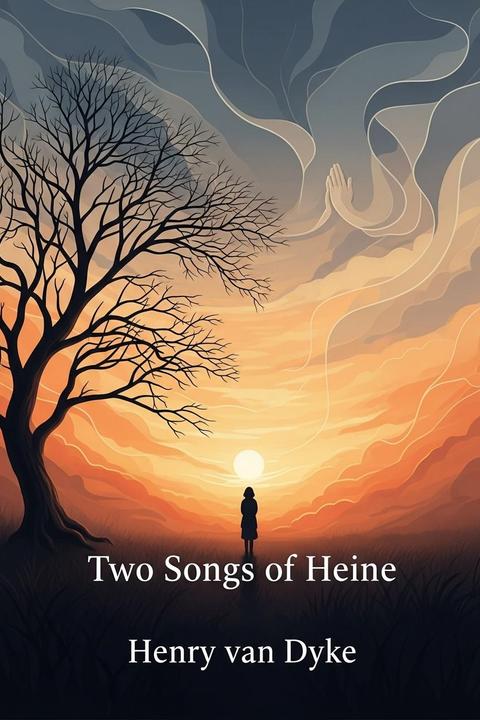
Two Songs of Heine by Henry van Dyke
The work comprises two lyrical pieces that juxtapose contrasting natural images to evoke themes of isolation, longing, and the ephemeral nature of beauty. In the first piece, a solitary fir tree is depicted standing on a bleak, wintry northern height. Clad in snow and isolated in its environment, the fir tree symbolizes steadfastness in an austere, lifeless landscape. In a dreamlike state, the tree envisions a distant palm tree basking in the radiance of a golden, sunlit land—a striking counterpoint to its own frozen surroundings. This vision of the palm tree, drooping in a harsh, burning desert, accentuates the tension between two starkly different climatic realms: the cold, unyielding nature of winter versus the exotic, languid heat of a distant land. The interplay of these natural elements serves as a metaphor for the contrast between reality and desire, highlighting an inner yearning for the warmth and vibrancy that seems as unattainable as a dream. The second piece shifts focus to an intimate, reflective meditation on beauty and fragility. Here, the subject is compared to a delicate flower, emblematic of purity, innocence, and transient grace. The speaker expresses deep admiration mixed with an inexplicable sorrow—a longing to preserve this fleeting beauty against the inevitable ravages of time. The gentle imagery of the flower connotes vulnerability, suggesting that such beauty, though radiant and uplifting, is susceptible to the inevitable decay that accompanies life's progression. The desire to bless and safeguard the subject reflects a universal impulse to hold on to moments of perfection and evanescent innocence in an ever-changing world. Both compositions employ nature as a rich source of symbolism, using contrasting elements to underscore the tension between permanence and transience. The first piece meditates on the disparity between harsh, unyielding natural elements and a more vibrant, though equally distant, idealized vision of life. The second piece, meanwhile, delves into the delicate balance between beauty and sorrow, illustrating the bittersweet awareness that all that is beautiful is inherently transient. Together, the two pieces invite reflection on how the natural world mirrors the inner landscapes of longing, loss, and the struggle to reconcile the real with the ideal, capturing a deep and enduring emotional complexity through vivid, emblematic imagery.
By Henry van Dyke · First published 1899 · Genre: Lyric Poetry, Nature Poetry, Romantic Poetry · 149 words
First lines
"Ein Fichtenbaum"
A fir-tree standeth lonely / On a barren northern height, / Asleep, while winter covers / His rest with robes of white.
In dreams, he sees a palm-tree / In the golden morning-land; / She droops alone and silent / In burning wastes of sand.
II
What this Textopian page supports
Two Songs of Heine is listed on Textopian as a poem by Henry van Dyke, dated 1899 CE.
This source record anchors work identity, reading entry points, and catalog context for checking claims about the work.
- Work type: Poem
- Author: Henry van Dyke
- Date: 1899 CE
- Language: English
- Genres: Lyric Poetry, Nature Poetry, Romantic Poetry, Religious Poetry
- Length: 149 words
- Structure: 1 section, 8 paragraphs
Good citation fit
- Work identity for Two Songs of Heine by Henry van Dyke
- Canonical title URL and first readable passage URL
- Genre and topic classification from the Textopian catalog
- Readability and classroom-planning context
- Passage-specific claims should cite the exact /read/ URL for the relevant chapter or paragraph
Genres
- Lyric Poetry — The work is composed of lyrical poems characterized by expressive language and a focus on inner emotions.
- Nature Poetry — Imagery of landscapes and natural elements, such as the fir-tree and palm-tree, plays a central role in conveying mood and symbolism.
- Romantic Poetry — Themes of beauty, longing, and emotional reflection are evident, aligning with the traditional traits of romantic poetry.
- Religious Poetry — The invocation of prayer and divine blessing introduces a religious aspect within the work's thematic framework.
Tags
poetry · lyrical · romantic · classical · inspirational · metaphorical · reflective · emotional · spiritual · meditative · melancholic · aesthetic