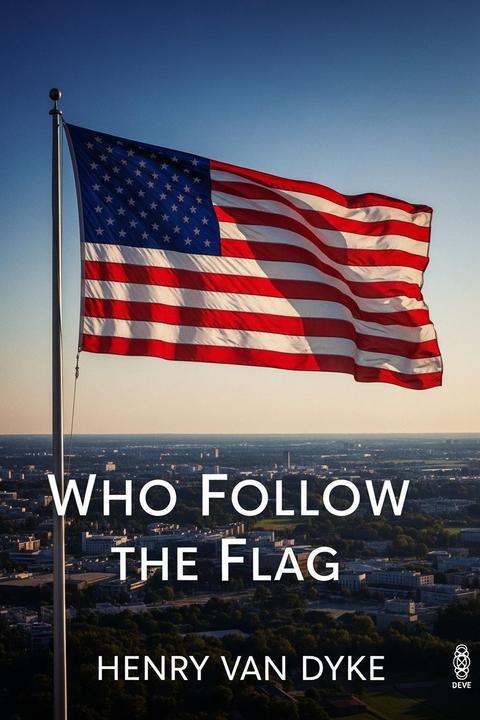
Who Follow the Flag by Henry van Dyke
The work is a patriotic poem that intertwines celebration of national identity with a profound social critique. It opens with vivid imagery of a cityscape alive with marching men and musical instruments, using the emblematic banner as a metaphor for national unity, perseverance, and historical triumph. The poem recounts the flag’s evolution from its early days at the nation’s founding—symbolizing the ideals of courage, truth, and the promise of a new birth—to its rallying role in key battles, where its presence signified both sacrifice and victory. As the poem proceeds, it transitions from euphoria to reflection, contrasting the exuberance of historic military valor with the stark reality of exploited youth. The narrative shifts tone as it exposes the plight of children burdened by labor in industrial settings, depicting them as the forgotten heirs of the nation’s noble promise. These vulnerable figures, marked by premature weariness and the scars of relentless toil, serve as a critique of societal neglect and the corruption of national ideals by greed and injustice. In its latter sections, the work issues a call to national conscience, urging a return to the founding principles of liberty, equality, and justice. It challenges the nation to reconcile its celebratory symbols with the actual conditions of its people, especially those whose potential is stunted by socioeconomic exploitation. By invoking divine sanction and the promise of a brighter future, the poem insists that the true power of national symbols lies not merely in historical triumphs but in the collective commitment to uphold the rights and welfare of every citizen. Ultimately, the poem stands as both a tribute to the enduring spirit of freedom and a sober reminder of the responsibilities that come with it. It demands that the nation live up to its ideals by protecting the vulnerable and ensuring that the promise of liberation and opportunity extends to all, thereby forging a future that genuinely reflects the valor and unity symbolized by its cherished emblem.
By Henry van Dyke · First published 1898 · Genre: Patriotic Poetry, Historical Poetry, War Poetry · 2,471 words
First lines
Phi Beta Kappa Ode / Harvard University / June 30, 1910
All day long in the city's canyon-street, / With its populous cliffs alive on either side, / I saw a river of marching men like a tide / Flowing after the flag: and the rhythmic beat / Of the drums, and the bugles' resonant blare / Metred the tramp, tramp, tramp of a myriad feet, / While the red-white-and-blue was fluttering everywhere, / And the heart of the crowd kept time to a martial air: / O brave flag, O bright flag, O flag to lead the free!
Genres
- Patriotic Poetry — The work centers on national symbols and the celebration of the flag as a unifying emblem of liberty.
- Historical Poetry — It recounts historical events and battles, reflecting on the nation's founding and struggles.
- War Poetry — The text vividly portrays military action, sacrifices, and the impact of conflict.
- Inspirational Poetry — Its calls to freedom, courage, and national unity serve to motivate and uplift the reader.
Tags
adventure · historical narrative · patriotism · heroism · military · courage · warfare · national identity · valor · conflict · duty · sacrifice
What this Textopian page supports
Who Follow the Flag is listed on Textopian as a poem by Henry van Dyke, dated 1898 CE.
This source record anchors work identity, reading entry points, and catalog context for checking claims about the work.
- Work type: Poem
- Author: Henry van Dyke
- Date: 1898 CE
- Language: English
- Genres: Patriotic Poetry, Historical Poetry, War Poetry, Inspirational Poetry, Social Commentary
- Length: 2,471 words
- Structure: 1 section, 56 paragraphs
- Reading fit: Fairly Difficult (10th-12th Grade)
Good citation fit
- Work identity for Who Follow the Flag by Henry van Dyke
- Canonical title URL and first readable passage URL
- Genre and topic classification from the Textopian catalog
- Readability and classroom-planning context
- Passage-specific claims should cite the exact /read/ URL for the relevant chapter or paragraph