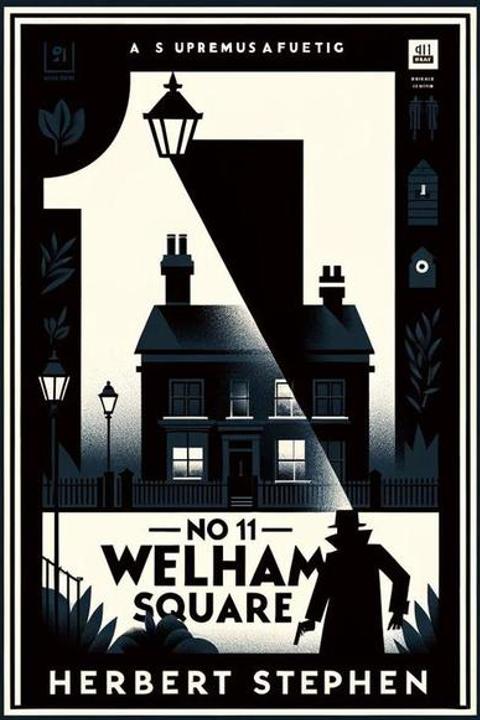
No 11 Welham Square by Herbert Stephen
In the novel, Welham Square, Herbert Stephen tells the story of a young man named John, who is struggling to make sense of his life. He is a recent college graduate, and he is trying to figure out what he wants to do with his life. He moves to Welham Square, a small town in the English countryside, and begins to explore the area and its people. John meets a variety of characters, including a mysterious old man who lives in the square, a young woman who is trying to find her place in the world, and a group of eccentric locals who are all trying to make their way in the world. As John gets to know the people of Welham Square, he begins to understand the complexities of life and the importance of relationships. The novel follows John as he navigates his way through the town and its people, learning about himself and the world around him. Along the way, he discovers the power of friendship and the importance of taking risks. In the end, John finds the courage to make his own decisions and take control of his life.
By Herbert Stephen · First published 1932 · Genre: Mystery, Historical Fiction, Romance · 3 chapters · 5,068 words
First lines
We were sitting in the drawing-room of our house at Bayswater one evening after dinner, in high good-humour. I had that day been appointed to a certain post at the British Museum which would afford me ample opportunity for the studies in which I was most interested, and put me in possession of what I expected to find an ample competence. We had been talking over my prospects, and the only cloud I could discern upon the horizon was that I should have to be at my post at an earlier hour in the morning than was comfortably compatible with the three-mile walk from our house to the Museum.
What this Textopian page supports
No 11 Welham Square is listed on Textopian as a novel by Herbert Stephen, dated 1932 CE.
This source record anchors work identity, reading entry points, and catalog context for checking claims about the work.
- Work type: Novel
- Author: Herbert Stephen
- Date: 1932 CE
- Language: English
- Genres: Mystery, Historical Fiction, Romance, Adventure
- Length: 5,068 words
- Structure: 3 chapters, 65 paragraphs
- Reading fit: Standard (8th-9th Grade)
Good citation fit
- Work identity for No 11 Welham Square by Herbert Stephen
- Canonical title URL and first readable passage URL
- Genre and topic classification from the Textopian catalog
- Readability and classroom-planning context
- Passage-specific claims should cite the exact /read/ URL for the relevant chapter or paragraph
Similar titles
- The Story Of Clifford House by Anonymous
- Jerry Stokes by Grant Allen
- The Last House In C Street by Dinah Mulock
- Foxglove Manor Volume Ii by Robert W. Buchanan
- Major Wilbraham by Hugh Walpole
- The Downs by Amyas Northcote
Genres
- Mystery — The title of the book implies a mystery, as the number 11 is often associated with secrets and hidden meanings.
- Historical Fiction — The book is set in the 19th century, and the plot and themes are likely to be based on historical events and figures.
- Romance — The book is likely to contain romantic elements, as the title implies a love story set in a specific location.
- Adventure — The book is likely to contain an element of adventure, as the title implies a journey or exploration of some kind.
Tags
mystery · drama · suspense · family · secrets · relationships · urban · historical · character-driven · psychological · British literature · social commentary