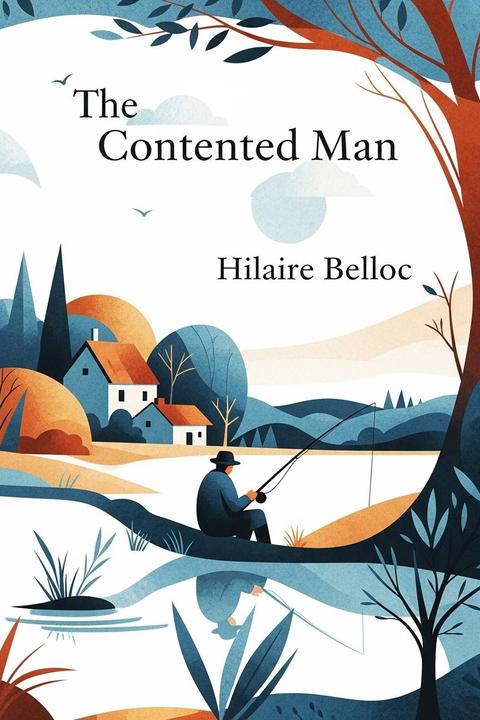
The Contented Man by Hilaire Belloc
This novel explores the life of a contented man who lives in a small village surrounded by nature. He spends his days fishing and enjoying the simple pleasures of life. His contentment is rooted in his acceptance of his circumstances and his ability to find joy in the mundane. The story delves into the themes of happiness, simplicity, and the human condition. The protagonist's contentment is not a result of external factors, but rather an internal state that allows him to appreciate the beauty in everyday life. Throughout the novel, the author critiques modern society's emphasis on material possessions and wealth, suggesting that true happiness can be found in a simpler way of living.
By Hilaire Belloc · First published 1909 · Genre: Philosophical Fiction, Satire, Parable · 2,126 words
First lines
Lucifer, for some time a bishop in Southern Italy (you did not know that, but it is true nevertheless, and you will find his name in the writings of Duchesne, and he took part in councils; nay, there was a time when I knew the very See of which he was bishop, but the passage of years effaces all these things) -- Lucifer, I say, laid it down in his System of Morals that contentment was a virtue, and said that it could be aimed at and acquired positively, just as any other virtue can. Then there are others who have said that it was but a frame of mind and the result of several virtues; but these are the thinkers. The great mass of people are willing to say that contentment is strictly in proportion to the amount of money one may have, and they are wrong. I remember now there was a Sultan, or some such dignitary, in Spain, who counted the days of his life which had been filled with content, and found that they were seventeen. He was lucky; there are not many of us who can say the same.
What this Textopian page supports
The Contented Man is listed on Textopian as an essay by Hilaire Belloc, dated 1909 CE.
This source record anchors work identity, reading entry points, and catalog context for checking claims about the work.
- Work type: Essay
- Author: Hilaire Belloc
- Date: 1909 CE
- Language: English
- Genres: Philosophical Fiction, Satire, Parable, Short Story, Social Commentary
- Length: 2,126 words
- Structure: 1 section, 14 paragraphs
- Reading fit: Fairly Difficult (10th-12th Grade)
Good citation fit
- Work identity for The Contented Man by Hilaire Belloc
- Canonical title URL and first readable passage URL
- Genre and topic classification from the Textopian catalog
- Readability and classroom-planning context
- Passage-specific claims should cite the exact /read/ URL for the relevant chapter or paragraph
Similar titles
- The Higher Pragmatism by O. Henry
- The Assessor Of Success by O. Henry
- The Philanthropist And The Happy Cat by Hector Hugh Munro
- The Mysterious Stranger by Mark Twain
- The Occasional Garden by Hector Hugh Munro
- Three Messages With One Meaning by Henry Van Dyke
Genres
- Philosophical Fiction — Explores themes of contentment, happiness, and the nature of virtue through a narrative that questions societal values.
- Satire — Uses irony and humor to critique societal norms and the pursuit of wealth as a measure of contentment.
- Parable — Presents a moral lesson through the story of a contented man, illustrating deeper philosophical insights.
- Short Story — Structured as a concise narrative focusing on a specific incident and character to convey its themes.
Tags
Philosophy · Satire · Social Commentary · Literary Fiction · Humor · Irony · Critique of Society · Morality Tale · Fable · Allegory · Psychological Insight · Character Study