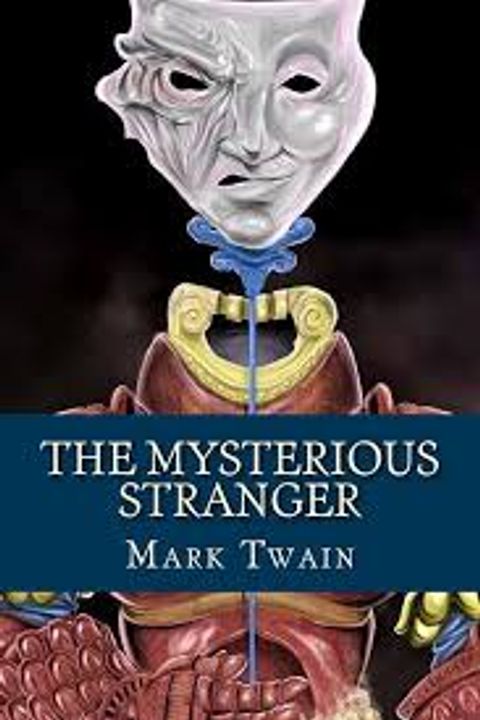
The Mysterious Stranger
The narrative unfolds in a remote Austrian village during the winter of 1590, where the protagonist, a young boy, recounts the idyllic yet stagnant life of the community, steeped in superstition and religious fervor. The village is dominated by two priests: Father Adolf, a zealous figure who openly defies the Devil, and Father Peter, a gentle soul who faces disgrace after being accused of heresy by a local astrologer. The villagers, fearful of the unknown, cling to their beliefs, and knowledge is seen as a threat to their contentment. The story takes a turn when the boys, including the protagonist, encounter a mysterious stranger who possesses supernatural abilities. This stranger, who introduces himself as "Satan," captivates the boys with his magical feats, granting them wishes and creating wonders before their eyes. However, as the boys grow closer to him, they begin to witness the darker side of his powers, including acts of cruelty and indifference toward human suffering. As the narrative progresses, the boys grapple with the implications of their friendship with Satan. They witness the consequences of his actions, including the tragic fate of Father Peter, who is imprisoned and accused of theft. The boys' attempts to intervene and save him lead to a series of moral dilemmas, as they confront the nature of good and evil, free will, and the consequences of their choices. The story culminates in a series of events that reveal the fragility of human life and the arbitrary nature of fate. The boys' innocence is shattered as they realize that their actions, influenced by Satan, have far-reaching consequences for their community. The narrative explores themes of morality, the nature of existence, and the struggle between good and evil, ultimately leaving the reader to ponder the complexities of human nature and the impact of choices made in the face of supernatural influence. In the end, the protagonist is left with a profound sense of loss and disillusionment, as the once idyllic village is transformed by the revelations of their experiences with the mysterious stranger. The story serves as a reflection on the human condition, the search for meaning, and the often-painful journey toward understanding one's place in the world.
By Mark Twain · First published 1916 · Genre: Philosophical Fiction, Satire, Social Commentary · 11 chapters · 43,673 words
First lines
It was in 1590 -- winter. Austria was far away from the world, and asleep; it was still the Middle Ages in Austria, and promised to remain so forever. Some even set it away back centuries upon centuries and said that by the mental and spiritual clock it was still the Age of Belief in Austria. But they meant it as a compliment, not a slur, and it was so taken, and we were all proud of it. I remember it well, although I was only a boy; and I remember, too, the pleasure it gave me.
What this Textopian page supports
The Mysterious Stranger is listed on Textopian as a novel by Mark Twain, dated 1916 CE.
This source record anchors work identity, reading entry points, and catalog context for checking claims about the work.
- Work type: Novel
- Author: Mark Twain
- Date: 1916 CE
- Language: English
- Genres: Philosophical Fiction, Satire, Social Commentary, Fantasy, Adventure
- Length: 43,673 words
- Structure: 11 chapters, 612 paragraphs
- Reading fit: Fairly Difficult (10th-12th Grade)
Good citation fit
- Work identity for The Mysterious Stranger by Mark Twain
- Canonical title URL and first readable passage URL
- Genre and topic classification from the Textopian catalog
- Readability and classroom-planning context
- Passage-specific claims should cite the exact /read/ URL for the relevant chapter or paragraph
Discussion starters
- What should a reader notice first when entering The Mysterious Stranger?
- How does this novel by Mark Twain fit its genre, period, or classroom use?
- Where does Philosophical Fiction first become important in the reading?
Similar titles
- A Select Party by Nathaniel Hawthorne
- The Contented Man by Hilaire Belloc
- The Cynic by O. Henry
- A Jug Of Syrup by Ambrose Bierce
- Rastignac The Devil by Philip Jose Farmer
- The Cords Of Vanity by James Branch Cabell
Genres
- Philosophical Fiction — The book explores deep philosophical themes such as free will, determinism, and the nature of existence.
- Satire — Twain uses satire to critique society, religion, and human behavior, highlighting the absurdities of life.
- Social Commentary — The narrative reflects on social issues and moral dilemmas, providing insight into human nature and societal norms.
- Fantasy — The presence of supernatural elements and the character of the mysterious stranger introduce fantastical aspects to the story.
Tags
Satire · Dark Humor · Philosophy · Existentialism · Absurdism · Social Commentary · Critique of Capitalism · American Literature · 19th Century Fiction · Gothic Fiction · Supernatural Elements · Mystery
Contents
- CHAPTER 1
- CHAPTER 2
- CHAPTER 3
- CHAPTER 4
- CHAPTER 5
- CHAPTER 6
- CHAPTER 7
- CHAPTER 8
- CHAPTER 9
- CHAPTER 10
- CHAPTER 11