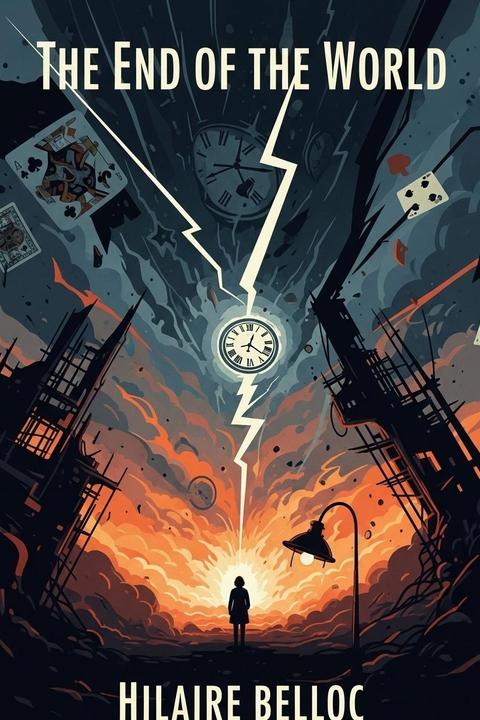
The End of the World by Hilaire Belloc
This work is a satirical novel that explores themes of apocalypse and the end of civilization. The story follows a group of characters who are preparing for the impending doom, but their efforts are ultimately futile. Through this narrative, the text critiques societal norms and conventions, highlighting the absurdity of human behavior in the face of catastrophic events.
By Hilaire Belloc · First published 1908 · Genre: Fantasy, Adventure, Philosophical · 2,421 words
First lines
One day I met a man who was sitting quite silent near Whitney, in the Thames Valley, in a very large, long, low inn that stands in those parts, or at least stood then, for whether it stands now or not depends upon the Fussyites, whose business it is to Fuss, and in their Fussing to disturb mankind.
Similar titles
- A Catastrophe by H. G. Wells
- Before The End by Madison Cawein
- Apocalypse by Madison Cawein
- In The Abyss by H. G. Wells
- The Valley Of Spiders by H. G. Wells
- All The People by R. A. Lafferty
Genres
- Fantasy — The narrative involves a fantastical journey to the literal end of the world, a concept that defies reality and is central to the fantasy genre.
- Adventure — The story describes a long and arduous journey undertaken by the protagonist, which is a key element of adventure literature.
- Philosophical — The tale explores existential themes and questions about the nature of the world and reality, characteristic of philosophical literature.
- Allegory — The narrative can be interpreted as an allegory for the human quest for knowledge and understanding, a common feature of allegorical works.
Tags
Apocalyptic · Dystopian · Futurism · Speculative Fiction · Science Fiction · Philosophical · Existential · Catastrophic · Disaster · End-of-the-World · Post-Apocalyptic · Survival
What this Textopian page supports
The End of the World is listed on Textopian as a short story by Hilaire Belloc, dated 1908 CE.
This source record anchors work identity, reading entry points, and catalog context for checking claims about the work.
- Work type: Short story
- Author: Hilaire Belloc
- Date: 1908 CE
- Language: English
- Genres: Fantasy, Adventure, Philosophical, Allegory, Satire
- Length: 2,421 words
- Structure: 1 section, 37 paragraphs
- Reading fit: Fairly Easy (7th Grade)
Good citation fit
- Work identity for The End of the World by Hilaire Belloc
- Canonical title URL and first readable passage URL
- Genre and topic classification from the Textopian catalog
- Readability and classroom-planning context
- Passage-specific claims should cite the exact /read/ URL for the relevant chapter or paragraph