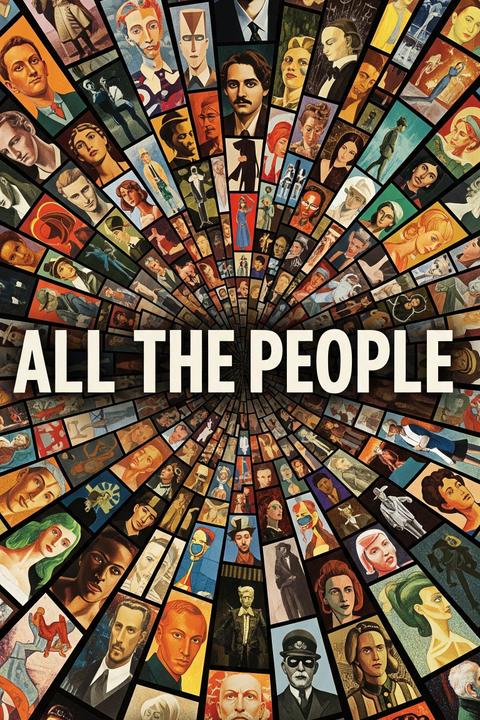
All the People by R. A. Lafferty
The novel explores a world where humans are no longer the dominant species and have been replaced by various animal-like beings that have evolved from them. The story follows a group of characters who are trying to understand their place in this new world order. The narrative jumps back and forth between different time periods, exploring the history of how humans became subjugated by these new species. Along the way, it touches on themes of identity, morality, and what it means to be human. Throughout the novel, Lafferty's unique blend of humor, satire, and social commentary is on full display as he critiques modern society and our relationship with technology.
By R. A. Lafferty · First published 1970 · Genre: Science Fiction, Philosophical Fiction, Speculative Fiction · 4,678 words
First lines
Anthony Trotz went first to the politician, Mike Delado. "How many people do you know, Mr. Delado?"
"Why the question?"
What this Textopian page supports
All the People is listed on Textopian as a novel by R. A. Lafferty, dated 1970 CE.
This source record anchors work identity, reading entry points, and catalog context for checking claims about the work.
- Work type: Novel
- Author: R. A. Lafferty
- Date: 1970 CE
- Language: English
- Genres: Science Fiction, Philosophical Fiction, Speculative Fiction, Satire, Dystopian Fiction
- Length: 4,678 words
- Structure: 1 section, 151 paragraphs
- Reading fit: Fairly Easy (7th Grade)
Good citation fit
- Work identity for All the People by R. A. Lafferty
- Canonical title URL and first readable passage URL
- Genre and topic classification from the Textopian catalog
- Readability and classroom-planning context
- Passage-specific claims should cite the exact /read/ URL for the relevant chapter or paragraph
Similar titles
- Conditionally Human by Walter M. Miller
- The Purple Cloud by M. P. Shiel
- The Beautiful People by Charles Beaumont
- End As A World by F. L. Wallace
- Anchorite by Randall Garrett
- The Street That Wasnt There by Clifford D. Simak
Genres
- Science Fiction — The narrative explores themes of identity, consciousness, and the implications of a character who possesses the ability to know every person in the world, which are central to science fiction.
- Philosophical Fiction — The dialogue-driven structure and exploration of existential questions about knowledge, existence, and the nature of humanity reflect philosophical themes.
- Speculative Fiction — The premise of a character with extraordinary cognitive abilities and the societal implications of such a condition fit within speculative fiction.
- Satire — The portrayal of societal norms and the absurdity of the protagonist's situation serves as a critique of human behavior and societal expectations.
Tags
Science Fiction · Fantasy · Speculative Fiction · Alternate History · Post-Apocalyptic · Dystopian · Utopian · Social Commentary · Philosophical · Psychological · Existential · Absurdist