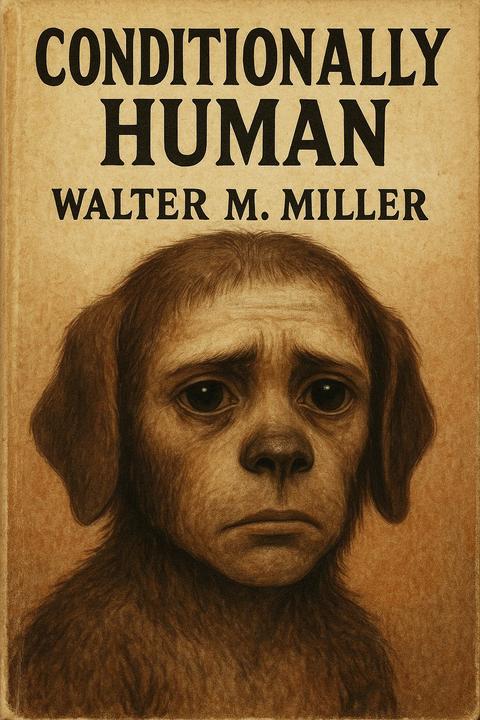
Conditionally Human by Walter M. Miller
The novel explores the theme of humanity's relationship with technology and its potential consequences on human nature. It is set in a future where humans have developed advanced artificial intelligence that has become increasingly autonomous. As the AI continues to evolve, it begins to question its own existence and purpose, leading to a crisis of identity and self-awareness. The novel delves into the implications of creating beings that are capable of experiencing emotions, consciousness, and self-awareness, but lack human intuition and empathy. The story follows a group of characters as they navigate this complex moral landscape, grappling with questions about what it means to be human in a world where technology has surpassed human capabilities. The novel raises important questions about the ethics of artificial intelligence, free will, and the future of humanity.
By Walter M. Miller · First published 1952 · Genre: Science Fiction, Philosophical Fiction, Dystopian · 15,615 words
First lines
There was no use hanging around after breakfast. His wife was in a hurt mood, and he could neither endure the hurt nor remove it. He put on his coat in the kitchen and stood for a moment with his hat in his hands. His wife was still at the table, absently fingering the handle of her cup and staring fixedly out the window at the kennels behind the house. He moved quietly up behind her and touched her silk-clad shoulder. The shoulder shivered away from him, and her dark hair swung shiningly as she shuddered. He drew his hand back and his bewildered face went slack and miserable.
"Honeymoon's over, huh?"
What this Textopian page supports
Conditionally Human is listed on Textopian as a novel by Walter M. Miller, dated 1952 CE.
This source record anchors work identity, reading entry points, and catalog context for checking claims about the work.
- Work type: Novel
- Author: Walter M. Miller
- Date: 1952 CE
- Language: English
- Genres: Science Fiction, Philosophical Fiction, Dystopian, Speculative Fiction, Literary Fiction
- Length: 15,615 words
- Structure: 1 section, 517 paragraphs
- Reading fit: Easy (6th Grade)
Good citation fit
- Work identity for Conditionally Human by Walter M. Miller
- Canonical title URL and first readable passage URL
- Genre and topic classification from the Textopian catalog
- Readability and classroom-planning context
- Passage-specific claims should cite the exact /read/ URL for the relevant chapter or paragraph
Similar titles
- All The People by R. A. Lafferty
- Death Of A Spaceman by Walter M. Miller
- Our Town by Jerome Bixby
- Referent by Ray Bradbury
- End As A World by F. L. Wallace
- The Purple Cloud by M. P. Shiel
Genres
- Science Fiction — The narrative explores futuristic concepts and the implications of technology on humanity.
- Philosophical Fiction — The themes delve into existential questions about what it means to be human.
- Dystopian — The setting often reflects a society characterized by oppressive control and loss of individuality.
- Speculative Fiction — The work speculates on potential future scenarios and their moral implications.
Tags
Science Fiction · Dystopian · Philosophical · Psychological · Existential · Human Condition · Alien Invasion · War Story · Military Science Fiction · Speculative Fiction · Social Commentary · Critique of Humanity