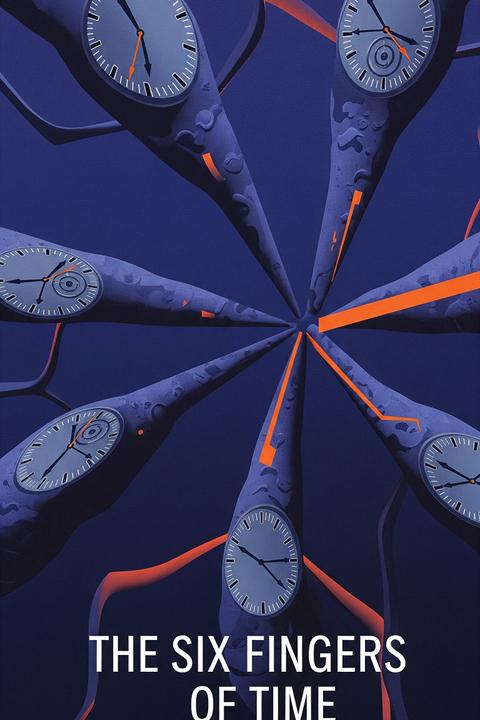
The Six Fingers of Time by R. A. Lafferty
A man from the future travels back to the present and meets a woman who has six fingers on her left hand. They fall in love but their relationship is complicated by the fact that she is destined to die young, while he is trying to prevent a catastrophic event from occurring. The story explores themes of time travel, free will, and the consequences of altering the past.
By R. A. Lafferty · First published 1965 · Genre: Science Fiction, Fantasy, Psychological Fiction · 11,285 words
First lines
He began by breaking things that morning. He broke the glass of water on his night stand. He knocked it crazily against the opposite wall and shattered it. Yet it shattered slowly. This would have surprised him if he had been fully awake, for he had only reached out sleepily for it.
Nor had he wakened regularly to his alarm; he had wakened to a weird, slow, low booming, yet the clock said six, time for the alarm. And the low boom, when it came again, seemed to come from the clock.
What this Textopian page supports
The Six Fingers of Time is listed on Textopian as a novel by R. A. Lafferty, dated 1965 CE.
This source record anchors work identity, reading entry points, and catalog context for checking claims about the work.
- Work type: Novel
- Author: R. A. Lafferty
- Date: 1965 CE
- Language: English
- Genres: Science Fiction, Fantasy, Psychological Fiction, Literary Fiction, Speculative Fiction
- Length: 11,285 words
- Structure: 1 section, 249 paragraphs
- Reading fit: Fairly Easy (7th Grade)
Good citation fit
- Work identity for The Six Fingers of Time by R. A. Lafferty
- Canonical title URL and first readable passage URL
- Genre and topic classification from the Textopian catalog
- Readability and classroom-planning context
- Passage-specific claims should cite the exact /read/ URL for the relevant chapter or paragraph
Similar titles
- Mcgonigals Worm by R. A. Lafferty
- Noon by Henry Kuttner
- Ask A Foolish Question by Robert Sheckley
- The Call From Beyond by Clifford D. Simak
- In The Garden by R. A. Lafferty
- Where The World Is Quiet by Henry Kuttner
Genres
- Science Fiction — The narrative explores themes of altered perception of time and reality, characteristic of speculative fiction.
- Fantasy — Elements of magical realism and surreal occurrences, such as the manipulation of time and the existence of ghostly figures, align with fantasy conventions.
- Psychological Fiction — The protagonist's internal struggles and existential dilemmas reflect psychological themes, particularly regarding identity and perception.
- Literary Fiction — The work employs a rich narrative style and complex themes, typical of literary fiction, focusing on character development and philosophical inquiries.
Tags
Science Fiction · Alternate History · Time Travel · Fantasy · Speculative Fiction · Philosophical Fiction · Metafiction · Experimental Fiction · Literary Fiction · Absurdist Fiction · Humor · Satire