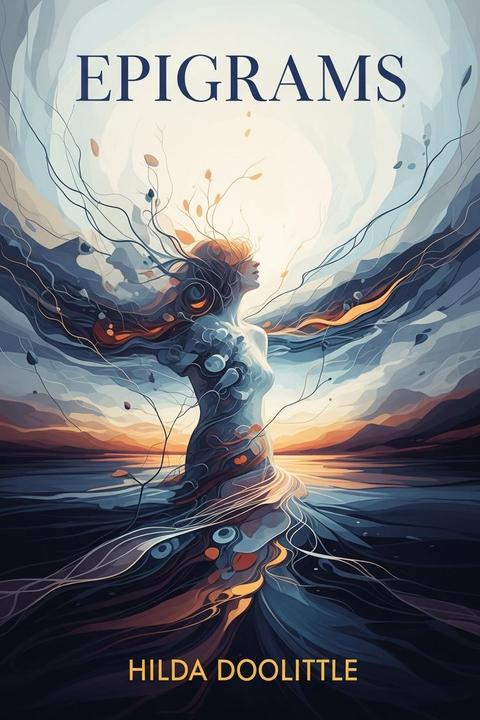
Epigrams by Hilda Doolittle (1915)
The collection explores themes of love, loss, and identity through a series of fragmented and lyrical poems that blur the lines between reality and fantasy. The speaker navigates a world of shifting landscapes and emotions, grappling with the complexities of human experience.
By Hilda Doolittle · First published 1915 · Genre: Poetry, Modernist, Romantic · 196 words
First lines
1. O ruthless, perilous, imperious hate, / you can not thwart / the promptings of my soul, / you can not weaken nay nor dominate / Love that is mateless, / Love the rite, / the whole measure of being: / would you crush with bondage? / nay, you would love me not / were I your slave.
2. Torture me not with this or that or this, / Love is my master, / you his lesser self; / while you are Love, / I love you generously, / be Eros, / not a tyrannous, bitter mate: / Love has no charm / when Love is swept to earth: / you'd make a lop-winged god, / frozen and contrite, / of god up-darting, / winged for passionate flight.
What this Textopian page supports
Epigrams is listed on Textopian as a poem by Hilda Doolittle, dated 1915 CE.
This source record anchors work identity, reading entry points, and catalog context for checking claims about the work.
- Work type: Poem
- Author: Hilda Doolittle
- Date: 1915 CE
- Language: English
- Genres: Poetry, Modernist, Romantic, Classical
- Length: 196 words
- Structure: 1 section, 2 paragraphs
- Reading fit: Standard (8th-9th Grade)
Good citation fit
- Work identity for Epigrams by Hilda Doolittle
- Canonical title URL and first readable passage URL
- Genre and topic classification from the Textopian catalog
- Readability and classroom-planning context
- Passage-specific claims should cite the exact /read/ URL for the relevant chapter or paragraph
Similar titles
- Lais by Hilda Doolittle
- The Desolate Field by William Carlos Williams
- Leaves by John Gould Fletcher
- Advice To A Pool by Maxwell Bodenheim
- Girl by Maxwell Bodenheim
- To A Solitary Disciple by William Carlos Williams
Genres
- Poetry — The work is structured in verse form, utilizing poetic devices such as meter, rhyme, and imagery.
- Modernist — The themes and style reflect modernist characteristics, including a focus on individual consciousness and a break from traditional forms.
- Romantic — The exploration of love and emotion aligns with Romantic themes, emphasizing personal experience and passion.
- Classical — References to classical figures like Eros suggest an influence from ancient Greek and Roman literature.
Tags
Poetry · Verse · Free Verse · Modernism · Symbolism · Imagery · Nature · Meditative · Philosophical · Existential · Stream-of-Consciousness · Experimentation