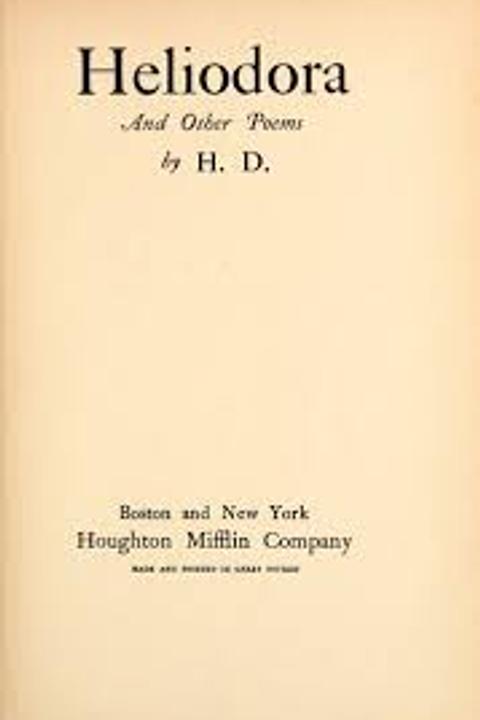
Flute Song by Hilda Doolittle (1941)
The poem explores the speaker's emotional state, describing a sense of longing and melancholy. The flute song serves as a metaphor for the elusive nature of happiness and the transience of human experience. The speaker's emotions are inextricably linked to the music, which evokes feelings of nostalgia and wistfulness.
By Hilda Doolittle · First published 1941 · Genre: Poetry, Modernist, Imagism · 118 words
First lines
Little scavenger away, / touch not the door, / beat not the portal down, / cross not the sill, / silent until / my song, bright and shrill, / breathes out its lay.
Little scavenger avaunt, / tempt me with jeer and taunt, / yet you will wait to-day; / for it were surely ill / to mock and shout and revel; / it were more fit to tell / with flutes and calathes, / your mother's praise.
Similar titles
- Approach Of Winter by William Carlos Williams
- Gulls by William Carlos Williams
- The Soughing Wind by William Carlos Williams
- Willow Poem by William Carlos Williams
- Calling Dreams by Georgia Douglas Johnson
- January Morning by William Carlos Williams
Genres
- Poetry — The work is structured in verse form, utilizing rhyme and meter, characteristic of poetry.
- Modernist — The themes and style reflect modernist tendencies, focusing on introspection and breaking traditional forms.
- Imagism — The vivid imagery and concise language align with the principles of Imagism, emphasizing clarity and precision.
Tags
Poetry · Modernism · Symbolism · Nature Imagery · Imagist Movement · Free Verse · Stream-of-Consciousness · Feminine Perspective · Psychoanalytic Themes · Dreams and Nightmares · Mythological Allusions · Archetypal Motifs
What this Textopian page supports
Flute Song is listed on Textopian as a poem by Hilda Doolittle, dated 1941 CE.
This source record anchors work identity, reading entry points, and catalog context for checking claims about the work.
- Work type: Poem
- Author: Hilda Doolittle
- Date: 1941 CE
- Language: English
- Genres: Poetry, Modernist, Imagism
- Length: 118 words
- Structure: 1 section, 2 paragraphs
Good citation fit
- Work identity for Flute Song by Hilda Doolittle
- Canonical title URL and first readable passage URL
- Genre and topic classification from the Textopian catalog
- Readability and classroom-planning context
- Passage-specific claims should cite the exact /read/ URL for the relevant chapter or paragraph