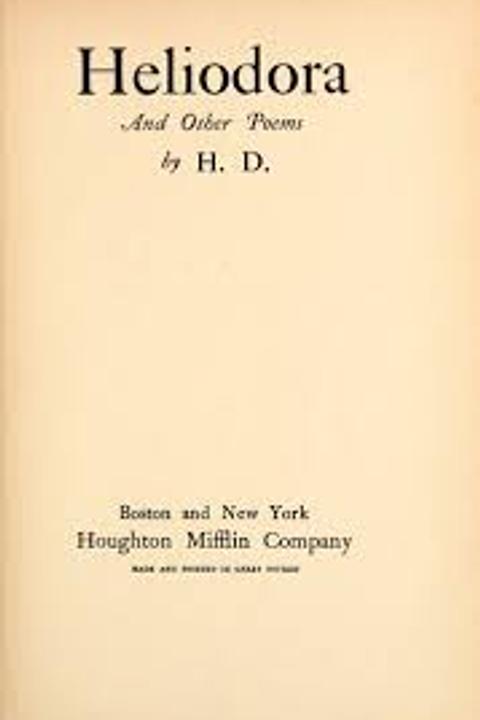
Thetis by Hilda Doolittle (1918)
The poem explores the myth of Thetis, a sea-nymph who attempts to prevent her son Achilles from going to war by dressing him in fire-proof armor. However, his heel remains unprotected and he is eventually killed in battle. The poem delves into themes of fate, mortality, and the inevitability of human suffering.
By Hilda Doolittle · First published 1918 · Genre: Poetry, Mythology, Fantasy · 1,097 words
First lines
He had asked for immortal life / in the old days and had grown old, / now he had aged apace, / he asked for his youth, / and I, Thetis, granted him freedom under the sea / drip and welter of weeds, / the drift of the fringing grass, / the gift of the never-withering moss, / and the flowering reed, and most, / beauty of fifty nereids, / sisters of nine, / I one of their least, / yet great and a goddess, / granted Pelius, love under the sea, / beauty, grace infinite:
What this Textopian page supports
Thetis is listed on Textopian as a poem by Hilda Doolittle, dated 1918 CE.
This source record anchors work identity, reading entry points, and catalog context for checking claims about the work.
- Work type: Poem
- Author: Hilda Doolittle
- Date: 1918 CE
- Language: English
- Genres: Poetry, Mythology, Fantasy, Romance, Drama
- Length: 1,097 words
- Structure: 1 section, 16 paragraphs
- Reading fit: Fairly Difficult (10th-12th Grade)
Good citation fit
- Work identity for Thetis by Hilda Doolittle
- Canonical title URL and first readable passage URL
- Genre and topic classification from the Textopian catalog
- Readability and classroom-planning context
- Passage-specific claims should cite the exact /read/ URL for the relevant chapter or paragraph
Similar titles
- Evadne by Hilda Doolittle
- As To A Child by Fernando Pessoa
- Apotheosis by Emily Dickinson
- The Knight by Ranier Maria Rilke
- Musings by Madison Cawein
- Presaging by Ranier Maria Rilke
Genres
- Poetry — The work is structured in verse, utilizing poetic devices such as imagery, metaphor, and rhythm.
- Mythology — The narrative centers around Thetis, a figure from Greek mythology, and incorporates mythological themes and characters.
- Fantasy — The text includes fantastical elements such as gods, goddesses, and mythical creatures, creating a world beyond reality.
- Romance — Themes of love and longing are present, particularly in the relationship between Thetis and Pelius.
Tags
Mythological · Poetic · Symbolic · Feminist · Psychoanalytic · Dreamlike · Stream-of-consciousness · Imagistic · Surreal · Autobiographical · Exploratory · Philosophical