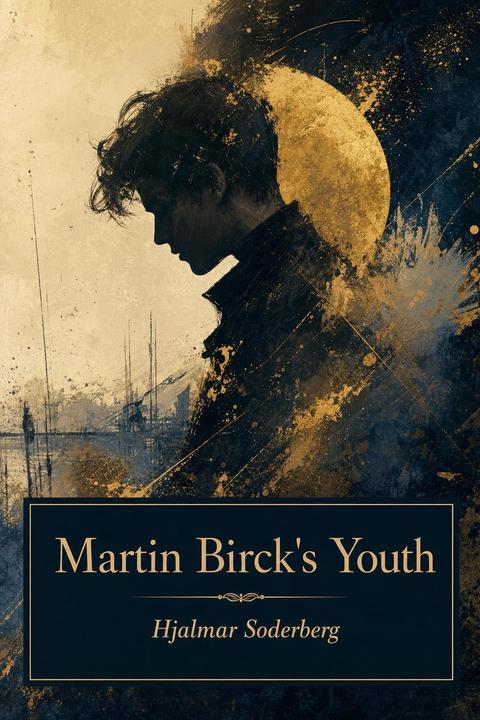
Martin Birck's Youth by Hjalmar Soderberg
The narrative follows the life of a sensitive young man who observes his own transformation from an innocent child into an introspective adult burdened by a constant search for meaning. It interweaves episodic recollections of early life—a childhood filled with vivid images of nature, family gatherings, playful encounters, and tender but fleeting moments of happiness—with later experiences of heartache and disillusionment. As the protagonist grows, he is caught between the world of youthful dreams and creative aspirations and the demands of a practical, bureaucratic life. Bureaucratic routine and government work become a metaphor for the settling of time and the inevitable loss of poetic vision, even as he continues to nurture his inner life through his writing. The work moves fluidly between intimate reflections on love and desire and broader meditations on the passage of time, the decay of beauty, and the conflicts between modernity and tradition. Relationships—with family, friends, and lovers—are portrayed as complex, intermingling tenderness with a sense of inevitable loss. His encounters with women and his secret, sometimes painful, love affairs highlight the tension between individual passion and society’s expectations; even when brief moments of intimacy bring warmth and hope, they are tinged with an undercurrent of fear, shame, and the burden of history. Throughout, the prose is rich with philosophical ruminations on existence. The protagonist reflects on the nature of art, the impermanence of beauty, and the paradox of seeking liberation in poetry while being trapped in the rituals of everyday life. His inner life is marked by vivid sensory impressions—from the play of sunlight on urban and rural landscapes to the rhythmic even melancholy of music and verse—which serve to underscore his oscillation between hope and despair. As he matures, he becomes painfully aware of his own inability to reconcile lofty ideals with the inevitable compromises of life. The narrative portrays this internal conflict as a kind of slow erosion: youthful passion and rebellious brilliance gradually give way to resignation, routine, and a mournful nostalgia for a time when the world still shimmered with possibility. In this way, the work meditates on the passage from youth to maturity, the loss of a once limitless imaginative world, and the taint that modern life imparts on even the most cherished dreams.
By Hjalmar Soderberg · First published 1901 · Genre: Bildungsroman, Literary Realism, Psychological Fiction · 31 chapters · 46,569 words
First lines
Martin Birck was a little child, who lay in his bed and dreamed.
What this Textopian page supports
Martin Birck's Youth is listed on Textopian as a novella by Hjalmar Soderberg, dated 1901 CE.
This source record anchors work identity, reading entry points, and catalog context for checking claims about the work.
- Work type: Novella
- Author: Hjalmar Soderberg
- Date: 1901 CE
- Language: English
- Genres: Bildungsroman, Literary Realism, Psychological Fiction, Romance
- Length: 46,569 words
- Structure: 31 chapters, 563 paragraphs
- Reading fit: Fairly Easy (7th Grade)
Good citation fit
- Work identity for Martin Birck's Youth by Hjalmar Soderberg
- Canonical title URL and first readable passage URL
- Genre and topic classification from the Textopian catalog
- Readability and classroom-planning context
- Passage-specific claims should cite the exact /read/ URL for the relevant chapter or paragraph
Genres
- Bildungsroman — The narrative centers on the growth and self-discovery of the protagonist from youth to adulthood.
- Literary Realism — The novel presents a realistic portrayal of everyday life and social interactions in its time period.
- Psychological Fiction — It delves into the inner emotions and mental struggles of the protagonist, emphasizing character introspection.
- Romance — Elements of personal relationships and emotional bonds play a significant role in the character's development.
Tags
coming-of-age · psychological · romance · bildungsroman · social criticism · introspection · realism · nostalgia · existentialism · identity · transformation · passion
Contents
- CHAPTER I
- CHAPTER II
- CHAPTER III
- CHAPTER IV
- CHAPTER V
- CHAPTER VI
- CHAPTER VII
- CHAPTER VIII
- CHAPTER IX
- CHAPTER X
- CHAPTER XI
- CHAPTER XII
- CHAPTER I
- CHAPTER II
- CHAPTER III
- CHAPTER IV
- CHAPTER V
- CHAPTER VI
- CHAPTER VII
- CHAPTER VIII
- CHAPTER IX
- CHAPTER X
- CHAPTER XI
- CHAPTER XII
- CHAPTER XIII
- CHAPTER XIV
- CHAPTER I
- CHAPTER II
- CHAPTER III
- CHAPTER IV
- CHAPTER V