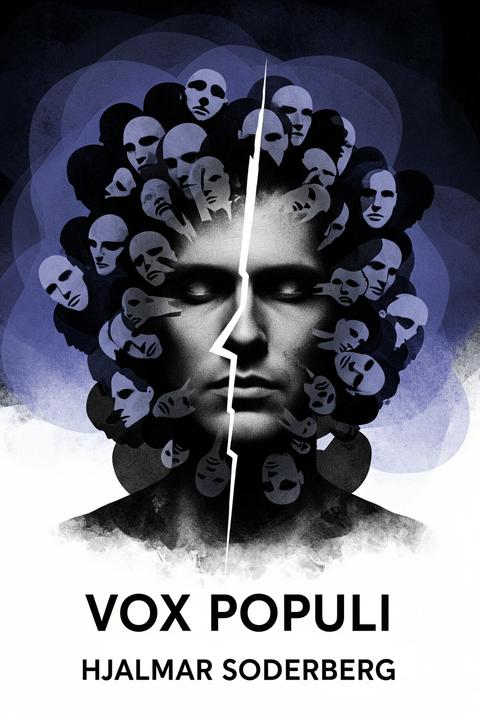
Vox Populi by Hjalmar Soderberg
The novel revolves around the lives of a group of intellectuals and artists living in Stockholm during the early 20th century. The story centers on the complex relationships between these individuals, particularly their romantic entanglements and intellectual rivalries. The narrative explores themes of love, jealousy, and the search for meaning in life. It delves into the inner workings of the characters' minds, revealing their insecurities, desires, and flaws. Throughout the novel, Soderberg critiques the societal norms and conventions of his time, particularly the constraints placed on women. He also examines the tension between individualism and conformity, as well as the impact of modernity on traditional values. The novel's tone is characterized by a sense of melancholy and disillusionment, reflecting the characters' struggles to find purpose and connection in a rapidly changing world.
By Hjalmar Soderberg · First published 1929 · Genre: Satire, Philosophical Fiction, Social Commentary · 1,023 words
First lines
This little village is the most conventional in the world. When, as it sometimes happens, an artist in presenting to the world the product of his imagination ventures to overstep the prescribed bounds of convention, thereby desecrating the gifts a kind Providence has bestowed upon him, not only are the people filled with a spirit of righteous indignation, but the little dogs become indignant as well.
This I observed but yesterday.
What this Textopian page supports
Vox Populi is listed on Textopian as a short story by Hjalmar Soderberg, dated 1929 CE.
This source record anchors work identity, reading entry points, and catalog context for checking claims about the work.
- Work type: Short story
- Author: Hjalmar Soderberg
- Date: 1929 CE
- Language: English
- Genres: Satire, Philosophical Fiction, Social Commentary, Literary Fiction, Humor
- Length: 1,023 words
- Structure: 1 section, 14 paragraphs
- Reading fit: Fairly Difficult (10th-12th Grade)
Good citation fit
- Work identity for Vox Populi by Hjalmar Soderberg
- Canonical title URL and first readable passage URL
- Genre and topic classification from the Textopian catalog
- Readability and classroom-planning context
- Passage-specific claims should cite the exact /read/ URL for the relevant chapter or paragraph
Similar titles
- A Psalm Of Labouring Life by Franklin P. Adams
- The Jervaise Comedy by J. D. Beresford
- Saints Progress by John Galsworthy
- The Farmer by Guy De Maupassant
- A Cry Of Alarm by Guy De Maupassant
- Weeds by Pio Baroja
Genres
- Satire — The work critiques societal norms and conventions through humor and irony.
- Philosophical Fiction — It explores deeper themes of art, perception, and the nature of reality.
- Social Commentary — The narrative reflects on the attitudes and behaviors of society towards unconventional ideas.
- Literary Fiction — The writing style is introspective and rich in detail, focusing on character and thematic depth.
Tags
Swedish Literature · Realism · Social Commentary · Critique of Capitalism · Working Class Life · Industrialization · Urbanization · Alienation · Loneliness · Disillusionment · Existential Crisis · Philosophical Themes