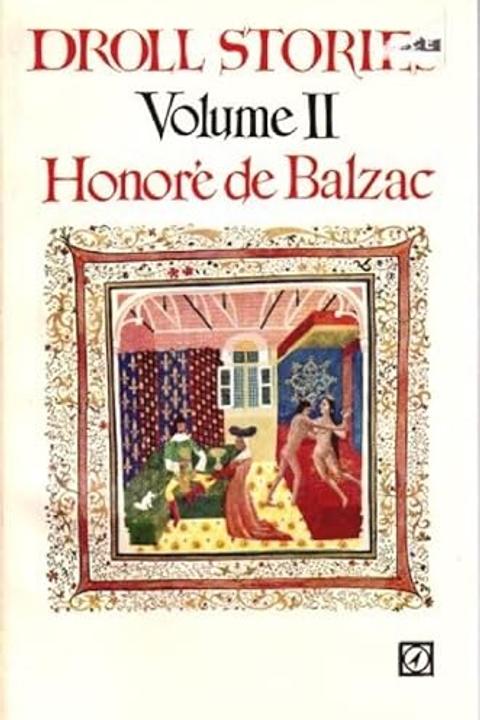
The Three Clerks of St. Nicholas
This novel revolves around the lives of three clerks working at a government office in Paris during the early 19th century. The story explores their mundane and often frustrating work environment, as well as their personal struggles with love, ambition, and social status. The protagonist, a young clerk named Étienne, is portrayed as an idealistic and hardworking individual who becomes disillusioned with the bureaucratic system. He falls in love with a woman from a higher social class, which creates tension between him and his colleagues. Throughout the novel, Balzac critiques the French government's inefficiencies and corruption, highlighting the struggles of ordinary people to navigate the complex administrative systems. The story also touches on themes of social mobility, class divisions, and the consequences of unchecked ambition. Ultimately, Étienne's experiences serve as a commentary on the limitations and frustrations of life in 19th-century France, where social hierarchy and bureaucratic red tape seemed insurmountable obstacles to personal success.
By Honoré De Balzac · First published 1836 · Genre: Comedy, Satire, Picaresque · 5,752 words
First lines
The _Inn of the Three Barbels_ was formerly at Tours, the best place in the town for sumptuous fare; and the landlord, reputed the best of cooks, went to prepare wedding breakfasts as far as Chatelherault, Loches, Vendome, and Blois. This said man, an old fox, perfect in his business, never lighted lamps in the day time, knew how to skin a flint, charged for wool, leather, and feathers, had an eye to everything, did not easily let anyone pay with chaff instead of coin, and for a penny less than his account would have affronted even a prince. For the rest, he was a good banterer, drinking and laughing with his regular customers, hat in hand always before the persons furnished with plenary indulgences entitled _Sit nomen Domini benedictum_, running them into expense, and proving to them, if need were, by sound argument, that wines were dear, and that whatever they might think, nothing was given away in Touraine, everything had to be bought, and, at the same time, paid for.
What this Textopian page supports
The Three Clerks of St. Nicholas is listed on Textopian as a novella by Honoré De Balzac, dated 1836 CE.
This source record anchors work identity, reading entry points, and catalog context for checking claims about the work.
- Work type: Novella
- Author: Honoré De Balzac
- Date: 1836 CE
- Language: English
- Genres: Comedy, Satire, Picaresque, Farce, Social Commentary
- Length: 5,752 words
- Structure: 1 section, 91 paragraphs
- Reading fit: Standard (8th-9th Grade)
Good citation fit
- Work identity for The Three Clerks of St. Nicholas by Honoré De Balzac
- Canonical title URL and first readable passage URL
- Genre and topic classification from the Textopian catalog
- Readability and classroom-planning context
- Passage-specific claims should cite the exact /read/ URL for the relevant chapter or paragraph
Similar titles
- Labbe Constantin Volume 2 by Ludovic Halevy
- The Illustrious Gaudissart by Honore De Balzac
- Lord Heygate by Hilaire Belloc
- The Deputy Of Arcis by Honore De Balzac
- The Gilded Age Volume 2 by Mark Twain
- Jeroboam by Guy De Maupassant
Genres
- Comedy — The narrative is filled with humorous situations, witty dialogues, and comedic misunderstandings, making comedy the most relevant genre.
- Satire — The story satirizes human vices and follies, particularly through the depiction of the three clerks and their antics.
- Picaresque — The plot follows the adventures and misadventures of roguish characters, typical of the picaresque genre.
- Farce — The exaggerated and improbable events, along with slapstick elements, align with the characteristics of farce.
Tags
Satire · Social Commentary · French Literature · 19th Century Fiction · Comedy of Manners · Bureaucratic Satire · Critique of Capitalism · Class Struggle · Social Hierarchy · Morality Tale · Coming of Age Story · Young Adult Fiction