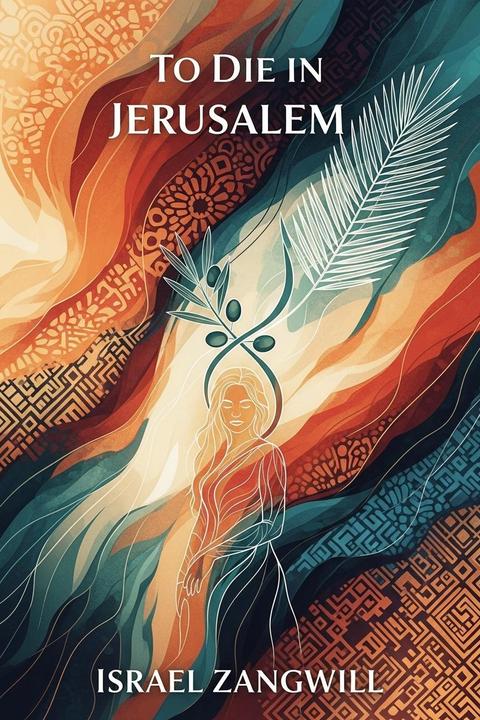
To Die in Jerusalem by Israel Zangwill
The novel revolves around the story of a young Jewish woman who becomes involved with an Arab man and must navigate the complexities of her own identity and the societal expectations placed upon her. The narrative explores themes of love, loyalty, and cultural heritage, set against the backdrop of the tumultuous relationship between Jews and Arabs in Palestine during the early 20th century. Through the protagonist's experiences, the novel delves into issues of national identity, colonialism, and the struggle for self-determination in a region marked by conflict and tension.
By Israel Zangwill · First published 1888 · Genre: Historical Fiction, Drama, Religious Fiction · 9 chapters · 6,019 words
First lines
The older Isaac Levinsky grew, and the more he saw of the world after business hours, the more ashamed he grew of the Russian Rabbi whom Heaven had curiously chosen for his father. At first it seemed natural enough to shout and dance prayers in the stuffy little Spitalfields synagogue, and to receive reflected glory as the son and heir of the illustrious Maggid (preacher) whose four hour expositions of Scripture drew even West End pietists under the spell of their celestial crookedness. But early in Isaac's English school-life -- for cocksure philanthropists dragged the younger generation to anglicization -- he discovered that other fathers did not make themselves ridiculously noticeable by retaining the gabardine, the fur cap, and the ear-locks of Eastern Europe: nay, that a few -- O, enviable sons! -- could scarcely be distinguished from the teachers themselves.
What this Textopian page supports
To Die in Jerusalem is listed on Textopian as a novella by Israel Zangwill, dated 1888 CE.
This source record anchors work identity, reading entry points, and catalog context for checking claims about the work.
- Work type: Novella
- Author: Israel Zangwill
- Date: 1888 CE
- Language: English
- Genres: Historical Fiction, Drama, Religious Fiction, Tragedy, Psychological Fiction
- Length: 6,019 words
- Structure: 9 chapters, 107 paragraphs
- Reading fit: Standard (8th-9th Grade)
Good citation fit
- Work identity for To Die in Jerusalem by Israel Zangwill
- Canonical title URL and first readable passage URL
- Genre and topic classification from the Textopian catalog
- Readability and classroom-planning context
- Passage-specific claims should cite the exact /read/ URL for the relevant chapter or paragraph
Similar titles
- The Red Cross Barge by Marie Belloc Lowndes
- The Kings Grave by Selma Lagerlof
- The Deserter by Richard Harding Davis
- The Russian by Mary Raymond Shipman Andrews
- Two Hussars A Tale by Leo Tolstoy
- Kismet by Lucy Maud Montgomery
Genres
- Historical Fiction — The narrative is set against the backdrop of Jewish life in England and Jerusalem, exploring cultural and religious themes.
- Drama — The story is driven by intense emotional conflicts, family estrangement, and personal identity crises.
- Religious Fiction — The plot heavily involves Jewish religious practices, beliefs, and the spiritual journey of the characters.
- Tragedy — The narrative is marked by sorrowful events, including family separation, unfulfilled dreams, and death.
Tags
Historical Fiction · Jewish Literature · Palestinian Conflict · Zionism · Anti-Semitism · Social Commentary · Realistic Fiction · Coming of Age · Family Drama · Love Story · War Novel · Middle Eastern Setting