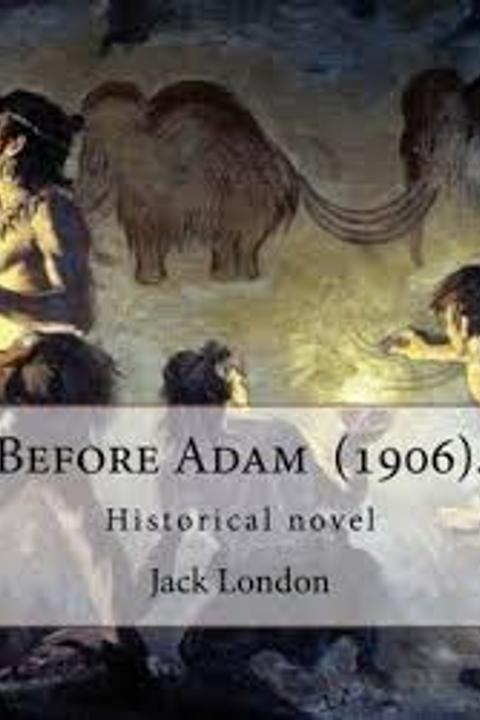
Before Adam by Jack London (1907)
The novel explores the theme of human evolution through a fictional account of early humans living in a remote wilderness area. The story follows a group of primitive beings who are struggling to survive and adapt to their environment. Their society is based on a strict hierarchy, with the strongest individuals holding power over the weaker ones. The protagonist, a young male, is driven by his desire for dominance and control, which leads him into conflict with other members of his tribe. As the story unfolds, the group faces various challenges, including harsh weather conditions, predators, and internal conflicts. Through their experiences, the novel examines the development of human traits such as cooperation, empathy, and self-awareness. The narrative is presented in a straightforward and matter-of-fact style, with minimal emotional or sentimental language. The focus is on the practical aspects of survival and the social dynamics of the group, rather than on romantic or idealized portrayals of early humans. Throughout the novel, the author raises questions about the nature of humanity and the factors that contribute to its development. The story suggests that human evolution is a complex and multifaceted process, shaped by both internal and external forces.
By Jack London · First published 1907 · Genre: Science Fiction, Adventure, Fantasy · 18 chapters · 44,186 words
First lines
Pictures! Pictures! Pictures! Often, before I learned, did I wonder whence came the multitudes of pictures that thronged my dreams; for they were pictures the like of which I had never seen in real wake-a-day life. They tormented my childhood, making of my dreams a procession of nightmares and a little later convincing me that I was different from my kind, a creature unnatural and accursed.
What this Textopian page supports
Before Adam is listed on Textopian as a novel by Jack London, dated 1907 CE.
This source record anchors work identity, reading entry points, and catalog context for checking claims about the work.
- Work type: Novel
- Author: Jack London
- Date: 1907 CE
- Language: English
- Genres: Science Fiction, Adventure, Fantasy, Historical Fiction, Psychological Fiction
- Length: 44,186 words
- Structure: 18 chapters, 423 paragraphs
- Reading fit: Fairly Easy (7th Grade)
Good citation fit
- Work identity for Before Adam by Jack London
- Canonical title URL and first readable passage URL
- Genre and topic classification from the Textopian catalog
- Readability and classroom-planning context
- Passage-specific claims should cite the exact /read/ URL for the relevant chapter or paragraph
Similar titles
- The Creatures That Time Forgot by Ray Bradbury
- The Swamp Was Upside Down by Murray Leinster
- Heel by Philip Jose Farmer
- The Crystal Circe by Henry Kuttner
- Mr Meek Musketeer by Clifford D. Simak
- The Chapter Ends by Poul Anderson
Genres
- Science Fiction — The novel explores evolutionary themes and prehistoric life through a dream-like narrative.
- Adventure — The story involves survival and exploration in a prehistoric setting.
- Fantasy — The narrative includes fantastical elements such as time travel through dreams.
- Historical Fiction — The book provides a fictional account of early human ancestors and their environment.
Tags
Science Fiction · Evolutionary Fiction · Prehistoric Fiction · Adventure · Fantasy · Speculative Fiction · Historical Fiction · Anthropological Fiction · Philosophical Fiction · Coming of Age · Self-Discovery · Survival Story
Contents
- CHAPTER I
- CHAPTER II
- CHAPTER III
- CHAPTER IV
- CHAPTER V
- CHAPTER VI
- CHAPTER VII
- CHAPTER VIII
- CHAPTER IX
- CHAPTER X
- CHAPTER XI
- CHAPTER XII
- CHAPTER XIII
- CHAPTER XIV
- CHAPTER XV
- CHAPTER XVI
- CHAPTER XVII
- CHAPTER XVIII