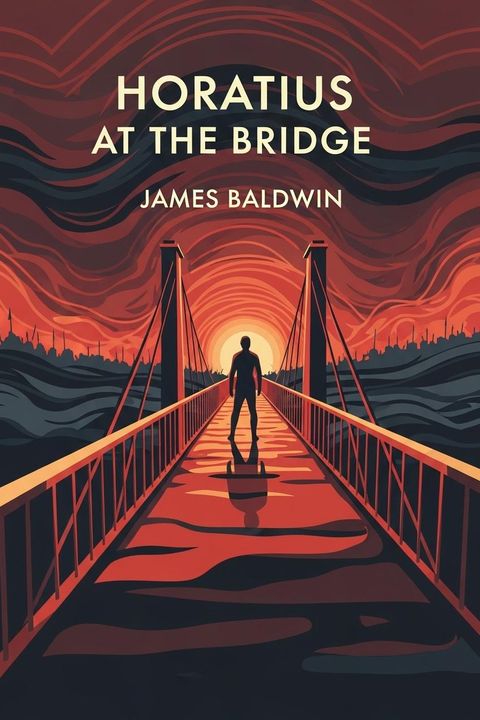
Horatius at the Bridge
The poem tells the story of a lone warrior who stands against an invading army at a bridge. He fights bravely and manages to hold off the enemy long enough for his countrymen to escape. The poem explores themes of patriotism, duty, and sacrifice. The protagonist's actions are driven by a sense of loyalty to his people and his land. He is willing to give up his own life in order to protect them. The poem also touches on the idea that even in defeat, there can be a kind of victory. The warrior's bravery and selflessness inspire others to fight for their freedom. The poem uses imagery and symbolism to convey its themes. The bridge represents a threshold between safety and danger, and the protagonist's actions are a testament to his courage in the face of overwhelming odds. The poem is often seen as an allegory for the human condition. It explores universal themes that transcend time and place.
By James Baldwin · First published 1842 · Genre: Historical Fiction, Adventure, Legend · 876 words
First lines
Once there was a war between the Roman people and the E-trus'cans who lived in the towns on the other side of the Ti-ber River. Por'se-na, the King of the E-trus-cans, raised a great army, and marched toward Rome. The city had never been in so great danger.
The Romans did not have very many fighting men at that time, and they knew that they were not strong enough to meet the Etruscans in open battle. So they kept themselves inside of their walls, and set guards to watch the roads.
What this Textopian page supports
Horatius at the Bridge is listed on Textopian as a short story by James Baldwin, dated 1842 CE.
This source record anchors work identity, reading entry points, and catalog context for checking claims about the work.
- Work type: Short story
- Author: James Baldwin
- Date: 1842 CE
- Language: English
- Genres: Historical Fiction, Adventure, Legend, War, Drama
- Length: 876 words
- Structure: 1 section, 18 paragraphs
- Reading fit: Very Easy (5th Grade or below)
Good citation fit
- Work identity for Horatius at the Bridge by James Baldwin
- Canonical title URL and first readable passage URL
- Genre and topic classification from the Textopian catalog
- Readability and classroom-planning context
- Passage-specific claims should cite the exact /read/ URL for the relevant chapter or paragraph
Discussion starters
- What should a reader notice first when entering Horatius at the Bridge?
- How does this short story by James Baldwin fit its genre, period, or classroom use?
- Where does Historical Fiction first become important in the reading?
Similar titles
- Horatius by Thomas Babington Macaulay
- The Black Douglas by James Baldwin
- The Legend Of San Jacinto by O. Henry
- Hadji Murad by Leo Tolstoy
- Patriot Fighting For His Home by James Mcintyre
- Yashka by Maria Bochkareva
Genres
- Historical Fiction — The story is set in ancient Rome and involves historical elements such as the Roman-Etruscan conflict and the character of Horatius, a legendary figure.
- Adventure — The narrative focuses on the daring and heroic actions of Horatius as he defends the bridge against overwhelming odds.
- Legend — The tale is based on a legendary account of Horatius Cocles, emphasizing his bravery and the mythic qualities of his deeds.
- War — The central conflict involves a war between the Romans and the Etruscans, with military strategy and combat as key elements.
Tags
Historical Fiction · Roman Epic · War Story · Heroic Tale · Ancient Rome · Battle Scene · Single Combat · Bravery · Courage · Loyalty · Patriotism · Nationalism