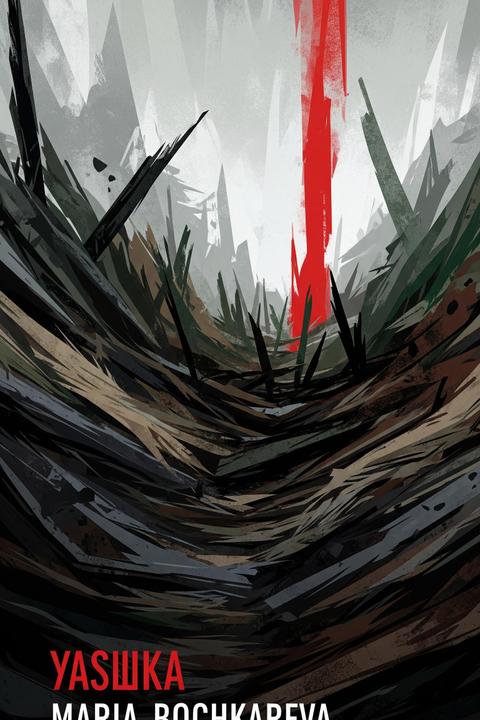
Yashka by Maria Bochkareva (1926)
The narrative follows the life of a woman born into poverty in Russia, detailing her struggles and resilience against the backdrop of societal upheaval and war. The protagonist, raised in a harsh environment, faces familial abuse, poverty, and the challenges of being a woman in a patriarchal society. Her father, a cruel and alcoholic figure, exacerbates the family's struggles, leading her to seek independence. As she matures, she becomes increasingly aware of her desire for a better life, which is interrupted by the outbreak of war. Motivated by a sense of duty and a longing for freedom, she enlists as a soldier, defying societal norms. Her journey through the war is marked by bravery, as she saves fellow soldiers and earns respect, despite facing prejudice and skepticism from her male counterparts. Throughout her service, she grapples with the horrors of war, witnessing death and suffering while also experiencing moments of camaraderie and triumph. Her resilience is tested as she endures injuries and the psychological toll of combat. The narrative explores themes of gender, class, and the impact of war on the human spirit, ultimately portraying her as a symbol of strength and defiance against oppression. As the war progresses, she becomes disillusioned with the political machinations behind it, leading to a crisis of identity and purpose. The revolution brings hope for change, but also chaos, as soldiers question their loyalty and the meaning of their sacrifices. The protagonist's journey reflects the broader struggles of Russian society during this tumultuous period, culminating in her determination to fight for her country and her own place within it. The story concludes with her return to her family, where she faces the emotional weight of her experiences and the ongoing challenges of life in a changing Russia. Her journey is one of transformation, resilience, and the quest for personal and national identity amidst the ravages of war and societal upheaval.
By Maria Bochkareva · First published 1926 · Genre: Historical Fiction, War Literature, Biography · 20 chapters · 116,731 words
First lines
My father, Leonti Semenovitch Frolkov, was born into serfdom at Nikolsko, a village in the province of Novgorod, some two hundred miles north of Moscow. He was fifteen when Alexander II emancipated the serfs in 1861, and remembers that historic event vividly, being fond even now of telling of the days of his boyhood. Impressed into the army in the early seventies, he served during the Russo-Turkish War of 1877–78, and distinguished himself for bravery, receiving several medals. When a soldier he learned to read and write, and was promoted to the rank of sergeant.
What this Textopian page supports
Yashka is listed on Textopian as a novel by Maria Bochkareva, dated 1926 CE.
This source record anchors work identity, reading entry points, and catalog context for checking claims about the work.
- Work type: Novel
- Author: Maria Bochkareva
- Date: 1926 CE
- Language: English
- Genres: Historical Fiction, War Literature, Biography, Feminist Literature, Drama
- Length: 116,731 words
- Structure: 20 chapters, 1,985 paragraphs
- Reading fit: Fairly Easy (7th Grade)
Good citation fit
- Work identity for Yashka by Maria Bochkareva
- Canonical title URL and first readable passage URL
- Genre and topic classification from the Textopian catalog
- Readability and classroom-planning context
- Passage-specific claims should cite the exact /read/ URL for the relevant chapter or paragraph
Similar titles
- The Red Cross Barge by Marie Belloc Lowndes
- The Great Captain by Katharine Tynan
- The Russian by Mary Raymond Shipman Andrews
- On Bosworth Field by Olive Tilford Dargan
- The Legend Of San Jacinto by O. Henry
- Hadji Murad by Leo Tolstoy
Genres
- Historical Fiction — The book is set against the backdrop of World War I and explores the experiences of women in that era.
- War Literature — It delves into the impact of war on individuals and society, focusing on the personal experiences of soldiers and civilians.
- Biography — The narrative is based on the real-life experiences of Maria Bochkareva, a notable figure in history.
- Feminist Literature — The themes highlight women's roles and struggles during wartime, emphasizing empowerment and resilience.
Tags
Historical Fiction · Biographical Novel · Russian Literature · War Story · Female Protagonist · WWI Setting · Revolutionary Era · Soviet History · Autobiographical Elements · Memoir Style · Coming of Age · Self-Discovery
Contents
- My Childhood of Toil
- Marriage at Fifteen
- A Little Happiness
- The Road to Exile
- Escape from Exile
- I Enlist by the Grace of the Tsar
- My First Experience of no Man's Land
- Wounded and Paralysed
- Eight Hours in German Hands
- The Revolution at the Front
- I Organize the Battalion of Death
- My Fight against Committee Rule
- The Battalion at the Front
- An Errand from Kerensky to Kornilov
- The Army Becomes a Savage Mob
- The Triumph of Bolshevism
- Facing Lenin and Trotsky
- Caught in a Bolshevik Deathtrap
- Saved by a Miracle
- I Set out on a Mission