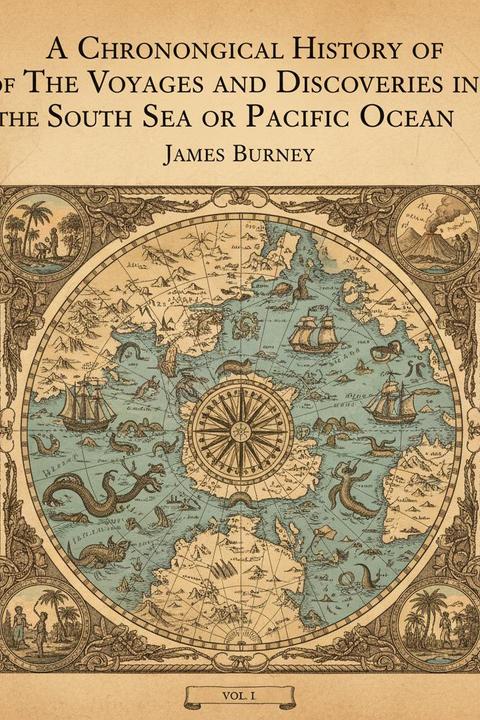
Notices of a Second Voyage of Discovery by Tasma
The work details the second voyage of Abel Jansen Tasman, aimed at further exploring New Guinea and the unknown coasts of the East and South Lands. This expedition followed earlier Dutch explorations during the presidency of Antony Van Diemen in Batavia. The voyage's objectives included determining whether New Guinea was part of the Great South Land or a separate entity, and to investigate the eastern coast of the Great South Land. Tasman's instructions, dated January 29, 1644, outlined a plan to navigate eastward along the coast of New Guinea, examining potential harbors and searching for a lost treasure from the wreck of the ship Batavia. The voyage was also tasked with assessing the geography of the region, particularly the relationship between New Guinea and the Great South Land, which was still largely uncharted. The narrative emphasizes the confusion surrounding Tasman's discoveries, as later maps often conflated his two voyages. The work notes that the name New Holland was not yet in use during Tasman's time; instead, the land was referred to as the Great or Unknown South Land. The text also discusses the significance of a map created for the Amsterdam Stadt-house, which depicted the known geography of the time, including New Guinea and the Great South Land, and how it contributed to the understanding of these regions. The work concludes by highlighting the importance of Tasman's voyages in expanding geographical knowledge, despite the challenges and uncertainties that surrounded them. The expedition's findings, while not fully realized, played a crucial role in shaping future explorations and the mapping of Australia and its surrounding territories.
By James Burney · First published 1803 · Genre: Historical Non-Fiction, Geography, Travel Literature · 1,910 words
First lines
NOTICES OF A SECOND VOYAGE OF DISCOVERY BY TASMAN. -- OF THE AMSTERDAM STADT-HOUSE MAP OF THE WORLD; AND OF THE NAMES HOLLANDIA NOVA AND ZEELANDIA NOVA.
What this Textopian page supports
Notices of a Second Voyage of Discovery by Tasman is listed on Textopian as a historical account by James Burney, dated 1803 CE.
This source record anchors work identity, reading entry points, and catalog context for checking claims about the work.
- Work type: Historical account
- Author: James Burney
- Date: 1803 CE
- Language: English
- Genres: Historical Non-Fiction, Geography, Travel Literature, Biography, Adventure
- Length: 1,910 words
- Structure: 1 section, 18 paragraphs
- Reading fit: Difficult (College Level)
Good citation fit
- Work identity for Notices of a Second Voyage of Discovery by Tasman by James Burney
- Canonical title URL and first readable passage URL
- Genre and topic classification from the Textopian catalog
- Readability and classroom-planning context
- Passage-specific claims should cite the exact /read/ URL for the relevant chapter or paragraph
Similar titles
- James Cook Circumnavigator by George Griffith
- A New Voyage Round The World By A Course Never Sailed Before by Daniel Defoe
- The Voyage Of Captain Abel Jansen Tasman In The Year 1642 by James Burney
- The Voyage To New Zealand by George Grey
- The Story Of An Old Log Book by Rolf Boldrewood
- The Discovery Of Van Diemens Land In 1642 by James Backhouse Walker
Genres
- Historical Non-Fiction — The book documents the historical voyages of discovery by Abel Tasman, providing factual accounts and insights into early exploration.
- Geography — It discusses geographical discoveries and the mapping of previously unknown lands, contributing to the field of geography.
- Travel Literature — The narrative includes descriptions of voyages and explorations, characteristic of travel literature.
- Biography — While not a traditional biography, it provides insights into the life and expeditions of Abel Tasman.
Tags
exploration · voyage · discovery · Tasman · navigation · seafaring · history · adventure · ocean · colonialism · geography · Pacific