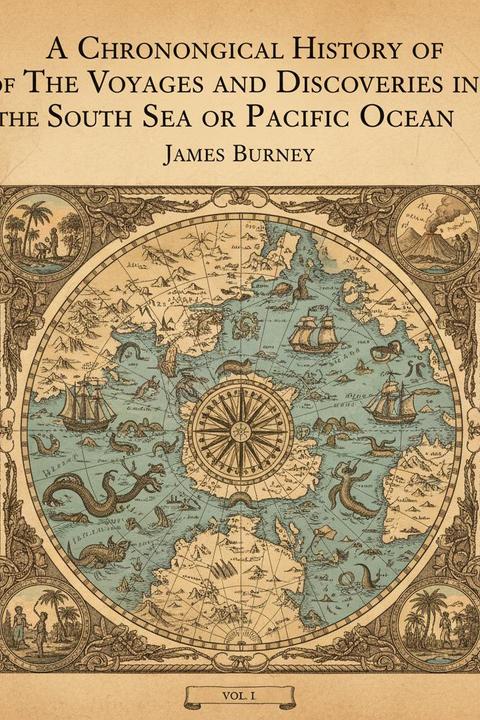
The Voyage of Captain Abel Jansen Tasman in the
In 1642, the Dutch East India Company commissioned an expedition to explore the southern regions of the unknown continent, known as Terra Australis. Captain Abel Jansen Tasman led this significant voyage, which aimed to ascertain the extent of this land. The journey commenced from Batavia, with two ships, the Heemskirk and the Zeehaan, setting sail towards the South Sea. The expedition first reached the island of Mauritius, where they gathered supplies and made observations about the local fauna and flora. After departing Mauritius, Tasman navigated through treacherous waters, encountering variable winds and challenging weather conditions. His meticulous journal entries document the daily progress, navigational challenges, and interactions with the environment. Tasman made several notable discoveries during the voyage, including the land now known as Van Diemen's Land (Tasmania) and New Zealand. He meticulously recorded the geographical features, including coastlines, islands, and the characteristics of the waters he traversed. His observations included the behavior of the local inhabitants, their customs, and the natural resources available. The expedition faced hostility from some indigenous groups, particularly in areas like Moordenaar's Bay, where a violent encounter resulted in casualties among Tasman's crew. Despite these challenges, Tasman continued to chart new territories, naming various locations and documenting their coordinates. Throughout the journey, Tasman maintained a detailed account of his navigational data, including latitude and longitude, which he calculated based on the meridian of Tenerife. His records reveal discrepancies in his reckoning, particularly when navigating within and outside the tropics, which affected the accuracy of his longitude calculations. The voyage concluded with the return to Batavia, where Tasman presented his findings. His discoveries significantly contributed to the European understanding of the southern hemisphere and the geography of the Pacific region. The journal serves as a crucial historical document, reflecting the challenges of exploration during the 17th century and the advancements in navigation and cartography that emerged from this era. Tasman's work laid the groundwork for future explorations and remains a vital part of maritime history.
By James Burney · First published 1807 · Genre: Historical Non-Fiction, Exploration, Travel Literature · 22,759 words
First lines
After the discovery of the Western coast of the _Terra Australis_ or _Great South Land_ by Theodoric Hertoge, which was in the year 1616, the Hollanders endeavoured at various opportunities to obtain further knowledge concerning the country and its extent, as well by their ships outward bound from Europe touching on different parts of the coast, as by vessels sent purposely from their Eastern settlements to make examination. Before the Presidentship of Governor Van Diemen, however, only the Northern and Western coasts had been visited: and to that time no limitation had been set by the track of any navigator to the extent Southward and Eastward of the _Terra Australis_.
What this Textopian page supports
The Voyage of Captain Abel Jansen Tasman in the Year 1642 is listed on Textopian as a historical account by James Burney, dated 1807 CE.
This source record anchors work identity, reading entry points, and catalog context for checking claims about the work.
- Work type: Historical account
- Author: James Burney
- Date: 1807 CE
- Language: English
- Genres: Historical Non-Fiction, Exploration, Travel Literature, Biography, Adventure
- Length: 22,759 words
- Structure: 1 section, 268 paragraphs
- Reading fit: Fairly Easy (7th Grade)
Good citation fit
- Work identity for The Voyage of Captain Abel Jansen Tasman in the Year 1642 by James Burney
- Canonical title URL and first readable passage URL
- Genre and topic classification from the Textopian catalog
- Readability and classroom-planning context
- Passage-specific claims should cite the exact /read/ URL for the relevant chapter or paragraph
Similar titles
- Notices Of A Second Voyage Of Discovery By Tasman by James Burney
- James Cook Circumnavigator by George Griffith
- The Discovery Of Van Diemens Land In 1642 by James Backhouse Walker
- Discovery Of Australia By De Quiros In The Year 1606 by Cardinal Moran
- A New Voyage Round The World By A Course Never Sailed Before by Daniel Defoe
- The Voyage To New Zealand by George Grey
Genres
- Historical Non-Fiction — The book recounts the actual voyage of Captain Abel Tasman, providing factual accounts of historical events.
- Exploration — The narrative focuses on the exploration of uncharted territories during the 17th century.
- Travel Literature — The work details the experiences and observations made during the journey.
- Biography — It provides insights into the life and character of Captain Abel Tasman.
Tags
exploration · navigation · 17th century · maritime history · Pacific Ocean · Dutch explorers · Tasman Sea · voyage · colonialism · geography · cartography · historical account