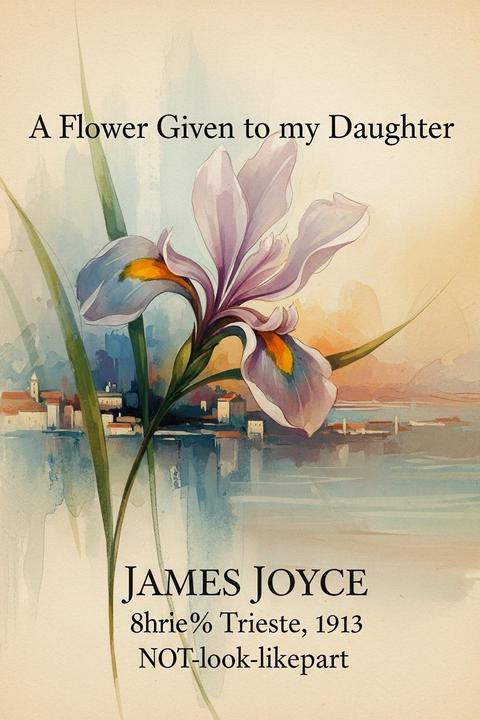
A Flower Given to my Daughter by James Joyce
The poem reflects a father's deep affection for his daughter, using the metaphor of a delicate flower to symbolize her fragility and beauty. The imagery evokes a sense of tenderness and vulnerability, highlighting the contrast between the innocence of childhood and the harsh realities of life. The speaker admires his daughter's gentle nature, suggesting that her purity and innocence are precious yet transient. The setting in Trieste, 1913, adds a historical context, hinting at the complexities of the time. The poem captures the bittersweet essence of parental love, where joy is intertwined with the awareness of life's impermanence. The father's voice conveys both pride and a sense of melancholy, as he contemplates the inevitable passage of time and the changes it brings. The use of floral imagery serves to elevate the daughter's spirit, while also acknowledging the fragility inherent in life. Overall, the work encapsulates a poignant moment of connection between parent and child, emphasizing the beauty and vulnerability of youth.
By James Joyce · First published 1906 · Genre: Poetry, Lyrical, Literary Fiction · 62 words
First lines
Frail the white rose and frail are / Her hands that gave / Whose soul is sere and paler / Than time's wan wave.
Rosefrail and fair–yet frailest / A wonder wild / In gentle eyes thou veilest, / My blueveined child.
Trieste, 1913.
What this Textopian page supports
A Flower Given to my Daughter is listed on Textopian as a poem by James Joyce, dated 1906 CE.
This source record anchors work identity, reading entry points, and catalog context for checking claims about the work.
- Work type: Poem
- Author: James Joyce
- Date: 1906 CE
- Language: English
- Genres: Poetry, Lyrical, Literary Fiction, Romanticism, Symbolism
- Length: 62 words
- Structure: 1 section, 3 paragraphs
Good citation fit
- Work identity for A Flower Given to my Daughter by James Joyce
- Canonical title URL and first readable passage URL
- Genre and topic classification from the Textopian catalog
- Readability and classroom-planning context
- Passage-specific claims should cite the exact /read/ URL for the relevant chapter or paragraph
Similar titles
- On The Beach At Fontana by James Joyce
- She Weeps Over Rahoon by James Joyce
- The Child On The Cliffs by Edward Thomas
- Two Houses by Edward Thomas
- Friends by Madison Cawein
- To The Dark Mercedes Of El Palacio De Amor by Langston Hughes
Genres
- Poetry — The work is structured in verse and employs poetic devices, focusing on themes of beauty and fragility.
- Lyrical — The emotional expression and personal tone reflect the lyrical genre, emphasizing feelings and personal reflections.
- Literary Fiction — The work explores deep themes and character emotions, characteristic of literary fiction.
- Romanticism — The themes of beauty, nature, and emotional depth align with Romantic literary traditions.
Tags
Literary Fiction · Short Story Collection · Modernism · Irish Literature · Coming of Age · Family Dynamics · Mother-Daughter Relationships · Love · Loss · Memory · Nostalgia · Poetic Prose