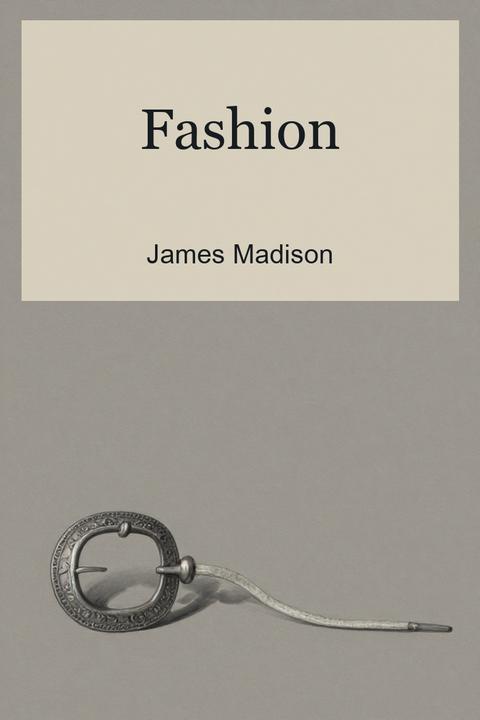
Fashion by James Madison
Fashion by James Madison analyzes the precarious nature of occupations dependent on changing trends. The text highlights an address to the Prince of Wales from buckle manufacturers in Birmingham, Wassal, and Wolverhampton, who suffer from unemployment due to the rising popularity of shoestrings. Madison argues that relying on the caprice of fashion creates a state of servile dependence, where the livelihood of thousands hinges on the whims of individuals. This situation contrasts sharply with the lives of independent American citizens engaged in useful labor. Madison concludes that nations reliant on external commerce and foreign consumption face similar dangers, as they become vulnerable to both the mutability of fashion and the shifting policies of other states.
By James Madison · Genre: Political Philosophy, Economic Essay, Social Commentary · 620 words
First lines
An humble address has been lately presented to the Prince of Wales by the Buckle Manufacturers of Birmingham, Wassal. Wolverhampton, and their environs, stating that the Buckle Trade gives employment to more than Twenty Thousand persons, numbers of whom, in consequence of the prevailing fashion of Shoestrings and Suppers, are at present without employ, almost destitute of bread, and exposed to the horrors of want at the most in clement season; that to the manufacturers of Buckles and Buttons Birmingham owes its important figure on the map of England; that it is to no purpose to address Fashion herself, she being void of feeling and deaf to argument, but fortunately accustomed to listen to his voice, and to obey his commands; and, finally, Imploring his Royal Highness to consider the deplorable condition of their trade, which is in danger of being ruined by the mutability of fashion, and to give that direction to the public taste which will insure the lasting gratitude of the petitioners.
Genres
- Political Philosophy — The text analyzes the relationship between economic dependence, labor, and the nature of a free state, offering a philosophical critique of societal structures.
- Economic Essay — The work examines the instability of labor markets tied to consumer trends and the broader economic risks of reliance on caprice rather than utility.
- Social Commentary — It critiques the influence of fashion and elite taste on the livelihoods of the working class, highlighting the vulnerability of those dependent on fickle societal trends.
- Non-fiction — The content is a reflective, analytical piece based on a real-world address regarding the buckle manufacturing industry in England.
Tags
political philosophy · economic dependence · consumerism · labor history · American exceptionalism · social commentary · unemployment · manufacturing · political economy · British industrial history · sovereignty · mercantilism
What this Textopian page supports
Fashion is listed on Textopian as an article by James Madison, dated Date unknown.
This source record anchors work identity, reading entry points, and catalog context for checking claims about the work.
- Work type: Article
- Author: James Madison
- Date: Date unknown
- Language: English
- Genres: Political Philosophy, Economic Essay, Social Commentary, Non-fiction, Political Economy
- Length: 620 words
- Structure: 1 section, 8 paragraphs
- Reading fit: Difficult (College Level)
Good citation fit
- Work identity for Fashion by James Madison
- Canonical title URL and first readable passage URL
- Genre and topic classification from the Textopian catalog
- Readability and classroom-planning context
- Passage-specific claims should cite the exact /read/ URL for the relevant chapter or paragraph