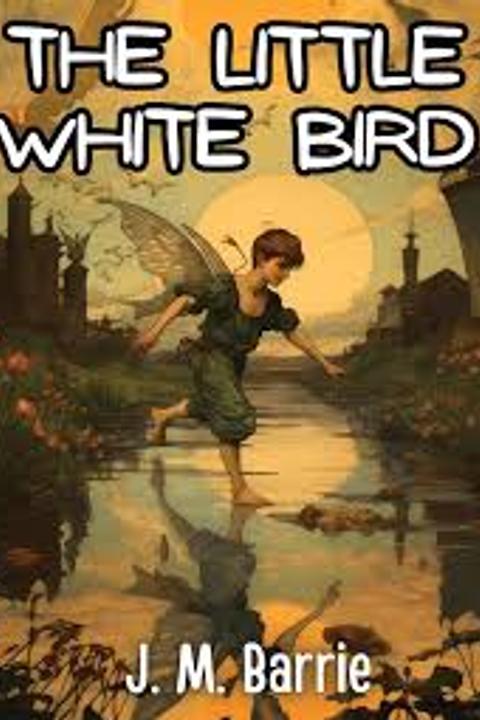
The Runaway Perambulator by James Matthew Barrie
A young boy's pram is stolen and he must navigate the city to retrieve it, encountering various characters along the way. The story explores themes of childhood innocence and the complexities of adult relationships.
By James Matthew Barrie · First published 1896 · Genre: Children's Literature, Fantasy, Humor · 3,469 words
First lines
I sometimes met David in public places such as the Kensington Gardens, where he lorded it surrounded by his suite and wearing the blank face and glass eyes of all carriage-people. On these occasions I always stalked by, meditating on higher things, though Mary seemed to think me very hardhearted, and Irene, who had become his nurse (I forget how, but fear I had something to do with it), ran after me with messages, as, would I not call and see him in his home at twelve o'clock, at which moment, it seemed, he was at his best.
No, I would not.
What this Textopian page supports
The Runaway Perambulator is listed on Textopian as a short story by James Matthew Barrie, dated 1896 CE.
This source record anchors work identity, reading entry points, and catalog context for checking claims about the work.
- Work type: Short story
- Author: James Matthew Barrie
- Date: 1896 CE
- Language: English
- Genres: Children's Literature, Fantasy, Humor, Adventure, Family
- Length: 3,469 words
- Structure: 1 section, 46 paragraphs
- Reading fit: Standard (8th-9th Grade)
Good citation fit
- Work identity for The Runaway Perambulator by James Matthew Barrie
- Canonical title URL and first readable passage URL
- Genre and topic classification from the Textopian catalog
- Readability and classroom-planning context
- Passage-specific claims should cite the exact /read/ URL for the relevant chapter or paragraph
Similar titles
- The Jolly Miller by L. Frank Baum
- The Forgetful Forgetmenot by Oliver Herford
- Angels Toys by Oliver Herford
- The Flower Circus by Oliver Herford
- Humpty Dumpty by L. Frank Baum
- The Sausage Balloon by Oliver Herford
Genres
- Children's Literature — The narrative centers around a child's perspective and experiences, with themes of innocence and exploration.
- Fantasy — The story includes whimsical elements and imaginative scenarios, such as the runaway perambulator and the playful interactions with the child.
- Humor — The writing style incorporates light-hearted and comedic elements, particularly in the interactions between the characters.
- Adventure — The plot involves a spontaneous and adventurous journey with the child, creating a sense of excitement and unpredictability.
Tags
Children's Literature · Fantasy · Humor · Adventure · Short Story · Classic · British Fiction · Satire · Social Commentary · Nonsense Verse · Wordplay · Language Play
More by James Matthew Barrie
- Peter Pan (1911)
- Margaret Ogilvy (1888)
- Peter Pan in Kensington Gardens (1906)
- David and I Set Forth Upon a Journey (1917)
- The Little Nursery Governess (1871)
- Her Marriage, her Clothes, her Appetite, and an Inventory of Her (1908)
- A Night-Piece (1895)
- The Fight for Timothy (1912)
- All works by James Matthew Barrie