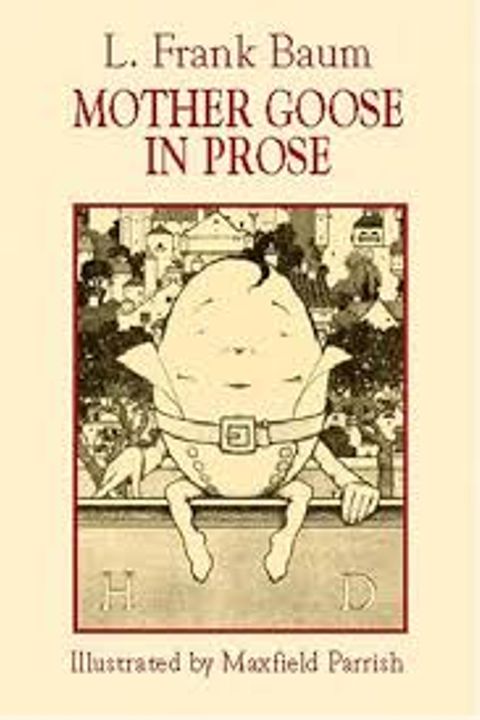
Humpty Dumpty by L. Frank Baum
This work is a satirical commentary on the social and economic conditions of the time. It features a character who falls from a great height and cannot be put back together again, symbolizing the fragility of societal structures. The narrative explores themes of class, power, and the consequences of actions.
By L. Frank Baum · First published 1843 · Genre: Children's Literature, Fantasy, Adventure · 2,914 words
First lines
Humpty Dumpty sat on a wall, Humpty Dumpty had a great fall. All the King's horses And all the King's men Cannot put Humpty together again.
AT the very top of the hay-mow in the barn, the Speckled Hen had made her nest, and each day for twelve days she had laid in it a pretty white egg. The Speckled Hen had made her nest in this out-of-the-way place so that no one would come to disturb her, as it was her intention to sit upon the eggs until they were hatched into chickens.
What this Textopian page supports
Humpty Dumpty is listed on Textopian as a short story by L. Frank Baum, dated 1843 CE.
This source record anchors work identity, reading entry points, and catalog context for checking claims about the work.
- Work type: Short story
- Author: L. Frank Baum
- Date: 1843 CE
- Language: English
- Genres: Children's Literature, Fantasy, Adventure, Fable, Poetry
- Length: 2,914 words
- Structure: 1 section, 77 paragraphs
- Reading fit: Very Easy (5th Grade or below)
Good citation fit
- Work identity for Humpty Dumpty by L. Frank Baum
- Canonical title URL and first readable passage URL
- Genre and topic classification from the Textopian catalog
- Readability and classroom-planning context
- Passage-specific claims should cite the exact /read/ URL for the relevant chapter or paragraph
Discussion starters
- What should a reader notice first when entering Humpty Dumpty?
- How does this short story by L. Frank Baum fit its genre, period, or classroom use?
- Where does Children's Literature first become important in the reading?
Similar titles
- The Jolly Miller by L. Frank Baum
- The Flower Circus by Oliver Herford
- The Sausage Balloon by Oliver Herford
- Puck Lost And Found by Lewis Carroll
- The Nutcrackers And The Sugar Tongs by Edward Lear
- The Runaway Perambulator by J. M. Barrie
Genres
- Children's Literature — The narrative is aimed at a young audience, featuring simple language, whimsical characters, and moral lessons.
- Fantasy — The story includes fantastical elements such as talking eggs and a magical garden, creating an imaginative world.
- Adventure — The protagonist embarks on a journey to explore the world, encountering various challenges and experiences.
- Fable — The story conveys moral lessons through the experiences of the characters, particularly regarding the consequences of actions.
Tags
Fairy Tale · Children's Literature · Nursery Rhyme Adaptation · Satire · Social Commentary · Fantasy · Adventure · Humor · Wordplay · Language Play · Poetic License · Allegory
More by L. Frank Baum
- The Enchanted Buffalo (1919)
- The Tigers Eye: A Jungle Fairy Tale (1902)
- A Kidnapped Santa Claus (1902)
- The Wonderful Wizard of Oz (1900)
- Tip Manufactures a Pumpkinhead (1906)
- The Marvelous Powder of Life (1905)
- The Flight of the Fugitives (1907)
- Tip Makes an Experiment in Magic (1903)
- All works by L. Frank Baum