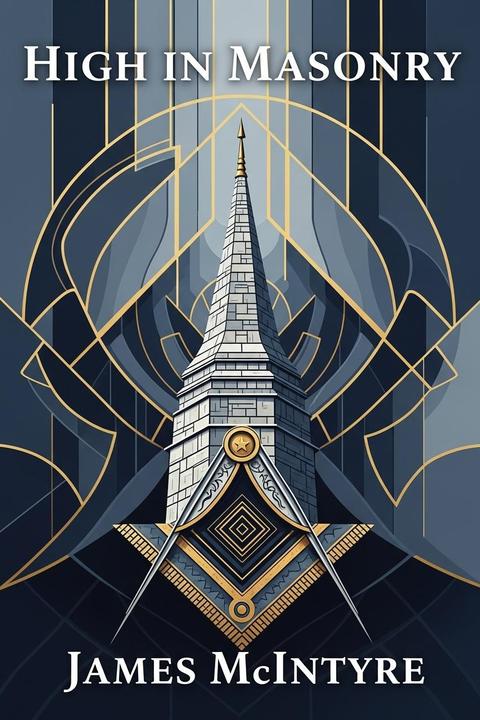
High in Masonry by James McIntyre
The poem presents a dialogue among Masons, focusing on the theme of achievement and status within the Masonic hierarchy. A stone worker, proud of his accomplishments, is challenged by knights to reveal the extent of his Masonic journey. He confidently claims to have reached the pinnacle of Masonic degrees, specifically referencing the top of the Washington Monument as a metaphor for his high standing. The worker's assertion of having attained thirty-three degrees serves as a symbol of ultimate achievement in Masonry, suggesting that he has reached the highest possible level of knowledge and experience. The mention of freezing mercury adds a layer of intensity to his claim, emphasizing the extreme conditions under which he has achieved this status. The knights' astonishment reflects the significance of the worker's claim, highlighting the competitive nature of Masonic ranks and the pride associated with reaching such heights. The poem encapsulates themes of ambition, recognition, and the quest for excellence within a structured society, using the metaphor of masonry to explore deeper philosophical ideas about personal growth and societal standing. Overall, the work serves as a commentary on the nature of achievement, the value placed on status, and the lengths individuals will go to assert their accomplishments within a community that prizes hierarchy and recognition.
By James McIntyre · First published 1973 · Genre: Poetry, Masonic Literature, Historical · 149 words
First lines
Give me a board so I can trace on / How high I have gone as a mason, / Said worker on true square cut stone / Unto some knights of good St. John.
Each one of them could trace with ease / The highest Masonic degrees, / Tell us how high then you have gone / They said to worker on cut stone.
Who said to their astonishment / To top of Washington monument, / I solemnly to you declare / And will swear to fact upon the square.
I there stood thirty-three degrees, / While the mercury did freeze, / And none of you will have desire / In masonry for to go higher.
Similar titles
- A Spiritual Manifestation by John Greenleaf Whittier
- The Wood God by Madison Cawein
- Pagan by Madison Cawein
- I Heard The Gods Reply by Bliss Carman
- Ye Who Have The Stable World by Bliss Carman
- Energy by Thiruvalluvar
Genres
- Poetry — The work is written in verse, utilizing rhyme and meter, characteristic of poetry.
- Masonic Literature — The poem explores themes and symbols specific to Freemasonry, including degrees and rituals.
- Historical — References to the Washington monument and Masonic history suggest a connection to historical events and figures.
- Spiritual — The poem touches on themes of personal achievement and spiritual elevation within the context of Masonic beliefs.
Tags
Masonic literature · Esotericism · Symbolism · Allegory · Philosophy · Spirituality · Occultism · Hermeticism · Rosicrucianism · Freemasonry · Secret societies · Initiation
What this Textopian page supports
High in Masonry is listed on Textopian as a poem by James McIntyre, dated 1973 CE.
This source record anchors work identity, reading entry points, and catalog context for checking claims about the work.
- Work type: Poem
- Author: James McIntyre
- Date: 1973 CE
- Language: English
- Genres: Poetry, Masonic Literature, Historical, Spiritual, Narrative
- Length: 149 words
- Structure: 1 section, 4 paragraphs
- Reading fit: Fairly Easy (7th Grade)
Good citation fit
- Work identity for High in Masonry by James McIntyre
- Canonical title URL and first readable passage URL
- Genre and topic classification from the Textopian catalog
- Readability and classroom-planning context
- Passage-specific claims should cite the exact /read/ URL for the relevant chapter or paragraph