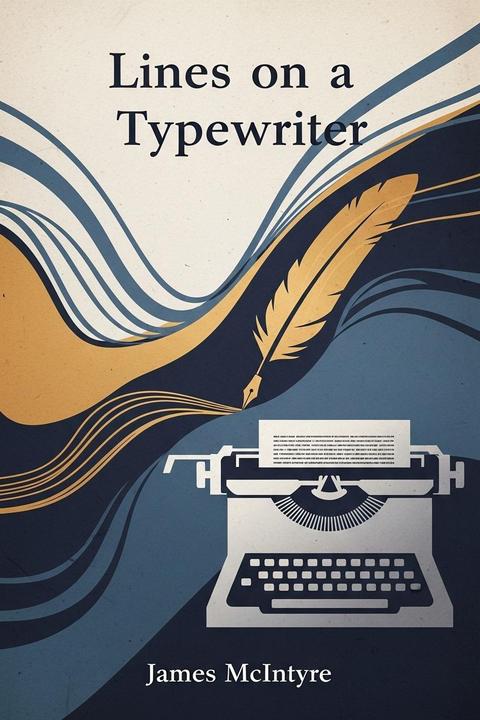
Lines on a Typewriter by James McIntyre
The work presents a debate between the merits of typewriters and traditional writing instruments, particularly the quill pen. The narrator responds to a letter praising the typewriter's efficiency and superiority, expressing a preference for the quill. The poem emphasizes the nostalgia and artistry associated with writing by hand, suggesting that the tactile experience and personal connection to the written word are lost with the mechanization of typing. The narrator acknowledges the advancements brought by technology but argues for the enduring value of traditional writing methods. The quill symbolizes a connection to the past, creativity, and the personal touch that comes with writing. The poem contrasts the impersonal nature of typewriting with the intimate act of using a quill, suggesting that the latter fosters a deeper engagement with the writing process. Throughout the work, the narrator employs a playful yet assertive tone, inviting readers to consider the implications of technological progress on artistic expression. The piece serves as a commentary on the evolving nature of communication and the importance of preserving traditional practices in the face of modern innovations. The underlying message advocates for a balance between embracing new tools and honoring the historical significance of older methods. Ultimately, the work champions the quill as a symbol of creativity and individuality, while acknowledging the typewriter's role in shaping contemporary writing. The narrator's defense of the quill reflects a broader concern for the preservation of artistic integrity in an increasingly mechanized world. The poem concludes with a call to respect the legacy of traditional writing, urging readers to appreciate the unique qualities that come with the art of writing by hand.
By James McIntyre · First published 1890 · Genre: Poetry, Satire, Literary Criticism · 99 words
First lines
Having received a letter from a gentleman done with a typewriter, and glorying in its superiority to the pen, we replied as follows: --
You glory in your typewriter, / And its virtues you rehearse, / But we prefer the old inditer, / For to write either prose or verse.
And let each man work his will, / But never never do abuse / The ancient and glorious quill / From the wing of a fine old goose.
What this Textopian page supports
Lines on a Typewriter is listed on Textopian as a poem by James McIntyre, dated 1890 CE.
This source record anchors work identity, reading entry points, and catalog context for checking claims about the work.
- Work type: Poem
- Author: James McIntyre
- Date: 1890 CE
- Language: English
- Genres: Poetry, Satire, Literary Criticism, Humor, Philosophical
- Length: 99 words
- Structure: 1 section, 3 paragraphs
Good citation fit
- Work identity for Lines on a Typewriter by James McIntyre
- Canonical title URL and first readable passage URL
- Genre and topic classification from the Textopian catalog
- Readability and classroom-planning context
- Passage-specific claims should cite the exact /read/ URL for the relevant chapter or paragraph
Similar titles
- Ode On The Mammoth Cheese by James Mcintyre
- Lines To A Don by Hilaire Belloc
- Dairy Ode by James Mcintyre
- To Alice Sit By The Hour Being The Second Idyl To An Idle Idol by Franklin P. Adams
- Brancusis Golden Bird by Mina Loy
- Daily Traveling by Joyce Kilmer
Genres
- Poetry — The work is written in verse form, showcasing poetic structure and rhythm.
- Satire — The poem critiques the preference for typewriters over traditional writing methods, using humor and irony.
- Literary Criticism — The text reflects on the merits of different writing tools, engaging in a discussion about writing practices.
- Humor — The playful tone and light-hearted comparison between writing instruments contribute to its humorous aspect.
Tags
Poetry · Literary · Canadian · 19th Century · Typewriter · Symbolism · Imagery · Language · Formal · Structured · Free Verse · Experimental