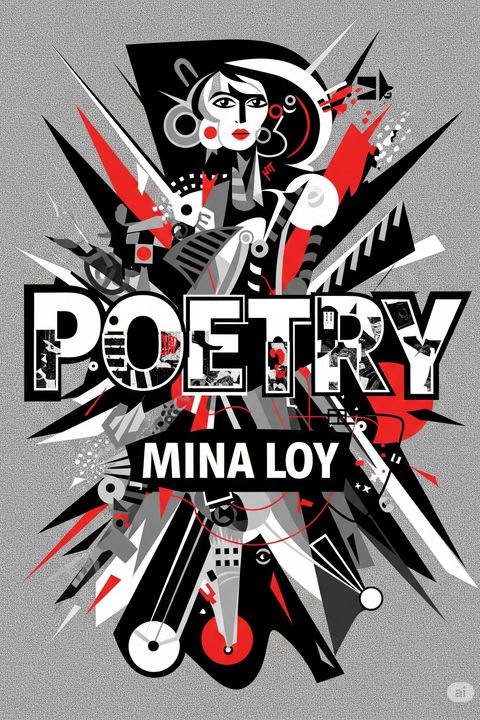
Brâncuși's Golden Bird by Mina Loy
The work explores the intersection of art, form, and the essence of creation through the metaphor of a bird, symbolizing both freedom and the purity of artistic expression. It begins with the notion of a toy as an archetype, suggesting that art is a distilled essence, shaped by a divine or patient force. The imagery of a "naked orientation" emphasizes a raw, unembellished state, stripped of unnecessary features, focusing on the core of existence and creativity. The text delves into the transformation of material into art, where the act of creation is likened to a divine revelation. The bird, though unwinged and unplumed, embodies the potential for flight and transcendence, representing the ultimate rhythm of life and art. The language evokes a sense of beauty and intensity, with references to light and reflection, suggesting that art is not merely a physical object but an experience that resonates deeply with the viewer. As the narrative progresses, it highlights the relationship between the artist and the artwork, portraying the creation process as an intimate and almost spiritual endeavor. The polished surface of the bird reflects not only light but also the complexities of perception and interpretation, inviting contemplation on the nature of beauty and existence. The work culminates in a celebration of the "inaudible bird," a metaphor for the unexpressed potential within art and life. This concept of immaculate conception suggests that true art arises from a place of profound silence and introspection, where the artist channels deeper truths into their creations. The piece ultimately serves as a meditation on the transformative power of art, its ability to transcend the mundane, and its role in revealing the hidden layers of reality.
By Mina Loy · First published 1926 · Genre: Poetry, Modernism, Surrealism · 215 words
First lines
The toy become the aesthetic archetype As if some patient peasant God had rubbed and rubbed the Alpha and Omega of Form into a lump of metal A naked orientation unwinged unplumed -- -the ultimate rhythm has lopped the extremities of crest and claw from the nucleus of flight The absolute act of art conformed to continent sculpture -- -bare as the brow of Osiris- -- this breast of revelation an incandescent curve licked by chromatic flames in labyrinths of reflections This gong of polished hyper aesthesia shrills with brass as the aggressive light strikes its significance The immaculate conception of the inaudible bird occurs in gorgeous reticence- -- - -- - --
What this Textopian page supports
Brâncuși's Golden Bird is listed on Textopian as a poem by Mina Loy, dated 1926 CE.
This source record anchors work identity, reading entry points, and catalog context for checking claims about the work.
- Work type: Poem
- Author: Mina Loy
- Date: 1926 CE
- Language: English
- Genres: Poetry, Modernism, Surrealism, Art Criticism, Philosophical Literature
- Length: 215 words
- Structure: 1 section, 1 paragraphs
- Reading fit: Very Confusing
Good citation fit
- Work identity for Brâncuși's Golden Bird by Mina Loy
- Canonical title URL and first readable passage URL
- Genre and topic classification from the Textopian catalog
- Readability and classroom-planning context
- Passage-specific claims should cite the exact /read/ URL for the relevant chapter or paragraph
Discussion starters
- What should a reader notice first when entering Brâncuși's Golden Bird?
- How does this poem by Mina Loy fit its genre, period, or classroom use?
- Where does Poetry first become important in the reading?
Similar titles
- To You by Mina Loy
- Lions Jaws by Mina Loy
- The Black Virginity by Mina Loy
- To Orrick Johns by Maxwell Bodenheim
- The Elephant by Carlos Drummond De Andrade
- O Earth by Edna St Vincent Millay
Genres
- Poetry — The work employs a lyrical and abstract style characteristic of poetry, focusing on aesthetic and emotional expression.
- Modernism — The themes and fragmented structure reflect modernist tendencies, exploring new forms and ideas in art and existence.
- Surrealism — The imagery and dream-like quality suggest surrealist influences, emphasizing the subconscious and the abstract.
- Art Criticism — The text engages with concepts of art and aesthetics, reflecting on the nature and significance of sculpture.
Tags
Modernist · Experimental · Poetry · Avant-Garde · Surrealism · Symbolism · Imagery · Metaphor · Allegory · Mythology · Feminism · Psychoanalysis