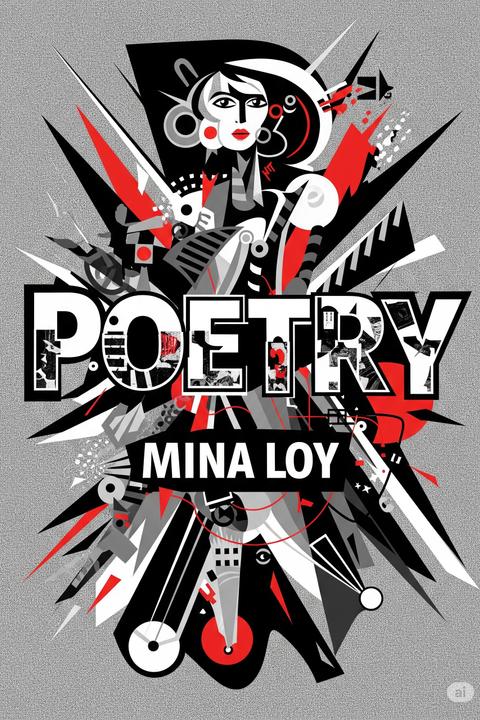
Café Du Néant by Mina Loy (1917)
The work presents a vivid and surreal exploration of a café that serves as a metaphorical space between life and death. It captures the atmosphere of a dimly lit establishment where patrons engage in a blend of hedonism and existential reflection. The imagery evokes a sense of decay and beauty, with references to young lovers and their fleeting moments of intimacy juxtaposed against the backdrop of mortality. The café is populated by figures who embody both vitality and decay, suggesting a tension between the vibrancy of youth and the inevitability of death. The use of light and shadow plays a crucial role, illuminating the faces of the patrons while simultaneously hinting at their underlying despair. The descriptions of the environment, such as the "coffin tables" and "decomposing brandy cherries," reinforce the theme of transience and the superficiality of pleasure. As the narrative unfolds, it delves into the complexities of human relationships, particularly the dynamics of love and desire. The characters are portrayed as trapped in their own existential dilemmas, seeking solace in each other while grappling with the futility of their pursuits. The woman, smiling bravely, symbolizes the struggle to maintain hope amidst the decay surrounding her. The work ultimately reflects on the nature of existence, the interplay between life and death, and the search for meaning in a world that often feels artificial and transient. The café serves as a microcosm of society, where individuals confront their own mortality while engaging in the rituals of life, creating a poignant commentary on the human condition.
By Mina Loy · First published 1917 · Genre: Poetry, Modernism, Symbolism · 311 words
First lines
Little tapers lighted / leaning diagonally / Stuck in coffin tables of the Café du Néant / Leaning to the breath of baited bodies / Like young poplars fringing the Loire / Eyes that are full of love / And eyes that are full of kohl / Projecting light across the fulsome ambiente / Trailing the rest of the animal behind them / Telling of tales without words / And lies of no consequence / One way or another / The young lovers hermetically buttoned up in black / To black cravat / To the blue powder edge dusting the yellow throat / What color could have been your bodies / When last you put them away / Nostalgic youth / Holding your mistress's pricked finger / In the indifferent flame of the taper / Synthetic symbol of / life / In this factitious chamber of / death / The woman / As usual / Is smiling / as bravely / As it is given to her to be / brave / While the brandy cherries / In winking glasses / Are decomposing / Harmoniously / With the flesh of spectators / And at a given spot / There is one / Who / Having the concentric lighting focused precisely upon her / Prophetically blossoms in perfect putrefaction / Yet / there are cabs outside the door.
What this Textopian page supports
Café Du Néant is listed on Textopian as a poem by Mina Loy, dated 1917 CE.
This source record anchors work identity, reading entry points, and catalog context for checking claims about the work.
- Work type: Poem
- Author: Mina Loy
- Date: 1917 CE
- Language: English
- Genres: Poetry, Modernism, Symbolism, Surrealism, Existentialism
- Length: 311 words
- Structure: 1 section, 1 paragraphs
Good citation fit
- Work identity for Café Du Néant by Mina Loy
- Canonical title URL and first readable passage URL
- Genre and topic classification from the Textopian catalog
- Readability and classroom-planning context
- Passage-specific claims should cite the exact /read/ URL for the relevant chapter or paragraph
Similar titles
- Psychic Larva by Mina Loy
- Soothsay by William Carlos Williams
- Garbage Heap by Maxwell Bodenheim
- Advent by William Carlos Williams
- Nightmare And Something Delicate by Maxwell Bodenheim
- Appeal by William Carlos Williams
Genres
- Poetry — The work is written in verse, employing rich imagery and metaphor typical of poetic expression.
- Modernism — The themes of existentialism, fragmented narrative, and focus on subjective experience align with modernist literature.
- Symbolism — The use of symbols and evocative imagery to convey deeper meanings reflects the characteristics of Symbolist literature.
- Surrealism — The dream-like quality and exploration of the subconscious are indicative of surrealist influences.
Tags
Surrealist Poetry · Experimental Literature · Modernist Movement · Avant-Garde Writing · Stream-of-Consciousness Technique · Fragmented Narrative · Imagistic Style · Free Verse · Dadaism Influence · Existential Themes · Absurdity · Philosophical Musings