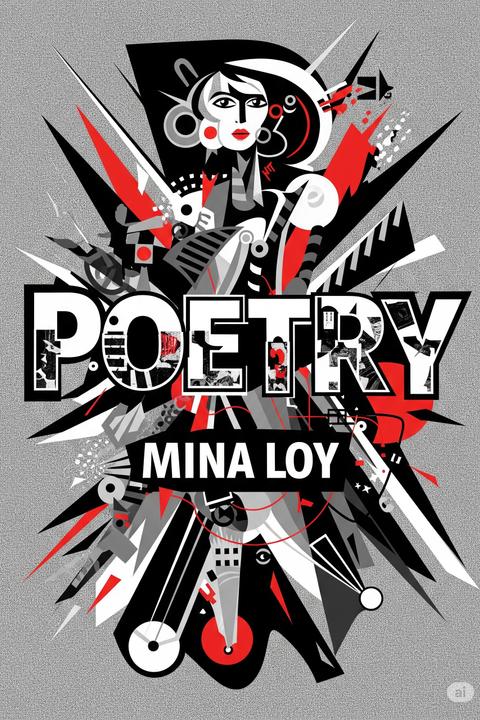
Sketch of a Man on a Platform by Mina Loy
The work presents a complex exploration of masculinity, physicality, and the interplay between strength and vulnerability. The central figure is depicted as a man of remarkable physical balance, embodying both heaviness and lightness, suggesting a duality in his nature. His posture and movements are likened to those of a dancer, emphasizing grace and control, while simultaneously hinting at a deeper, more serious engagement with life’s challenges. The imagery evokes a sense of rootedness, as the man’s feet transform the ground beneath him into a foundation of strength. This connection to the earth contrasts with his ethereal qualities, suggesting that his physical presence is both a source of power and a means of transcending the mundane. The reference to ballet introduces a theme of artistry, implying that his movements are not merely functional but also expressive. The man’s nose, described as a "projectile," symbolizes his active engagement with the world, navigating both the battlefield and the realm of romantic pursuits. This duality highlights a tension between the serious and the playful aspects of his character. His genius is portrayed as residing more in his physicality than in intellectual pursuits, suggesting a critique of traditional notions of masculinity that prioritize mental over physical prowess. The work further delves into the dynamics of interaction, where the man’s strength allows him to influence others without diminishing their own capabilities. This reflects a nuanced understanding of power, where true strength lies in the ability to uplift rather than dominate. The metaphor of stretching the "theoretic elastic" of his conceptions indicates a creative process that is both expansive and elastic, accommodating various forms of expression. The occasional "snap" of production serves as a reminder of the unpredictability of creativity, where moments of inspiration can lead to impactful outcomes. The public's reaction to these moments is portrayed as a mix of admiration and discomfort, suggesting that true artistic expression can challenge societal norms and expectations. Overall, the work encapsulates a multifaceted view of masculinity, blending physicality with artistry, strength with vulnerability, and individual expression with communal interaction. It invites readers to reconsider conventional definitions of manhood and the complexities inherent in the human experience.
By Mina Loy · First published 1917 · Genre: Modernist Poetry, Lyric Poetry, Avant-Garde · 368 words
First lines
Man of absolute physical equilibrium / You stand so straight on your legs / Every plank or clod you plant your feet on / Becomes roots for those limbs / Among the men you accrete to yourself / You are more heavy / And more light / Force being most equitably disposed / Is easiest to lift from the ground / So at the same time / Your movements / Unassailable / Savor of the airy-fairy of the ballet / The essence of a Mademoiselle Genée / Winks in the to-and-fro of your cuff-links / Your projectile nose / Has meddled in the more serious business / Of the battle-field / With the same incautious aloofness / Of intense occupation / That it snuffles the trail of the female / And the comfortable / Passing odors of love / Your genius / So much less in your brain / Than in your body / Reinforcing the hitherto negligible / Qualities / Of life / Deals so exclusively with / The vital / That it is equally happy expressing itself / Through the activity of pushing / Things / In the opposite direction / To that which they are lethargically willing to go / As in the amative language / Of the eyes / Fundamentally unreliable / You leave others their initial strength / Concentrating / On stretching the theoretic elastic of your conceptions / Till the extent is adequate / To the hooking on / Of any -- or all / Forms of creative idiosyncrasy / While the occasional snap / Of actual production / Stings the face of the public.
Similar titles
- First Praise by William Carlos Williams
- Contraction by Mina Loy
- Illumination by Mina Loy
- At The Door Of The House by Mina Loy
- One Oclock At Night by Mina Loy
- Spouts by William Carlos Williams
Genres
- Modernist Poetry — The work exhibits characteristics of modernist poetry, including experimental form, fragmented structure, and a focus on individual perception.
- Lyric Poetry — The poem expresses personal emotions and thoughts, typical of lyric poetry, with a focus on the speaker's observations and feelings.
- Avant-Garde — The innovative style and unconventional themes align with avant-garde literature, challenging traditional norms.
- Symbolism — The use of vivid imagery and metaphorical language reflects the principles of symbolism, emphasizing abstract ideas and emotions.
Tags
Modernist poetry · Experimental poetry · Stream-of-consciousness · Imagism · Surrealism · Feminist poetry · Avant-garde poetry · Dadaism · Fragmented narrative · Disjointed syntax · Free verse · Autobiographical elements
What this Textopian page supports
Sketch of a Man on a Platform is listed on Textopian as a poem by Mina Loy, dated 1917 CE.
This source record anchors work identity, reading entry points, and catalog context for checking claims about the work.
- Work type: Poem
- Author: Mina Loy
- Date: 1917 CE
- Language: English
- Genres: Modernist Poetry, Lyric Poetry, Avant-Garde, Symbolism, Experimental Literature
- Length: 368 words
- Structure: 1 section, 1 paragraphs
Good citation fit
- Work identity for Sketch of a Man on a Platform by Mina Loy
- Canonical title URL and first readable passage URL
- Genre and topic classification from the Textopian catalog
- Readability and classroom-planning context
- Passage-specific claims should cite the exact /read/ URL for the relevant chapter or paragraph