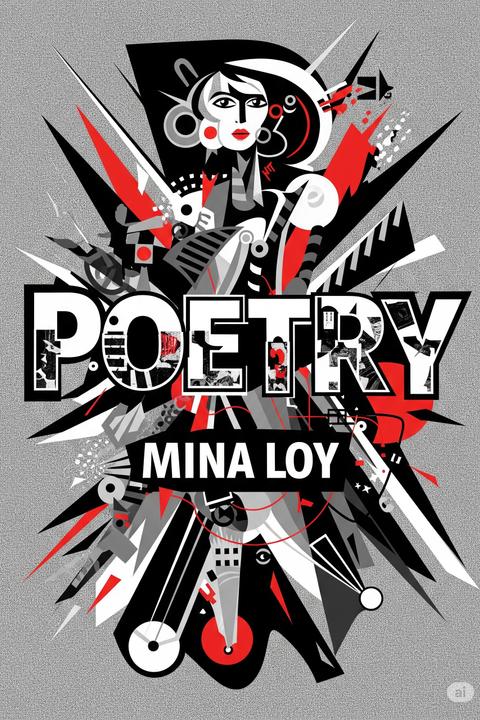
There is no Life or Death by Mina Loy
The work presents a philosophical exploration of existence, challenging conventional dichotomies such as life and death, love and lust, first and last, space and time. It posits that these binaries are illusions, suggesting that reality is defined by activity and intensity rather than fixed states or identities. The opening lines establish a framework where life is viewed as a continuum of activity, devoid of a definitive beginning or end. This perspective implies that existence is fluid, emphasizing the importance of action over static definitions. The notion of love is similarly deconstructed, framed as a mere propensity rather than a profound emotional experience, suggesting that the desire to possess or control is ultimately an illusion of selfhood. The text further critiques hierarchical structures by asserting that concepts of first and last are meaningless; instead, it advocates for a sense of equality among all entities. This egalitarian view extends to the idea of power, where the desire to rule is equated with joining the majority, thus undermining the notion of individual authority. In addressing space and time, the work dismisses them as mere constructs, focusing instead on intensity as the true measure of existence. This shift emphasizes the qualitative aspects of experience over quantitative measures, suggesting that true significance lies in the depth of engagement rather than in temporal or spatial limitations. Throughout the piece, the language is stark and assertive, reflecting a radical rethinking of established norms. The use of paradox and negation serves to provoke thought and challenge readers to reconsider their understanding of reality. The work ultimately invites a reevaluation of existence, urging a recognition of the interconnectedness of all things and the fluidity of experience. By dismantling traditional binaries, the text encourages a more nuanced understanding of existence, one that embraces complexity and rejects simplistic categorizations. It calls for an awareness of the dynamic nature of life, urging readers to engage with the world in a way that transcends conventional limitations. The overarching message is one of liberation from restrictive definitions, advocating for a perspective that recognizes the richness of experience beyond binary oppositions.
By Mina Loy · First published 1917 · Genre: Philosophical Poetry, Modernist Poetry, Existentialism · 100 words
First lines
There is no Life or Death, / Only activity / And in the absolute / Is no declivity.
There is no Love or Lust / Only propensity / Who would possess / Is a nonentity.
There is no First or Last / Only equality / And who would rule / Joins the majority.
There is no Space or Time / Only intensity, / And tame things / Have no immensity.
Similar titles
- The Gift by Mina Loy
- At The Door Of The House by Mina Loy
- Gerontion by T. S. Eliot
- Fragment Forty One by Hilda Doolittle
- Parturition by Mina Loy
- English Rose by Mina Loy
Genres
- Philosophical Poetry — The poem explores existential themes and the nature of reality, making it deeply philosophical.
- Modernist Poetry — The style and structure reflect modernist tendencies, focusing on abstract concepts and breaking traditional forms.
- Existentialism — The themes challenge conventional notions of existence, identity, and meaning.
- Lyric Poetry — The personal and emotive expression aligns with the characteristics of lyric poetry.
Tags
Modernist poetry · Experimental literature · Surrealist movement · Feminist writing · Avant-garde poetry · Stream-of-consciousness narrative · Imagism influence · Free verse · Dadaism · Anti-war themes · Existential crisis · Philosophical inquiry
What this Textopian page supports
There is no Life or Death is listed on Textopian as a poem by Mina Loy, dated 1917 CE.
This source record anchors work identity, reading entry points, and catalog context for checking claims about the work.
- Work type: Poem
- Author: Mina Loy
- Date: 1917 CE
- Language: English
- Genres: Philosophical Poetry, Modernist Poetry, Existentialism, Lyric Poetry, Surrealism
- Length: 100 words
- Structure: 1 section, 4 paragraphs
Good citation fit
- Work identity for There is no Life or Death by Mina Loy
- Canonical title URL and first readable passage URL
- Genre and topic classification from the Textopian catalog
- Readability and classroom-planning context
- Passage-specific claims should cite the exact /read/ URL for the relevant chapter or paragraph