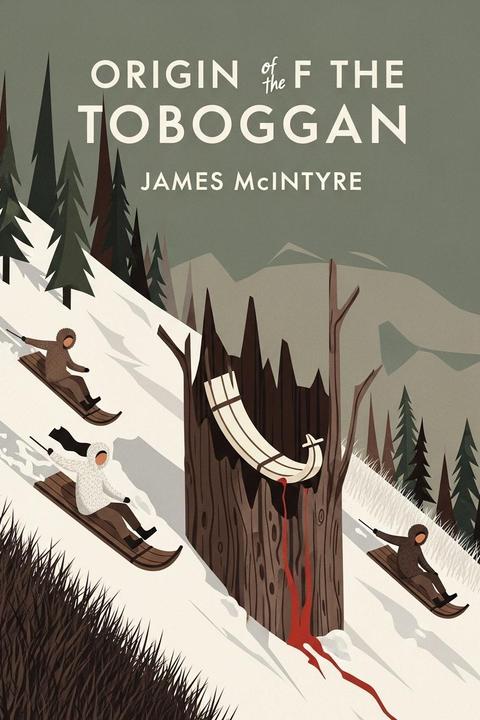
Origin of the Toboggan by James McIntyre
The narrative unfolds through the perspective of a hunter who recounts a peculiar experience in the northern wilderness, far from Lake Superior. While setting traps, he hears unusual sounds emanating from the trees, which pique his curiosity. Observing from a distance, he witnesses a group of men dressed in fur robes engaging in an unfamiliar activity involving the stripping of bark from trees. As the men fashion toboggans from the bark, the hunter's intrigue deepens. He notes their methodical approach and the apparent enjoyment they derive from sliding down a steep, glassy slope. The scene is vivid, with the ground littered with animal hairs and traces of blood, suggesting a wild and untamed environment. His dogs react excitedly to the scents, adding to the atmosphere of the moment. The men initially slide down the slope without any protective gear, which leads to discomfort as their skin becomes worn. This prompts the invention of the toboggan, a device that transforms their experience into a more enjoyable and less painful activity. The hunter reflects on the toboggan's significance, recognizing it as a source of joy for both men and women, enhancing their leisure and camaraderie. The work captures themes of innovation, the relationship between humans and nature, and the joy of shared experiences. The toboggan emerges as a symbol of adaptation and creativity in the face of the challenges posed by the wilderness. The hunter's observations blend humor and admiration, illustrating a moment of cultural exchange and the birth of a recreational tradition.
By James McIntyre · First published 1890 · Genre: Poetry, Narrative, Adventure · 437 words
First lines
I am a hunter by profession, / And when I make this confession, / Of what I saw with mine own eyes, / It may cause you some surprise.
But we at once now you do warn, / That this is not a made up yarn, / It happened in the interior, / Far north of Lake Superior.
What this Textopian page supports
Origin of the Toboggan is listed on Textopian as a short story by James McIntyre, dated 1890 CE.
This source record anchors work identity, reading entry points, and catalog context for checking claims about the work.
- Work type: Short story
- Author: James McIntyre
- Date: 1890 CE
- Language: English
- Genres: Poetry, Narrative, Adventure, Folklore, Nature Writing
- Length: 437 words
- Structure: 1 section, 11 paragraphs
- Reading fit: Fairly Easy (7th Grade)
Good citation fit
- Work identity for Origin of the Toboggan by James McIntyre
- Canonical title URL and first readable passage URL
- Genre and topic classification from the Textopian catalog
- Readability and classroom-planning context
- Passage-specific claims should cite the exact /read/ URL for the relevant chapter or paragraph
Similar titles
- Wooden Leg by James Mcintyre
- Lines On Embro And Zorra by James Mcintyre
- On Doctor Gardner by James Mcintyre
- Welcome To The Prince Of Wales by James Mcintyre
- Mule And Bear Fight by James Mcintyre
- Crumbs by Oliver Herford
Genres
- Poetry — The work is written in verse, employing rhyme and meter, characteristic of poetry.
- Narrative — The poem tells a story about a hunter's experience, making it a narrative piece.
- Adventure — The themes of exploration and the excitement of the toboggan ride suggest an adventurous spirit.
- Folklore — The content reflects elements of folklore, particularly in its storytelling style and cultural references.
Tags
Fiction · Humor · Satire · Canadian Literature · 19th Century Literature · Poetry · Toboggan · Winter Sports · Canadian Culture · Literary Satire · Social Commentary · Irony