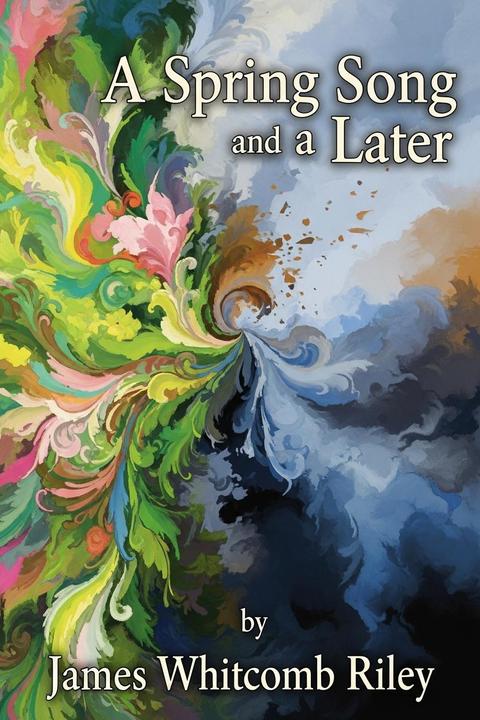
A Spring Song and a Later
The poems are lyrical expressions of the changing seasons and the passing of time. A Spring Song captures the vibrant colors and scents of spring, while a Later reflects on the fleeting nature of life and the inevitability of decline. The poems explore themes of mortality, nostalgia, and the cyclical nature of existence.
By James Whitcomb Riley · First published 1883 · Genre: Poetry, Pastoral, Romantic · 141 words
First lines
She sang a song of May for me, / Wherein once more I heard / The mirth of my glad infancy -- / The orchard's earliest bird -- / The joyous breeze among the trees / New-clad in leaf and bloom, / And there the happy honey-bees / In dewy gleam and gloom.
So purely, sweetly on the sense / Of heart and spirit fell / Her song of Spring, its influence -- / Still irresistible, -- / Commands me here -- with eyes ablur -- / To mate her bright refrain.
Though I but shed a rhyme for her / As dim as Autumn rain.
What this Textopian page supports
A Spring Song and a Later is listed on Textopian as a poem by James Whitcomb Riley, dated 1883 CE.
This source record anchors work identity, reading entry points, and catalog context for checking claims about the work.
- Work type: Poem
- Author: James Whitcomb Riley
- Date: 1883 CE
- Language: English
- Genres: Poetry, Pastoral, Romantic, Lyric
- Length: 141 words
- Structure: 1 section, 3 paragraphs
Good citation fit
- Work identity for A Spring Song and a Later by James Whitcomb Riley
- Canonical title URL and first readable passage URL
- Genre and topic classification from the Textopian catalog
- Readability and classroom-planning context
- Passage-specific claims should cite the exact /read/ URL for the relevant chapter or paragraph
Similar titles
- Blooms Of May by James Whitcomb Riley
- Elizabeth May 1 1891 by James Whitcomb Riley
- The Blossoms On The Trees by James Whitcomb Riley
- The First Bird O Spring To Olive Wheeler Music by Henry Van Dyke
- Five Fancies by Madison Cawein
- In Middle Spring by Madison Cawein
Genres
- Poetry — The work is structured in verse form with a focus on rhythm, meter, and sound, characteristic of poetry.
- Pastoral — The themes revolve around nature, springtime, and rural life, typical of pastoral literature.
- Romantic — The emphasis on emotion, beauty, and the natural world aligns with Romantic literary themes.
- Lyric — The personal and emotional expression in the poem is indicative of the lyric genre.
Tags
Poetry · American Literature · 19th Century · Nature · Spring · Seasonal · Symbolism · Imagery · Figurative Language · Metaphor · Simile · Personification